
Myanmar Spring Chronicle — November 5 Perspective
(MoeMaKa), November 6, 2026
Ethnic Armed Organizations in Northeastern Myanmar and Models of Self-Governance
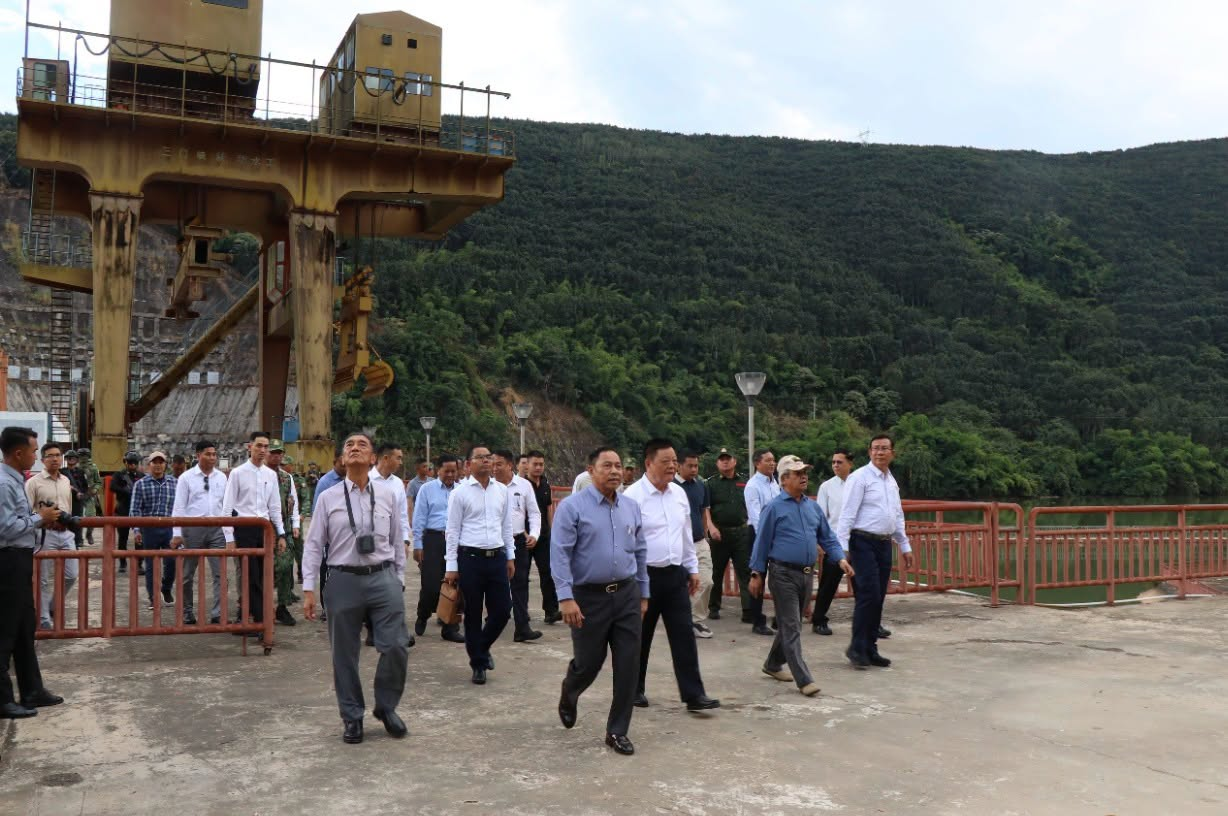
A delegation led by Lieutenant General Yar Pyae, chairman of the National Solidarity and Peacemaking Negotiation Committee (NSPNC)—a committee with a lengthy and rather ambiguous name—has arrived in Panghsang, the administrative capital of the Wa Self-Administered Division, in recent days to hold discussions with leaders of the United Wa State Party (UWSP).
Before traveling to the Wa region, the delegation visited Mong La on November 1, where it met with leaders of the National Democratic Alliance Army (NDAA), according to news reports.
Since the 2021 military coup, as Myanmar’s civil war has intensified, the leader of the military junta has repeatedly called for peace talks. Such invitations have been issued on several occasions since 2021. However, the simultaneous escalation of armed clashes and airstrikes, while extending invitations for peace negotiations, has seriously undermined trust in the process.
Even before Operation 1027 was launched in October 2023, the military authorities had invited both ethnic armed organizations that signed the Nationwide Ceasefire Agreement (NCA) in 2015 and 2018 and those that had not signed it to participate in discussions in Naypyidaw.
Some NCA signatories stopped attending these meetings after the military coup. Meanwhile, certain non-signatory armed organizations visited Naypyidaw for tactical or diplomatic reasons. Nevertheless, these meetings produced no significant new ceasefire agreements or further political arrangements involving organizations that had already observed ceasefires.
Looking at the past six years, meetings broadly described as “peace negotiations” appear to have served purposes other than achieving lasting peace. Both sides have often used ceasefires as temporary tactical arrangements to suspend fighting, replenish their forces, or concentrate military operations against one opponent while avoiding confrontation with another.
The recent visits by Lieutenant General Yar Pyae, who also serves as the current defense minister and oversees the NSPNC, to the Wa and Mong La regions—two ethnic armed territories based in northern and eastern Shan State—are undoubtedly intended to secure military and political advantages concerning northern Shan State.
For nearly four decades, the territory controlled by the United Wa State Party and its armed wing, the United Wa State Army (UWSP/UWSA), has maintained its own administrative, economic, and military structures without interference from the central government.
For the UWSP/UWSA, preserving this existing arrangement and maintaining stable relations with China are its two most important strategic objectives.
It is also evident that the organization seeks to preserve its influence over other ethnic armed organizations operating in northern Shan State. The UWSP/UWSA leads the Federal Political Negotiation and Consultative Committee (FPNCC), a coalition of seven ethnic armed organizations established during the period of peace conferences held in Naypyidaw after 2011.
The military junta is likely aware, at least to some extent, of the significant role played by the UWSP/UWSA during Operation 1027. The Chinese government may understand that role even more thoroughly than Myanmar’s military authorities.
China’s efforts to pressure and encourage the UWSP/UWSA to help stabilize northern Shan State became publicly known in August 2024, when a leaked record of discussions between a Chinese special envoy and Wa leaders revealed the substance of their exchanges.
The Chinese government appears to regard ethnic armed organizations based along its border as forces occupying a strategic buffer zone—organizations that cannot completely disregard Beijing’s influence.
This position allows China to maintain leverage and adjust its strategic advantages in dealings with both the ethnic armed organizations and Myanmar’s military government.
The ethnic armed organizations operating along the Chinese border, beginning from Kachin State, include the Kachin Independence Army (KIA), the Ta’ang National Liberation Army (TNLA) in northern Shan State, the Myanmar National Democratic Alliance Army (MNDAA) in the Kokang region, the United Wa State Army (UWSA), and the NDAA in eastern Shan State.
Under the 2008 Constitution, three self-administered areas are designated in these regions, which fall within Kachin State and Shan State.
During the first and second phases of Operation 1027, as well as throughout 2024 and early 2025, ethnic armed organizations captured extensive territories previously controlled by the military junta and other armed groups.
The KIA, TNLA, MNDAA, and Arakan Army (AA) were among the principal organizations that made significant territorial gains.
These organizations have subsequently sought formal recognition of the territories under their military control, either from the central authorities or from neighboring ethnic armed organizations.
This has been particularly evident among the MNDAA, TNLA, Mong La-based NDAA, and UWSA.
During its visit to Naypyidaw in July, the TNLA reportedly made recognition of the territories under its control a central issue in discussions. The Mong La group and the MNDAA also raised similar demands during their meetings with the NSPNC.
The NSPNC, however, responded that such matters should be addressed through parliament in accordance with the provisions of the 2008 Constitution.
Against this backdrop, China’s special envoy for Myanmar recently suggested, during the anniversary commemoration of the Nationwide Ceasefire Agreement and a peace forum, that Myanmar should develop a model of high-level autonomy for ethnic minorities.
The remarks were regarded as a rare public expression of China’s position on the question of ethnic nationalities in Myanmar.
The term “high-level autonomy” appears to have been deliberately chosen to distinguish the proposed arrangement from the existing self-administered areas established under the 2008 Constitution.
It is also possible that discussions concerning this new terminology and its implications have already taken place between China and certain ethnic armed organizations in northeastern Myanmar.
For the time being, however, Myanmar’s military junta, whose territorial control has fallen to its lowest level in decades, appears to be concentrating primarily on securing ceasefires for military and tactical purposes rather than pursuing broader arrangements for high-level ethnic autonomy.