
Myanmar Spring Chronicle – Scenes from October 7
(MoeMaKa), October 8, 2026
Two Killed in Drone Attacks in Hpakant; Revolutionary Fighters Kill Fellow Resistance Members and Seize Money and Weapons in Depayin Township
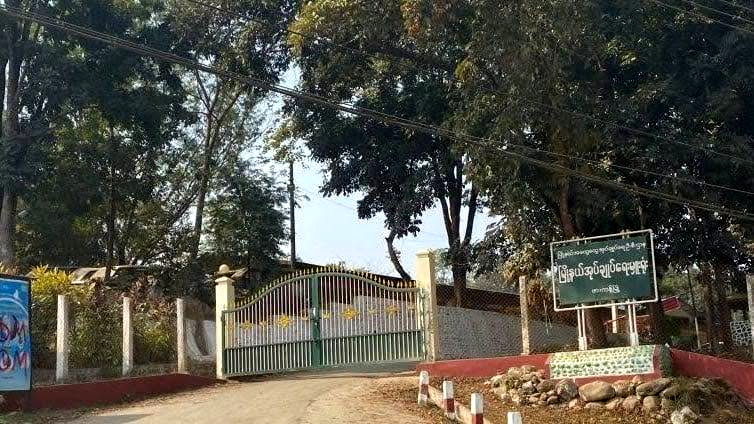
News reports indicate that two people were killed in drone attacks carried out by the Kachin Independence Army (KIA) and allied forces in Hpakant, Kachin State. The victims were U Zaw Aung, an official of the Kachin National Development and Progress Company (KNDPC), and a market vendor. The attacks occurred at a government administrative complex where a meeting was being held to discuss repairs to the Kamaing–Nam Ya–Hpakant road, and at an electricity office in a nearby village.
On October 7, the military administration and a military division commander invited local businesspeople and civil society organizations to a meeting at the Hpakant government administrative complex to discuss repairs to the severely damaged Kamaing–Nam Ya–Hpakant road. The drone attack occurred while the meeting was underway.
One of those killed was U Zaw Aung, also known by his Kachin name, Drung Zaw Aung, an official of KNDPC.
Several hours before the attack on the administrative complex, the KIA and allied forces reportedly carried out another drone strike on an electricity office in the Nam Hpyit village tract of Hpakant Township. A market vendor was reportedly killed in that attack.
Hpakant town remains under the control of Myanmar’s military junta, while the KIA controls certain surrounding areas and villages within Hpakant Township.
The Kamaing–Nam Ya–Hpakant road, which was the subject of the meeting, is one of the main transportation routes connecting Hpakant with other areas. The road has suffered severe damage during this year’s rainy season. The meeting was intended to bring together private companies, civil society organizations, and military administration officials to discuss road repairs.
Hpakant, located in Kachin State, is one of Myanmar’s most important jade-producing regions. During 2024 and the early months of 2025, the KIA and allied forces captured extensive territories previously controlled by the military junta.
However, in April and May 2025, junta forces managed to launch renewed military offensives into Hpakant and recapture certain areas.
Following Operation 1027, the military lost control of substantial territories in northern Shan State. After reaching a ceasefire agreement with the Myanmar National Democratic Alliance Army (MNDAA), the junta was able to reinforce its troops in the Hpakant region and launch renewed ground offensives.
Jade is one of Kachin State’s most valuable natural resources. By maintaining control over the jade-producing areas, the military seeks to prevent the KIA from gaining complete control of Hpakant and collecting the substantial tax revenues that would come with it.
Since early 2025, the military junta has pursued a strategy aimed at cutting off the financial resources of revolutionary armed organizations.
Its priority targets have included gold mines controlled by the Mandalay People’s Defense Force (MDY-PDF) in upper Mandalay Region, jade-producing areas controlled by the KIA in Hpakant, and cross-border trade routes through which goods enter Myanmar from Thailand in Myawaddy District, Karen State.
These areas represent important sources of revenue for revolutionary armed groups. The junta has therefore prioritized military offensives, blockades, and efforts to disrupt economic activities in these locations.
This broader strategy helps explain why the military has intensified its operations and efforts to consolidate control over Hpakant and its surrounding areas.
Another significant news development concerns an incident in a village in Depayin Township, Sagaing Region, where two members of a People’s Defense Team (Pa Ka Pha) were reportedly shot and killed by fellow resistance fighters on October 4. The attackers allegedly seized more than 20 million kyats in cash and the weapons carried by the victims.
According to news reports, the two victims were members of the Butalin Township People’s Defense Team. They had traveled to Mu Kan Gyi village in Depayin Township to collect an outstanding debt related to weapons purchases.
After receiving the repayment, they were allegedly ambushed and shot dead on their return journey.
Reports identified the suspected organizer as a man named Paing Paing, the acting leader of a local resistance organization known as the Bo Kyar Yaing group, a Local People’s Defense Force (LPDF) based in Mu Kan Gyi village.
According to the reports, Paing Paing allegedly arranged the repayment and subsequently waited along the victims’ return route, where the two fighters were shot and killed. Their money and weapons were then taken.
Subsequent reports indicated that Paing Paing and other individuals allegedly involved in the killings had been arrested.
Of the 22 million kyats reportedly stolen, authorities had recovered 20 million kyats. One of the two seized firearms had also been recovered, according to the reports.
Sagaing Region, part of Myanmar’s central dry zone, is a major stronghold of Bamar revolutionary armed organizations. Although numerous People’s Defense Teams operate under the National Unity Government’s Ministry of Defense, armed clashes and targeted killings between these units and independent Local People’s Defense Forces have occurred repeatedly.
Some incidents have involved conflicts between different People’s Defense Teams operating under the NUG’s Ministry of Defense.
Other cases have involved confrontations between People’s Defense Teams and independently organized LPDF units, or between different LPDF organizations themselves.
Reports of armed confrontations, internal disputes, and targeted killings among revolutionary groups have appeared frequently in the news.
In the latest incident, conflicting accounts have emerged regarding the identities and affiliations of those involved.
One report identified two members of a People’s Defense Team from Pauk Chaing village in Shwebo Township and the wife of one of the members as being involved in the killing of the two Butalin People’s Defense Team members.
Another report identified the alleged perpetrator as the acting leader of the Bo Kyar Yaing LPDF.
Sagaing Region is home to a wide variety of revolutionary armed organizations. In addition to People’s Defense Teams operating under the NUG’s Ministry of Defense, there are independent LPDF units, student revolutionary organizations, the People’s Liberation Army (PLA), and numerous other armed groups.
Earlier this year, the Burma National Revolutionary Army (BNRA), which had several hundred members, collapsed as an armed organization after its leader surrendered to the military junta.
Other resistance organizations in the region range in size from a few dozen members to several hundred fighters.
Although Myanmar’s revolution has continued for five years, numerous armed organizations commonly referred to as PDF groups remain independently organized and operate under separate command structures.
This fragmentation has weakened the cohesion of revolutionary armed forces in Sagaing Region and has made it difficult for them to conduct coordinated military and political activities.
It would not be unreasonable to conclude that the continued existence of so many separate armed organizations has undermined the overall unity and effectiveness of the resistance movement in the region.
Sagaing, Mandalay, and Magway regions are collectively known as Myanmar’s central dry zone, or Anyar, where the majority of the population is ethnically Bamar.
The growing question is whether the National Unity Government can bring together the diverse revolutionary armed organizations operating across the Anyar region through effective political leadership, sound organizational strategies, and successful efforts to build unity.
As the revolution enters its fifth year, the ability to unite these fragmented armed groups under a coherent political and military framework remains one of the most pressing challenges facing Myanmar’s resistance movement.