
Myanmar Spring Chronicle — October 29 Perspective
(MoeMaKa), October 30, 2026
Shell Fired During Fighting on Myanmar Side of Thai Border Lands in Thailand
A shell fired during fighting between the Karen National Union (KNU) and Myanmar’s military on the Myanmar side of the border landed in Mae Ko King village in Thailand’s Mae Sot district on October 29, injuring a Thai woman. Some news outlets described the projectile as an RPG round rather than a mortar shell.
According to news reports, the woman sustained shrapnel injuries and received hospital treatment, although her injuries were not serious. Mae Ko King village is located directly across the border from Min Let Pan village in Myawaddy District, Myanmar. The projectile reportedly crossed into Thailand during exchanges of fire between opposing forces near Min Let Pan.
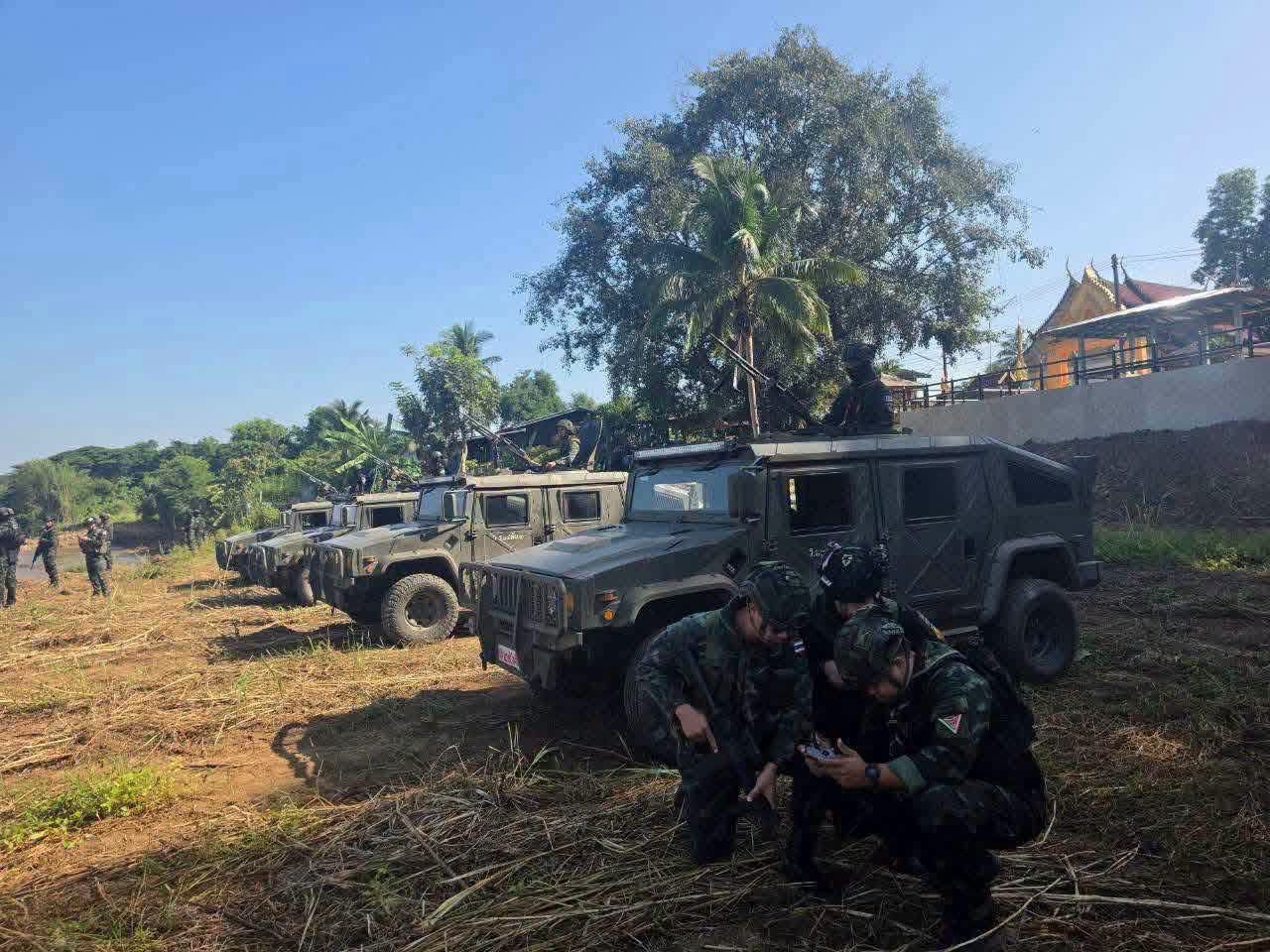
Following the incident, Thai troops reportedly fired smoke rounds as a warning. News photographs also showed Thai special operations forces deploying along the border in a show of strength and maintaining surveillance of the area.
The incident occurred approximately one week after the commander of the Thai military’s Ratchamanu Task Force warned on October 23 that Thai forces would respond if artillery shells fired from Myanmar continued to land on Thai territory.
On October 27, more than 200 residents of Mae Ko King reportedly staged a demonstration and submitted a letter to Thai authorities outlining five demands, including measures to protect their community from projectiles crossing the border.
The Moei River, which forms part of the Thai-Myanmar border, is only a few hundred feet wide in certain sections. As a result, fighting between KNU forces and Myanmar military units in areas such as Min Let Pan and Phalu, close to the international boundary, presents a continuing risk of artillery shells and other explosive projectiles crossing into Thailand.
Some residents of Karen State reportedly believe that Myanmar’s military has deliberately fired certain artillery rounds across the border while attacking KNU and allied forces. According to accounts cited in some news reports, these residents suspect that the intention is to encourage the Thai military to pressure the KNU. However, these allegations remain interpretations of the incidents rather than independently established facts.
The Thai military maintains close relations with Myanmar’s military authorities. Despite repeated incidents involving artillery shells and other projectiles crossing into Thai territory during fighting in Myanmar, Thailand has generally avoided issuing particularly strong warnings or taking substantial military action in response.
Thailand also maintains relatively good relations with the KNU. Its working relationships with both the KNU and Myanmar’s military may help explain why Thai authorities have generally refrained from more forceful warnings or military responses to fighting along the Myanmar border.
The Thai military appears to operate on the assumption that the armed groups fighting near the border do not intend to harm Thailand. This approach contrasts with its much more confrontational posture along the border with Cambodia, where Thai authorities have demonstrated considerably less tolerance for perceived violations of their territory.
During 2025 and 2026, Thailand and Cambodia experienced numerous border confrontations involving exchanges of gunfire, airstrikes, multiple-launch rocket systems and landmines. These clashes, often accompanied by nationalist sentiment, reflected the intensity of the territorial disputes between the two countries.
While Thailand has responded forcefully to its border disputes with Cambodia, treating them as matters of national sovereignty and security, it has not adopted a comparable military response to repeated incidents of shells and other explosive projectiles landing on Thai territory from Myanmar.
One important distinction is that the fighting along the Myanmar border is not directed against Thailand itself. The close relationships between the Thai and Myanmar militaries, as well as between their respective governments, also appear to have remained largely unaffected by these cross-border incidents.
On October 30, Thai authorities imposed a one-week ban on goods transported through river crossings controlled by various armed groups, while allowing trade through the official Thai-Myanmar Friendship Bridge between Mae Sot and Myawaddy to continue.
The Thai-Myanmar border is an important commercial and logistical corridor. It is also vital to ethnic armed organizations operating along the frontier and to People’s Defence Force (PDF) units allied with the KNU, providing access to essential supplies, medical treatment and communications.
Since Myanmar’s military coup in 2021, fighting between the KNU, a signatory to the Nationwide Ceasefire Agreement (NCA), and Myanmar military forces has intensified.
Meanwhile, the Karen armed organization led by Saw Chit Thu, which had long operated under the Myanmar military as a Border Guard Force (BGF), began seeking a more independent position in 2024.
During this period, Myanmar’s military lost control of numerous outposts near the Thai-Myanmar border in Karen State.
The military also lost control of the Kawkareik–Thingannyinaung section of the Asia Highway for several years, regaining control only relatively recently.
Areas such as Lay Kay Kaw, Phalu and Waw Lay (Wam Kha) in Myawaddy Township, Karen State, are strategically important for cross-border trade. Parts of this border region have also become centers for online scam operations.
These territories have consequently become economically significant not only to Myanmar’s military but also to certain ethnic armed organizations that depend on revenue generated by businesses operating in the region, including illicit online scam activities.
The combination of border trade, armed conflict, competing territorial interests and illicit economic activities has made the Thai-Myanmar frontier a strategically important and increasingly complicated region.