
Myanmar Spring Chronicle – Scenes from September 22
(MoeMaKa), September 23, 2026
The United Nations General Assembly and the Myanmar Crisis
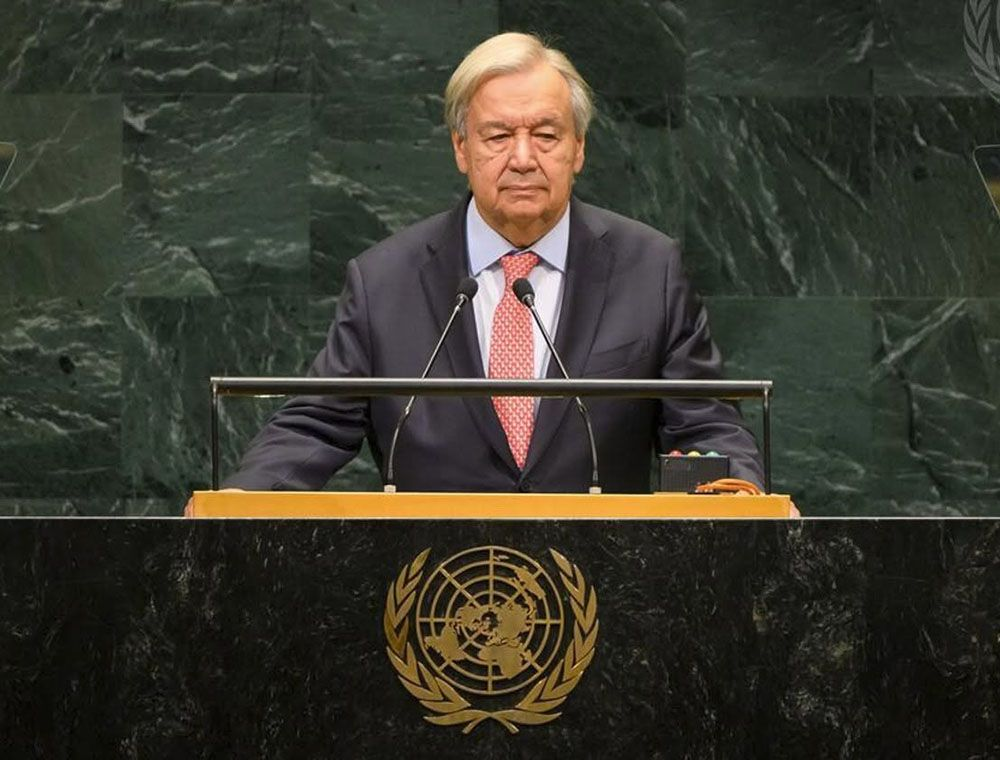
The annual United Nations General Assembly, traditionally held every September, is taking place at UN Headquarters in New York from September 8 through September 29. The period from September 18 to 28 includes the high-level meetings attended by heads of state and government. In recent days, the program has featured speeches by UN Secretary-General António Guterres, the President of the United States, and leaders from around the world.
In his address, UN Secretary-General António Guterres warned that the crisis in Myanmar is in danger of slipping from the world’s attention. Despite escalating violence, mass displacement, and transnational crime spilling across Myanmar’s borders, he noted that international attention to the country has continued to diminish.
At a time when the world is preoccupied with the Middle East conflict involving Iran, the United States and Israel, as well as the Russia-Ukraine war in Europe, Myanmar no longer appears directly connected to the strategic interests of the major powers. Although Myanmar remains geopolitically important to China, it does not carry the same strategic weight or direct national interests for many other countries. This helps explain why international attention to Myanmar has declined so sharply.
The United Nations was established after the Second World War with the aim of preventing another global war and providing mechanisms for resolving disputes between nations. For decades, the organization exercised considerable influence and played an important role in addressing international conflicts. During crises such as the Cuban Missile Crisis, UN diplomacy contributed to efforts to prevent confrontation between the major powers from escalating into war.
Likewise, the UN has intervened in civil wars and conflicts between states, deploying peacekeeping forces and helping to reduce violence. There have also been numerous historical instances in which governments accepted UN-mediated settlements or decisions, contributing to the easing of conflicts.
In recent decades, however, the situation has changed. Some major powers have increasingly criticized the United Nations when it does not serve their interests, while the five permanent members of the Security Council have repeatedly used their veto power to block resolutions supported by a broader majority.
As a result, the United Nations has increasingly struggled to exercise the political authority it once possessed. Its role has become more heavily associated with administering contributions from member states and providing humanitarian assistance, development programs, and technical expertise.
In the Russia-Ukraine war, for example, the UN has not been able to assume a decisive mediating role. Likewise, in the current conflict involving Iran, the United States and Israel, the organization has had little opportunity to position itself as an effective mediator.
The same limitations have been evident in Myanmar.
Since the 2021 military coup, Myanmar has descended into civil war amid allegations of war crimes and widespread human rights violations. Yet the United Nations has lacked the political leverage necessary to intervene decisively or bring about a settlement.
Myanmar is not a major global power, but even its military authorities have been willing to disregard UN resolutions and openly reject international criticism. Myanmar military leader Min Aung Hlaing has shown little regard for UN decisions or even for UN-appointed special envoys on Myanmar. If the leadership of a country such as Myanmar can disregard the organization in this way, it is not difficult to imagine how the world’s major powers may choose to behave toward it.
The UN General Assembly taking place this week also demonstrates another feature of contemporary international politics. Speeches by national leaders frequently serve as platforms for criticizing rival states and defending their own national interests.
The U.S. president, for example, has used the international stage to condemn Iran and other adversaries. Iran and other countries, in turn, have used the same forum to denounce what they regard as domination or coercion by powerful states such as the United States.
In this sense, both major powers and the states challenging them increasingly appear to approach the General Assembly as a stage from which to confront geopolitical rivals and opposing blocs.
The General Assembly therefore appears increasingly limited in its ability to resolve conflicts between states or to push hostile governments toward dialogue and negotiated settlements.
These developments provide an indication of the United Nations’ present level of political influence and authority.
If the United Nations is unable to prevent or resolve major disputes and wars among states, the prospects for decisive UN intervention in Myanmar are correspondingly limited.
For the people of Myanmar, it is therefore important to understand the constraints under which the United Nations currently operates. Under present circumstances, its most tangible contribution to Myanmar may lie not in resolving the country’s political and military crisis, but in areas such as humanitarian assistance and support for people affected by the conflict.