
Myanmar Spring Chronicle – Scenes from September 1
(MoeMaKa), September 2, 2026
The Market of Brokers and Profiteers Created by the Conscription Law
September 1 — The Market of Brokers and Profiteers Created by the Conscription Law
A recent case in Insein Township has drawn attention to an underground market that has emerged around military conscription. According to reports, four young men from Bogale Township were found being detained at the home of an auxiliary fire-service officer, allegedly with the intention of selling them to the military for recruitment. The case came to light after their families filed missing-person reports and authorities traced their last communications and phone locations.
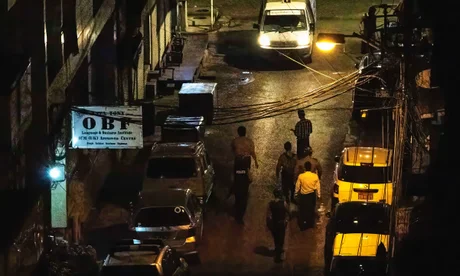
The incident is particularly striking because military recruitment is officially supposed to be conducted through lists compiled by ward and village authorities, with eligible residents selected according to a rotation or other prescribed system. In reality, however, reports have increasingly described young men being seized at night from streets or taken from checkpoints while traveling between towns and then sent to military recruitment centers.
In this case, an auxiliary fire-service officer was allegedly involved in luring or forcibly taking young men, detaining them at his home and then attempting to transfer them to military recruiters in exchange for money. The families of the missing youths apparently helped uncover the location by tracing where they had last been in contact and where their phones had stopped transmitting.
It appears that the junta-controlled police may not initially have known about the arrangement. As a result, while investigating the missing-person complaints, they inadvertently exposed what appears to have been a lower-level operation connected to forced military recruitment.
Such incidents have become increasingly familiar in recent years. In suburban neighborhoods—and sometimes even in central urban areas—young men have reportedly been seized at night by military personnel, Pyu Saw Htee militia members or affiliated groups. Families may then be asked to pay tens of millions of kyats to secure their release or provide a replacement. Those unable to pay may be sent into military service.
From Conscription to a Profitable Business
When the conscription system was initially implemented, ward and village administrators, hundred-household leaders and ten-household leaders often used lotteries or rotation systems to select recruits. After roughly two years, however, the system in many areas appears to have evolved into something different.
Young people are sometimes suddenly detained, and those without influential connections or enough money are sent to recruitment centers. Meanwhile, people involved in the process can profit financially.
For young people between approximately 18 and 35 living in cities and villages firmly controlled by the military, the situation has created persistent insecurity. Those who cannot afford to leave the country for work may live with the fear that they could be detained while traveling, whether during the day or at night.
About two and a half years after the conscription law was activated, forced recruitment and demands for large payments to obtain exemptions or replacements appear to have developed into an informal system in many military-controlled towns.
Reports have also revealed cases of people effectively being transferred or “sold” between ward administrators, ten-household leaders and Pyu Saw Htee militia members.
One recent incident in North Okkalapa illustrates how the system can operate. After a married couple had an argument, the husband left home. His cousin-in-law reportedly took him to a ward administration office. The administrator then allegedly registered him as a resident of Yaw Min Gyi Street in Dagon Township and sent him to military recruitment as part of Dagon Township’s conscription quota.
News reports suggest that this is not an isolated case. Even ordinary neighborhood disputes or personal conflicts may be exploited by local administrators as opportunities to hand people over for military recruitment.
Paying to Buy Back Recruits
These cases have created opportunities for individuals and groups to profit from people who have been detained for conscription.
Families with sufficient resources may have to pay tens of millions of kyats to recover relatives. The amount depends partly on how far the person has progressed through the recruitment system.
The amount demanded while someone remains in the custody of ward administrators or lower-level recruitment networks can differ substantially from the amount required after the person has already reached a military recruitment center. Once a recruit has entered the military system, families may have to pay significantly more to have that person removed or replaced.
Although these forced-recruitment networks are unofficial, the military authorities appear largely to tolerate or ignore them. The total amount of money circulating through this system could potentially reach billions of kyats.
There is also another layer of payments associated with conscription.
In central neighborhoods of Yangon, households may not necessarily be charged a monthly “conscription fee.” However, when residents need recommendation letters or other documents from ward administration offices, they may be charged what is described as a contribution to a military recruitment fund. Such payments can range from at least 5,000 kyats to tens of thousands of kyats.
In suburban Yangon neighborhoods, residents may instead be asked to contribute money toward providing people for each round of conscription.
In smaller towns and villages across Yangon, Bago and Ayeyarwady regions, rates vary from place to place, but residents reportedly pay approximately 20,000 to 30,000 kyats per month in some areas.
There appears to be little or no transparent auditing of money collected under the banner of military conscription. Various elements of the administrative system—including local authorities, police and military personnel—are believed to share in the proceeds.
Ordinary Families Bear the Cost
For civilians, this has created an environment in which an administrative structure technically exists, but laws and procedures are not consistently followed.
Families already struggling economically may suddenly have to find enormous sums of money if a son, daughter or relative is taken for military service. Some are forced to sell belongings, pawn property or exhaust whatever savings they have in an attempt to secure the person’s release.
These conditions are occurring mainly in military-controlled towns and villages away from the active front lines.
The situation is different in areas controlled or partially controlled by armed resistance organizations, including parts of Sagaing, Magway and Mandalay regions and territories controlled by ethnic armed organizations. Because the junta’s administrative authority does not fully operate there, residents are generally not subjected to the same form of sudden arrest under the junta’s conscription law.
However, they face a different set of dangers. Military columns may enter and raid villages, creating risks of arrest or killing and forcing residents to flee. Homes, cattle and agricultural produce—including rice, beans and sesame—may be seized or destroyed. Residents also have to live under the continuing threat of airstrikes.
Recruitment Under Ethnic Armed Organizations
Some territories controlled by ethnic armed organizations also have their own military recruitment requirements, although these differ from the junta’s system.
This is particularly the case in parts of Kachin, Shan and Rakhine states, where ethnic armed organizations have issued orders requiring residents to serve in their forces.
In some communities, families with young or middle-aged members of military-service age are expected to provide at least one person to join an armed organization. Families without eligible members may instead be required to make financial contributions.
The result is that Myanmar’s prolonged conflict has produced different forms of compulsory military recruitment across different areas. In junta-controlled territories, the conscription law has also created an increasingly lucrative informal economy in which forced recruitment, ransom-like payments, replacement fees and unofficial collections can be exploited for financial gain.