
Myanmar Spring Chronicle – Scenes from September 18
(MoeMaKa), September 19, 2026
Is There a Shift in Relations Between the United States and Myanmar’s Military Government?
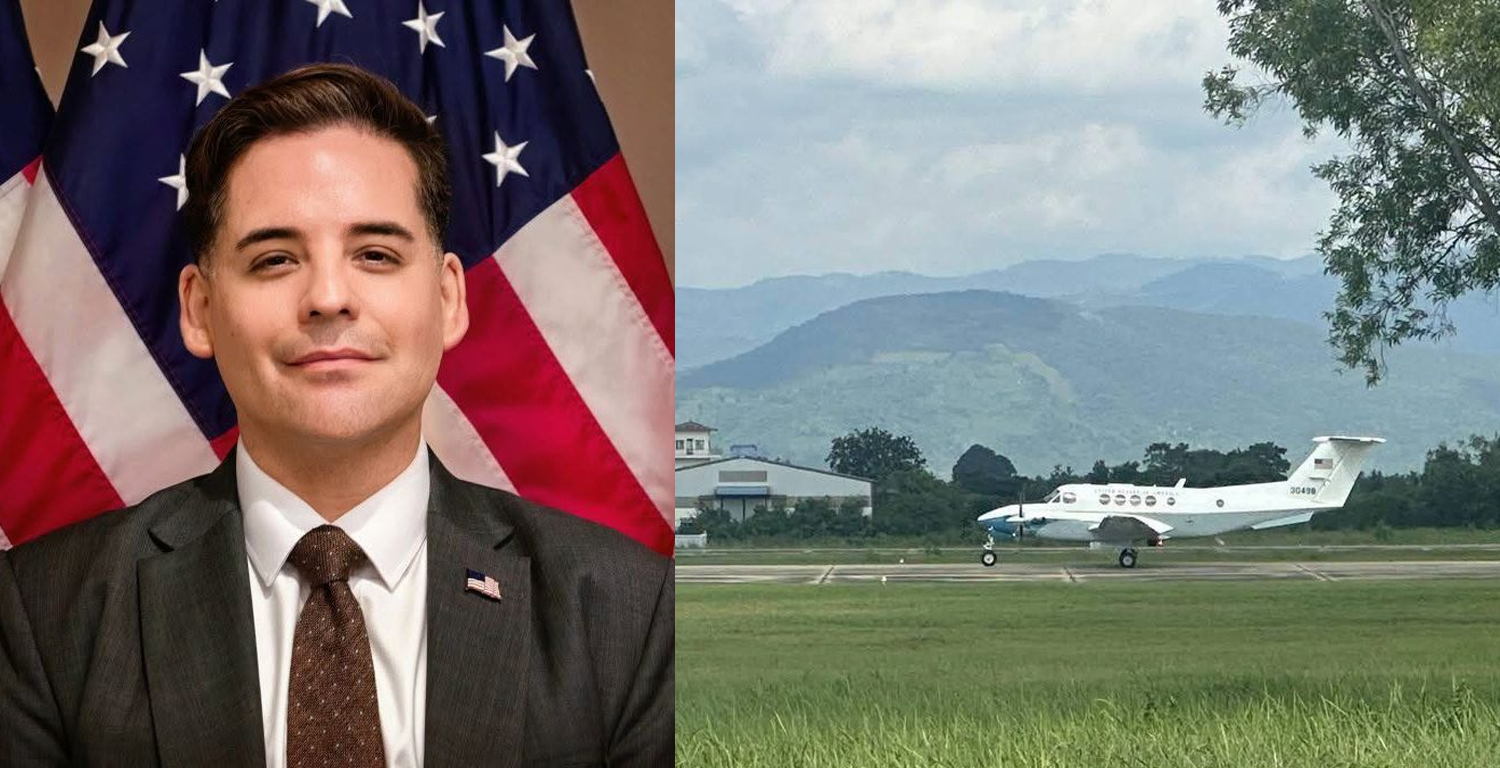
Reports said that an aircraft carrying a U.S. delegation arrived in Naypyidaw on September 15 and departed on the evening of September 16, after a stay of nearly one day.
Since the military coup, the United States has imposed sanctions on those responsible for the takeover as well as prominent business figures who have worked with the military. Against this backdrop, speculation emerged over why U.S. representatives—believed to have traveled via Bangkok—had made the trip to Naypyidaw.
Several hours later, Myanmar’s military government announced that it had deported U.S. citizen Adam Michael Castillo, who had been detained several months earlier. This led to speculation that the U.S. delegation had traveled to Myanmar specifically to secure his release and accompany him out of the country.
Castillo, a U.S. citizen, was arrested at the airport in early June while returning to Myanmar from abroad. He had written and recently published a book about his experiences in Myanmar following the military coup.
Castillo had also previously served for several years as president of the American Chamber of Commerce in Myanmar. Reports said he was arrested by the military authorities following a complaint by the organization alleging that he had violated its rules.
There were also reports that Castillo had helped facilitate contacts related to the military government’s efforts to hire a U.S. lobbying firm. According to those reports, some of his dealings with a Washington-based lobbying company while serving as president of the American Chamber of Commerce did not comply with the organization’s rules, resulting in the complaint that eventually led to his arrest by Myanmar’s military authorities.
More than three months after his arrest, Castillo has now been deported.
Neither the military government nor the U.S. side has disclosed who was included in the delegation that traveled from Bangkok to Naypyidaw, so its composition remains unknown.
A Precedent from 2021
There is a precedent for such a visit.
In May 2021, shortly after the coup, American journalist Danny Fenster was arrested while attempting to leave Myanmar through Yangon International Airport. About six months later, a delegation led by former U.S. diplomat and former governor Bill Richardson traveled to Naypyidaw and brought Fenster home following his release.
In the 2026 case involving Adam Castillo, it appears possible that a current U.S. diplomat or a delegation authorized by the U.S. government similarly traveled to Myanmar.
The delegation apparently came from Washington via Bangkok, stayed overnight in Naypyidaw—the seat of Myanmar’s military government—and then departed.
Bill Richardson, who negotiated Fenster’s release in 2021, has since died. The Fenster episode occurred during the administration of President Joe Biden and in the early period following Myanmar’s military coup.
There was no public indication at the time that Washington had made significant concessions in exchange for Fenster’s release. Nor did the episode lead to any noticeable improvement in relations between the United States and Myanmar’s military authorities.
A Very Different U.S. Political Environment
Adam Castillo’s release, however, comes at a time when the United States appears considerably less focused on Myanmar’s democracy struggle than it was in 2021.
Under President Trump and his “America First” policy, Washington has placed less emphasis on promoting democracy in countries around the world.
For his part, Myanmar military leader Min Aung Hlaing has made it increasingly apparent that, while maintaining close relations with Russia and China, he would also like better relations with the United States.
This desire for improved ties with Washington does not necessarily appear to be simply an attempt to balance China and Russia. Rather, it seems to reflect a broader desire to establish a more favorable relationship with the United States itself.
Myanmar’s relations with Washington improved rapidly after the Thein Sein government took office in 2011. Min Aung Hlaing appears to desire something resembling that improvement.
But circumstances today are vastly different from those of the post-2011 period. In practical terms, there appears to be little prospect for a substantial improvement in relations between Washington and a Min Aung Hlaing government that emerged following an election widely characterized by its critics as a sham.
Washington Says It Talks to “All Groups”
A day after the U.S. delegation visited Naypyidaw, the U.S. State Department reportedly told the BBC that it was engaging with “all groups” in Myanmar, adding that such engagement serves U.S. interests.
Even so, there are few indications that Washington is moving toward normal relations with Myanmar’s military leadership.
At the same time, however, the United States has made few public comments regarding the election organized under Min Aung Hlaing or the political changes that followed the formation of a government in April this year.
One of the more notable recent U.S. statements concerning Myanmar came from the U.S. Embassy in Yangon following a meeting between Aung San Suu Kyi and representatives of the International Committee of the Red Cross (ICRC). The embassy called for Aung San Suu Kyi’s unconditional release.
Myanmar Is No Longer a Major U.S. Priority
The broader international environment has also changed.
The United States is no longer operating in a world where it stands virtually alone as the dominant global power. China, Russia and India have increasingly emerged as competing major powers.
At the same time, some of Washington’s established alliances and partnerships have come under strain. Relations with traditional partners such as Canada, Western European countries, the European Union and NATO allies have faced tensions, including disputes over trade.
Against this broader geopolitical backdrop, Myanmar has gradually moved further down Washington’s list of priorities.
The United States currently appears neither able nor particularly inclined to devote significant attention to an issue such as Myanmar while confronting much larger strategic challenges elsewhere.
A Shift in Relations—or Simply Maintaining the Status Quo?
Taking these circumstances together, the U.S. delegation’s visit to Naypyidaw and Adam Castillo’s subsequent release should not necessarily be interpreted as evidence of a fundamental change in relations between Washington and Myanmar’s military government.
There are still few signs that the United States is moving toward normal diplomatic relations with Myanmar’s military leadership.
Rather than representing a major policy shift, the recent developments may be better understood as Washington maintaining a working channel of communication while largely preserving its existing posture toward Myanmar.
In other words, for now, this appears less like a transformation in U.S.–Myanmar military government relations and more like an effort by Washington to maintain the status quo while engaging when specific U.S. interests require it.