
Myanmar Spring Chronicle – Scenes from August 16
(MoeMaKa), August 17, 2026
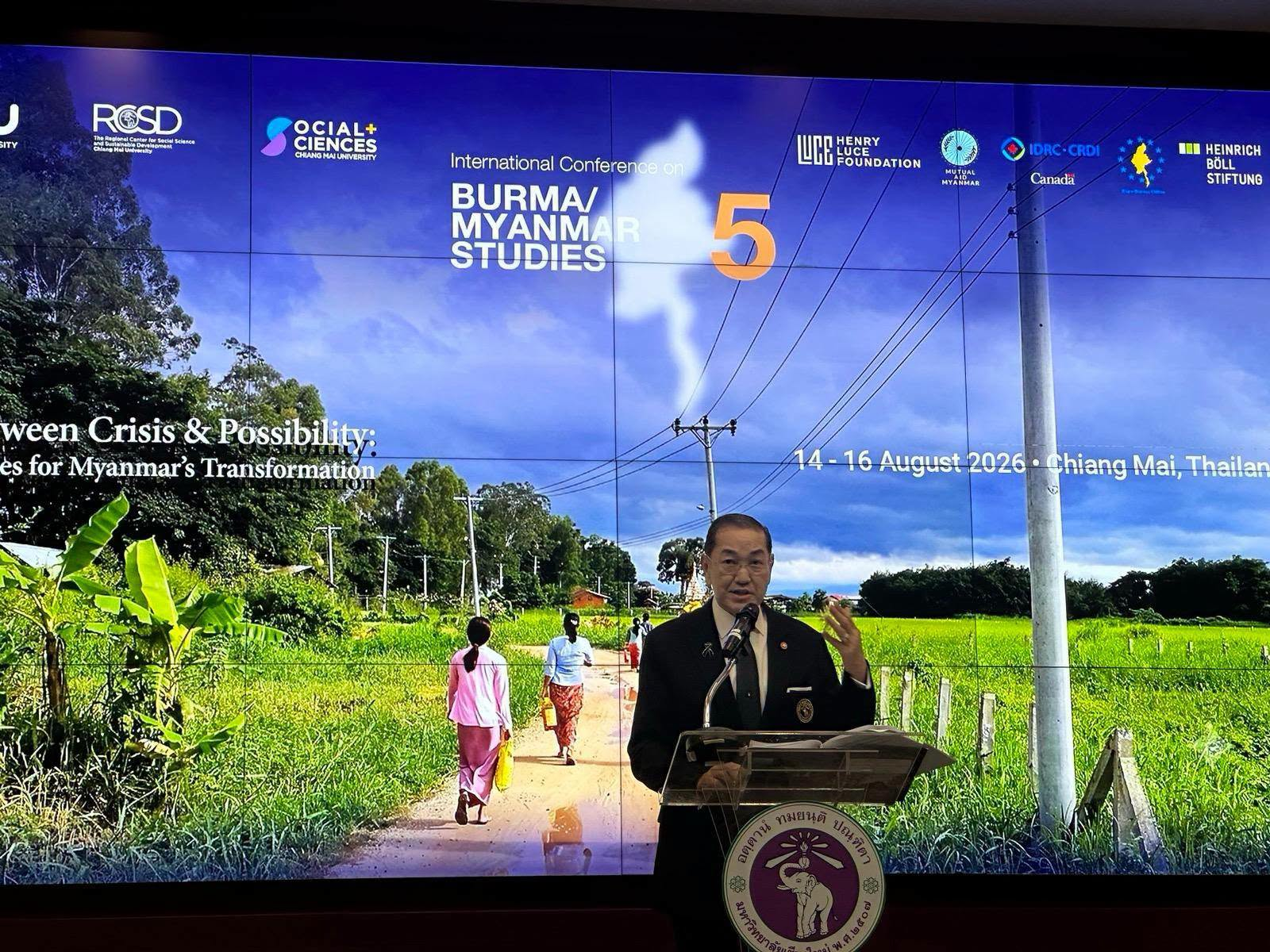
The Fifth International Conference on Myanmar Studies in Chiang Mai and Myanmar’s Civil War
The International Conference on Myanmar Studies was held over three days, from August 14 to 16, in Chiang Mai, a city located about four to five hours by car from the Thai-Myanmar border.
The conference was chaired by a professor from Chiang Mai University. The theme of this fifth conference was “Voices of Myanmar’s Transformation Between Crisis and Possibility.” International scholars interested in Myanmar, Myanmar academics, and Myanmar activists participated in the discussions. The conference was reportedly organized with support from Chiang Mai University and several international aid organizations.
It has now been five years since Myanmar’s political crisis began with the 2021 military coup and, within months, descended into civil war. It would therefore not be inaccurate to describe this conference as a gathering of international Myanmar scholars and experts to discuss the country’s political crisis. Representatives of Myanmar’s armed opposition groups and political organizations did not appear to be present, although some human rights activists and media leaders attended.
Because Chiang Mai University hosted and provided the venue for the conference, questions may arise about the Thai government’s position toward such an event. Another question might be why the conference was held at Chiang Mai University rather than in Bangkok.
Compared with universities in Bangkok, Chiang Mai University has closer relationships with Myanmar activists, researchers, and human rights advocates in Thailand who oppose Myanmar’s military government and military dictatorship. Chiang Mai also has one of the largest Myanmar communities in Thailand outside Mae Sot. These factors may explain why the conference was held in Chiang Mai.
In northern Thailand, Chiang Mai is one of the country’s major cities after Bangkok. Historically, during the era of kingdoms and monarchies, Chiang Mai had a long and complicated relationship with Myanmar, including wars and periods of conquest and occupation. Yet there is little sense of historical hostility toward Myanmar people today. Moreover, whenever political crises have erupted in Myanmar, Chiang Mai has become a city where Myanmar people who disagree with their government have come to live, often for years at a time.
The internal conflict that followed Myanmar’s 2021 military coup has been more intense than previous conflicts. The number of Myanmar people living abroad because of political differences with those in power can also be said to be significantly greater this time than in the period following the 1988 military takeover.
Although the Thai military maintains good relations with Myanmar’s coup-installed military, the Thai government has rarely arrested Myanmar political dissidents and handed them over to the Myanmar military authorities. In general, those deported to Myanmar tend to be people who crossed the border illegally to work in Thailand or those arrested for criminal offenses committed in Thailand.
It was against this backdrop that the conference on Myanmar affairs was held at Chiang Mai University.
Since the conference brought together international scholars, Myanmar-born academics and activists, as well as scholars from the host country, Thailand, another question arises: Are the principal actors in Myanmar’s current political landscape actually listening to the conference’s findings, perspectives, and recommendations?
Who are those principal actors? They include the National Unity Government (NUG), the military that seized power and Min Aung Hlaing’s government, and the ethnic armed organizations.
Are the armed forces and political actors who are the principal players in Myanmar’s political arena paying attention to the conclusions of discussions like this one on Myanmar? More importantly, are they taking them seriously?
During a civil war such as the present one, do ordinary people have sufficient space to express public opinion? And are the news media—which have a responsibility to listen to public opinion and give it a voice so that the organizations determining Myanmar’s future can hear it—doing enough to solicit and communicate the views of the public? These are questions that deserve attention.
Leaving the coup-installed military aside and examining organizations on the revolutionary side, it is regrettable to observe that many armed organizations also do not appear to take either expert opinion or public opinion seriously enough.
On issues such as environmental protection, military recruitment and human rights, the various taxes and financial burdens imposed on civilians, and gender-based violence, the views of experts and the public often do not appear to receive the serious consideration they deserve.
At the same time, there appears to be a growing belief that whatever an armed organization does in pursuit of military victory is justified and necessary.
The original objective of armed resistance—that it is being waged for the benefit of the people—appears, in some cases, to be gradually shifting toward a different priority: the military success of the armed organization itself.
The point, therefore, is that the discussions among Myanmar scholars and experts at Chiang Mai University should ultimately be assessed according to two important criteria: How much impact do their conclusions have on realities on the ground, and how accurately do their discussions reflect what is actually happening on the ground?
These are the two measures by which such conferences should be evaluated.