
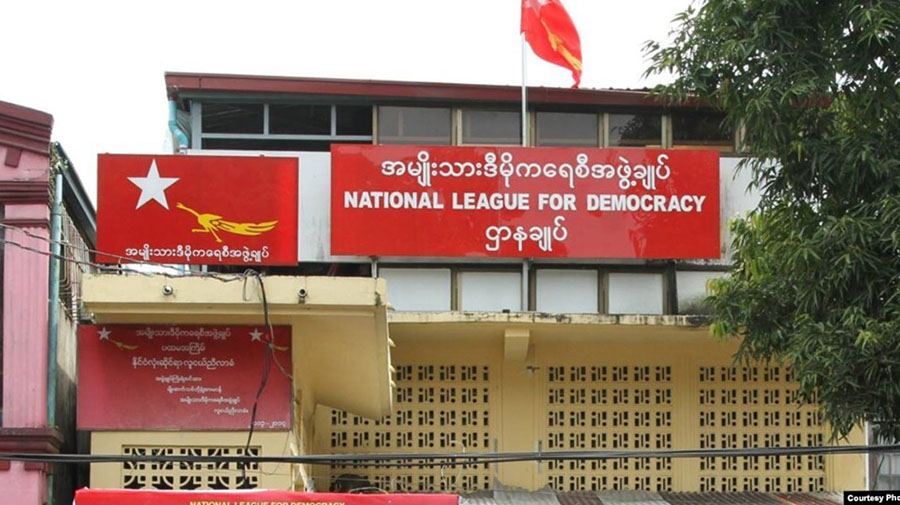
Myanmar Spring Chronicle – Scenes from July 20
(MoeMaKa), July 21, 2026
NLD Central Working Committee Statement Sparks Debate Over Party Policy and Political Position
A statement issued by the National League for Democracy (NLD) Central Working Committee (CWC) on July 20, the day after Martyrs’ Day, has generated controversy over the party’s current political stance.
In the statement, the NLD welcomed ASEAN’s continued use of the Five-Point Consensus as the framework for addressing Myanmar’s crisis. It emphasized that ending violence against civilians, securing the release of all political prisoners—including Daw Aung San Suu Kyi—ensuring unrestricted humanitarian aid reaches those in need, and promoting inclusive political dialogue are essential elements for resolving the country’s crisis.
The statement also argued that the root cause of Myanmar’s current political turmoil was the military’s annulment of the 2020 general election results and seizure of power by force. It said that because Daw Aung San Suu Kyi received democratic legitimacy through the people’s mandate, her participation is indispensable in resolving the political problems that followed the coup.
The CWC further stated that the continued detention of political prisoners remains one of the biggest obstacles to resolving Myanmar’s crisis. It argued that meaningful progress toward peace requires creating an environment where Daw Aung San Suu Kyi, other political leaders, and political organizations can freely participate in dialogue. The statement reaffirmed the NLD’s long-held belief that political problems should be solved only through political means and peaceful negotiations.
However, the statement has drawn criticism because its position appears to differ from those of the Committee Representing Pyidaungsu Hluttaw (CRPH), the National Unity Government (NUG), and other organizations leading the Spring Revolution. While ethnic armed organizations have long maintained armed resistance, many former mid-level NLD members and activists now involved in the revolution from border areas and neighboring countries have questioned the statement, arguing that it conflicts with the political direction adopted since the 2021 military coup.
Critics particularly focused on the statement’s assertion that the NLD has always believed political problems should be resolved solely through political dialogue. Some interpret this as implying that armed resistance groups have chosen the wrong path, indirectly criticizing the NUG and revolutionary forces while also suggesting that negotiations with the military regime remain a possible option. These interpretations have made the statement highly controversial.
Although the intentions behind the overseas-based CWC remain unclear, some NLD members involved in the armed resistance have argued that officials serving in the CRPH and NUG were not formally appointed by the NLD itself. According to this view, they are acting independently based on their own political decisions rather than through official party mandates. Despite pursuing different methods, they continue to share the same ultimate goal, and therefore no fundamental conflict exists. Similar opinions have circulated widely on social media.
Among ordinary NLD supporters, however, the statement has raised broader questions. Many are wondering whether the party has changed its political position, withdrawn support for armed resistance, or is preparing the ground for negotiations with the military regime.
The formation of the overseas-based Central Working Committee itself has also faced criticism since its establishment. Some questioned whether the committee assumed leadership of the party on its own initiative while Daw Aung San Suu Kyi and U Win Myint remained imprisoned.
In April, former President U Win Myint—who served as the NLD’s vice chairman—was released from prison and is now residing in Naypyitaw. His current role within the party remains uncertain. Observers continue to question whether he is still exercising party leadership or whether restrictions under the military authorities prevent him from publicly carrying out those responsibilities. His views on the CWC’s authority and its latest statement are therefore regarded as particularly significant.
In politics, public statements do not always fully reflect strategic intentions, and parties sometimes avoid revealing all of their objectives. Nevertheless, on fundamental issues involving political principles, policy direction, and core values, consistency remains essential if a political party hopes to maintain the confidence and trust of its supporters.