Myanmar Spring Chronicle – Scenes from July 23
(MoeMaKa), July 24, 2026
MNDAA and UWSA Leaders Expected to Visit Naypyidaw as Junta’s 100-Day Peace Initiative Nears Deadline
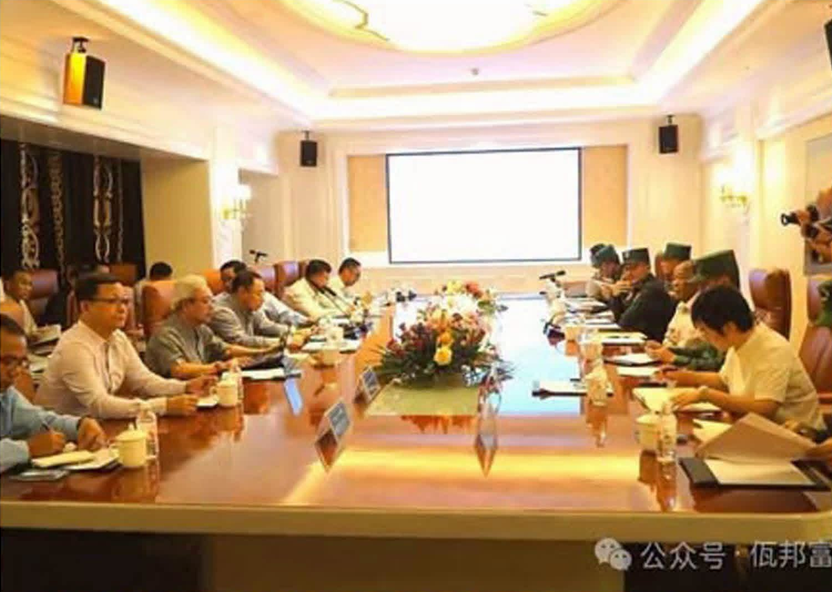
Reports have emerged that leaders of the Myanmar National Democratic Alliance Army (MNDAA or Kokang Army) and the United Wa State Army (UWSA) are expected to travel to Naypyidaw soon to meet with the junta’s National Solidarity and Peace Negotiation Committee (NSPNC).
The MNDAA was one of the three ethnic armed organizations that launched the major Operation 1027 offensive in October 2023, capturing numerous military bases and towns from the military regime led by Min Aung Hlaing. The UWSA, while not directly participating in the offensive, has widely been believed to have provided logistical, financial, and military support behind the scenes.
The reports surfaced only days after senior representatives of the Ta’ang National Liberation Army (TNLA) visited Naypyidaw, held talks with the NSPNC, and signed additional agreements. If confirmed, the visits by MNDAA and UWSA leaders would mark another significant step involving powerful armed groups from northern Shan State.
For both the TNLA and MNDAA, such visits would be their first known trips to Naypyidaw since the military seized power in 2021. Before the coup, these organizations occasionally attended peace conferences in the capital, but they have avoided official visits since the takeover.
Following a China-brokered ceasefire reached in Kunming last year, military representatives and ethnic armed groups have maintained routine meetings in Lashio, mainly to manage frontline issues and local troop deployments. However, meetings in Naypyidaw involve senior leadership and the NSPNC, making them higher-level discussions, even if they cannot yet be considered formal political negotiations.
In April, Min Aung Hlaing stepped down from his military role to assume the presidency and announced a 100-day peace initiative, inviting ethnic armed organizations to participate in peace talks. That 100-day period is set to expire on July 31. Whether the deadline will lead to new ceasefire agreements or meaningful political progress remains unclear, but many observers view the initiative primarily as an effort by the newly formed government to demonstrate tangible results during its first 100 days.
China is also widely believed to have encouraged and pressured ethnic armed groups in northern Shan State—particularly those currently observing ceasefires—to participate in the process.
Since the 2021 coup, China has become the only major foreign government actively involved in Myanmar’s ceasefire and peace negotiations. Before the coup, Western countries and regional partners such as Japan also supported the peace process. Today, however, China is the dominant external actor, largely because of its extensive political, economic, and strategic influence over ethnic armed groups operating along the China-Myanmar border.
Many analysts therefore describe the current peace process as being heavily designed or sponsored by China.
For Beijing, Myanmar holds increasing geopolitical importance. Besides sharing a long border, Myanmar is a crucial corridor for China’s energy security, including the oil and natural gas pipelines linking Kyaukphyu to Kunming. Recent regional developments—particularly the conflict involving Iran, Israel, and the United States, and concerns over potential disruptions to maritime routes such as the Strait of Hormuz and the Strait of Malacca—have further elevated the strategic value of Myanmar as an alternative energy and transportation corridor. Railway connectivity through Myanmar has likewise become more important in China’s long-term planning.
As a result, China has strong incentives to promote stability along its border and has been using its considerable leverage to encourage ethnic armed organizations in northern Shan State and Kachin State to participate in ceasefire and peace negotiations.
Beyond China’s border regions, the prospects for broader peace in Myanmar will also depend on the military balance between the junta and the National Unity Government (NUG), its People’s Defence Force (PDF), ethnic armed organizations operating along the Thai and Indian borders, as well as the policies and strategic interests of neighboring countries. Together, these factors are likely to shape whether wider ceasefire agreements or meaningful peace negotiations become possible.