
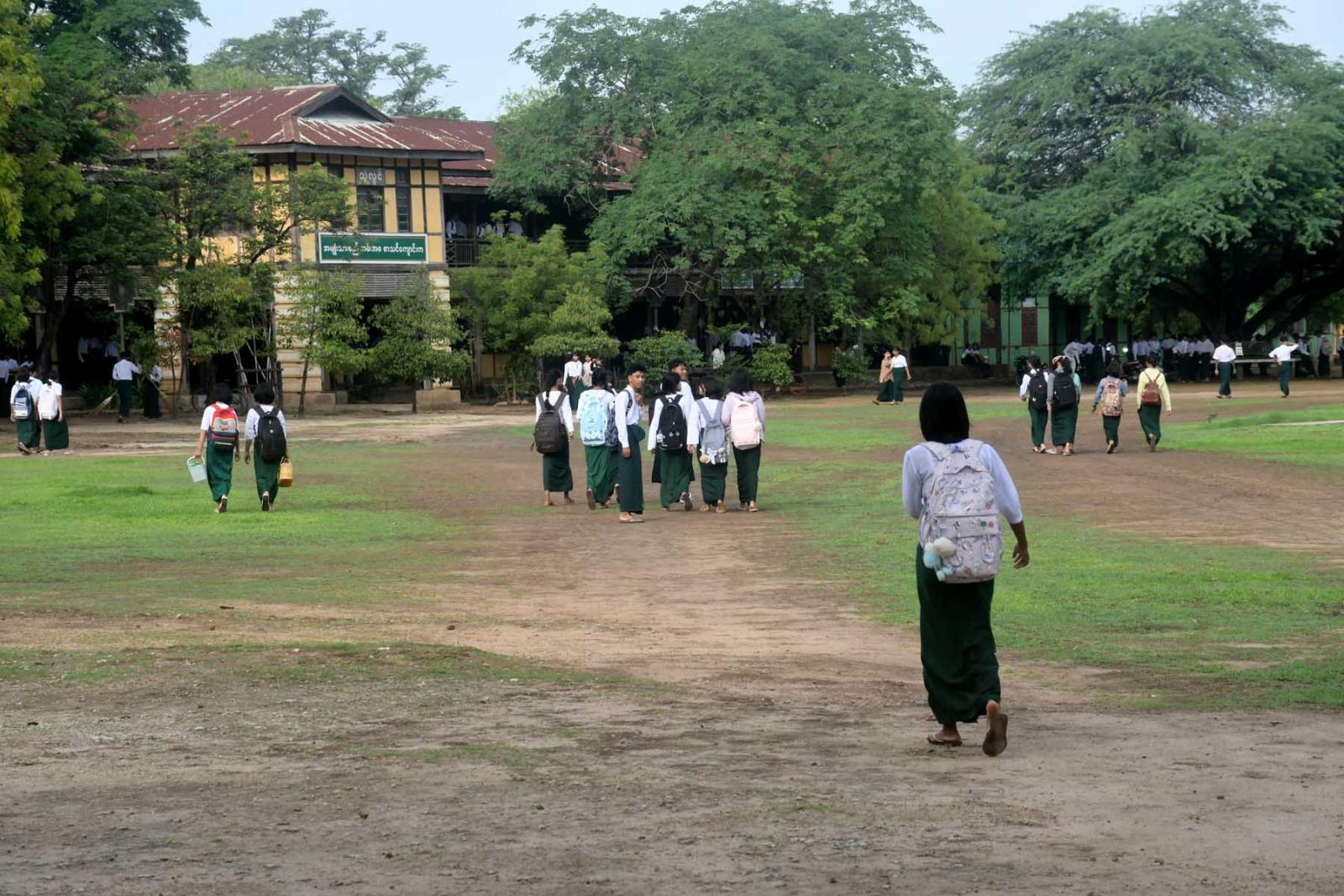
Myanmar Spring Chronicle – Scenes from June 1
(MoeMaKa), June 2, 2026
Education, Extremist Thinking, and Sacrificing Education for Power
June 1 marks the beginning of a new academic year for basic education schools in Myanmar, so it is natural to see many reports and discussions related to education. However, alongside concerns about children and young people’s access to learning under schools controlled by the government led by Min Aung Hlaing—five years after the military coup and subsequent election—there have also emerged some extreme viewpoints regarding education.
In recent days, statements have appeared that effectively politicize education, warning people not to attend schools in military-controlled areas, discouraging those who study there from returning to resistance-controlled territories, and even threatening punitive action against those who do. Such directives, issued by a township public administration body, have raised concerns that they further burden a population already suffering from war and hardship, while also revealing misunderstandings among some revolutionary organizations regarding educational policy and children’s fundamental right to learn.
A widely viewed opinion article titled “Demolish the Classrooms” was recently published in Mizzima Media under the byline Tu Mee Thein Maung. Not long ago, the military authorities announced that students who had been outside the formal education system could re-enter school by taking placement examinations and being assigned to the appropriate grade level. This announcement has led some parents and students—who avoided military-run schools after the 2021 coup but lacked access to alternative educational opportunities—to reconsider returning to formal schooling.
Against this backdrop, the Pale Township People’s Administration Team (Pa-Ah-Pha) issued a statement dated May 26. The announcement instructed residents who had enrolled their children in schools under the military administration to withdraw them and re-enroll them in interim schools established under the National Unity Government (NUG). It called on families to do so by June 30. It further urged all individuals participating in the revolution to ensure that their own family members complied without exception.
The statement also declared that students from Pale Township studying in military-run schools, along with their families, should not return to the township until the revolution is complete. Those who failed to comply would face investigation and action by local administrative bodies.
This announcement drew criticism even from supporters of the Spring Revolution. As of now, neither the Pale Township administration nor the Sagaing Federal Unit Government appears to have publicly clarified or addressed the controversy.
Many observers view the statement as an attempt to politicize parents’ efforts to secure education for their children during wartime and as a threat of punishment against those making difficult educational choices. Critics argue that it effectively restricts children’s fundamental right to education and freedom of learning.
Under the realities of civil war, many people in rural areas and villages are repeatedly displaced. Schools, monasteries, and other gathering places are frequently targeted in airstrikes. For many families, enrolling children in schools located in military-controlled areas where active fighting is absent may be one of the few practical options available. Opportunities to attend private schools in major cities or schools abroad, such as in neighboring Thailand, are beyond the reach of most families—perhaps available to only a tiny minority.
Given these realities, it is important for the Pale Township People’s Administration Team and the Sagaing Interim Federal Unit Government to understand the circumstances faced by ordinary people. While it is unclear how many students, if any, will actually withdraw from government-controlled schools and transfer to interim schools as a result of the directive, the damage to public trust in revolutionary institutions could be significant. Many are likely to view the announcement as short-sighted and an abuse of authority.
Only days after this controversial statement appeared, Mizzima published the opinion piece “Demolish the Classrooms.” The article provoked further public anger and criticism, with many questioning the judgment of media organizations that promote what they regard as extreme and impractical ideas.
In essence, the author argues that debates over whether students should attend military-run schools or revolutionary schools remain trapped within outdated assumptions about classrooms, formal education, and academic credentials. According to the article, these concepts are relics of an obsolete educational system. The author therefore calls for people to “demolish the classrooms” and “build learning instead.”
However, critics point out that the article fails to explain concretely how such a vision could be implemented under current conditions. Rather than offering practical alternatives, it presents a broad ideological slogan without a clear roadmap.
At first glance, the argument may appear revolutionary. Yet slogans such as “Demolish the Classrooms” resemble the rhetoric associated with China’s Cultural Revolution in 1966. Critics argue that such calls reflect a form of radicalism that seeks to overturn existing institutions without adequately considering consequences or practical realities.
The reaction from ordinary readers has been overwhelmingly negative. The comment section beneath the article contains numerous criticisms from people who found the argument unacceptable, misguided, or even offensive.
As a media outlet with a large audience reaching hundreds of thousands or even millions of viewers, Mizzima itself has come under scrutiny. Many readers have questioned the editorial perspective behind publishing such an article and have criticized the platform for amplifying ideas they believe could mislead young people and students.
While freedom of thought and expression are important values, critics argue that articles of this nature risk creating confusion and leading the public astray rather than contributing constructively to educational discussions. They stress the importance of recognizing the potential social impact of promoting extreme or poorly grounded ideas, especially during a time of conflict and uncertainty.