
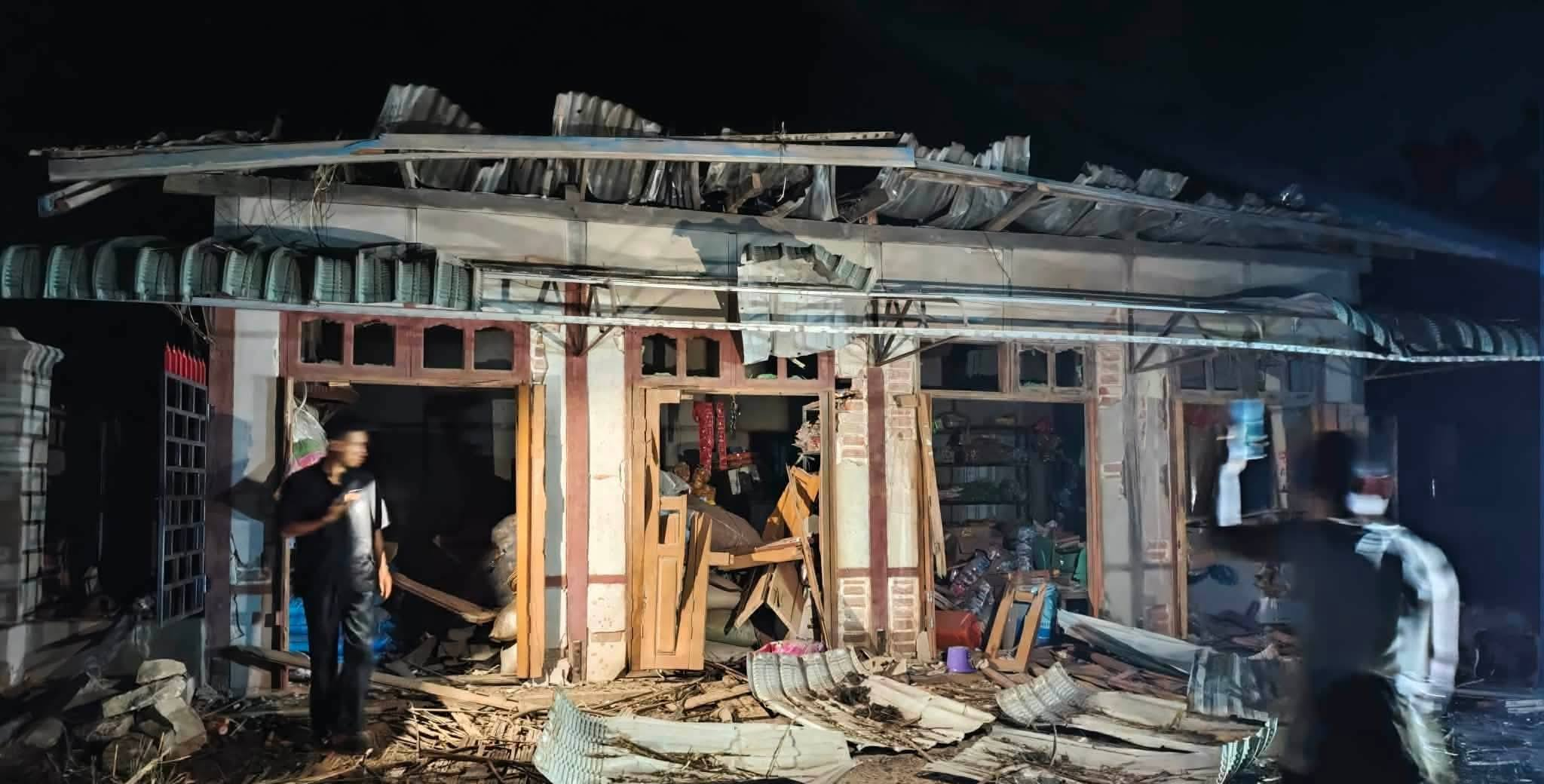
Myanmar Spring Chronicle – Scenes from May 22
(MoeMaKa), May 23, 2026
The Situation of Myanmar People Living Under Military Rule and Civil War
Among neighboring countries, Myanmar is now widely recognized as a country engulfed in civil war, a country with dozens — even hundreds — of armed groups, and a country from which hundreds of thousands to millions of people are leaving in search of employment opportunities abroad.
In Thailand alone, an estimated four to six million Myanmar nationals are living and working, both legally and undocumented. In Malaysia as well, tens of thousands to hundreds of thousands of Myanmar migrants reside through various legal and illegal arrangements.
The presence of millions of Myanmar migrant workers in Thailand is not new and has existed for decades. However, following the 2021 military coup, the numbers increased dramatically. Armed conflict spread across many parts of Myanmar, while agriculture, livestock farming, manufacturing, services, and other economic sectors declined significantly. In addition, the activation of the military conscription law in recent years has driven many young people subject to the law to flee abroad.
Whether one supports the coup, opposes it, or remains politically neutral, everyone is affected by the consequences of civil war. With the exception of a very small minority, the population as a whole is suffering from the impacts of both military dictatorship and armed conflict. Those least affected by the war and economic collapse are likely members of the ruling elite, the upper ranks of armed organizations, and the small number of individuals profiting from the conflict. For the vast majority, however, military rule and war have meant the loss of livelihoods, homes, food security, personal safety, and even life itself.
At present, large portions of the country are controlled by ethnic armed organizations and People’s Defense Forces operating under the National Unity Government. With the exception of a small number of ethnic armed groups, most are engaged in fighting against the military that seized power. The territories under the control of these organizations remain unstable and insecure.
For example, only territories controlled by groups such as the United Wa State Army (UWSA) and the Mongla group remain relatively free from armed conflict and are still able to maintain agriculture, livestock production, and trade under normal conditions. In contrast, territories controlled by organizations such as the KIA, TNLA, CNF, KNU, KNPP, and KNDF continue to face armed clashes, destruction of towns and villages, threats of airstrikes, severe travel restrictions, heavy taxation, and forced recruitment.
Questions are also increasingly being raised about whether the goal of ending military dictatorship through armed revolution — and the broader ambition of resisting all forms of authoritarianism — remains realistically achievable.
As the war intensifies, military priorities increasingly dominate every aspect of life. A mentality appears to be emerging in which military victory comes first, second, and third above all else. In such an environment, livelihoods, human rights, education, and many other social concerns risk being sacrificed entirely.
Now, nearly five years after the civil war sharply escalated again, there is a growing need to reflect on what has happened, examine the realities of the present, and assess possible futures.
Across Myanmar, more and more people are simply struggling to survive. Many face extortion, forced recruitment into military service, or pressure to engage in activities that damage the environment and social fabric. Instead of relying on traditional livelihoods such as farming and livestock raising, increasing numbers of people are turning to extractive industries, narcotics-related activities, online scam operations, and other harmful sectors simply to stay alive.
Among the many consequences of civil war, one of the most serious long-term impacts is the loss of educational opportunities for children and youth displaced from their homes. This will profoundly affect Myanmar’s future.
At the beginning of the coup, many believed the revolution would succeed within one or two years. Some parents temporarily paused their children’s education with that expectation. But as the conflict drags on, many families now face growing uncertainty about their children’s educational future.
While it is not entirely wrong to conclude that these conditions stem from the military coup, reducing everything to that single explanation alone risks becoming an incomplete and irresponsible conclusion.
In a protracted civil war, it has become urgently necessary for leaders and policymakers to prioritize livelihoods that do not further harm society, while also ensuring that education systems continue to protect the future of children and young people.