
Myanmar Spring Chronicle – Scenes from April 20
(MoeMaKa), April 21, 2026
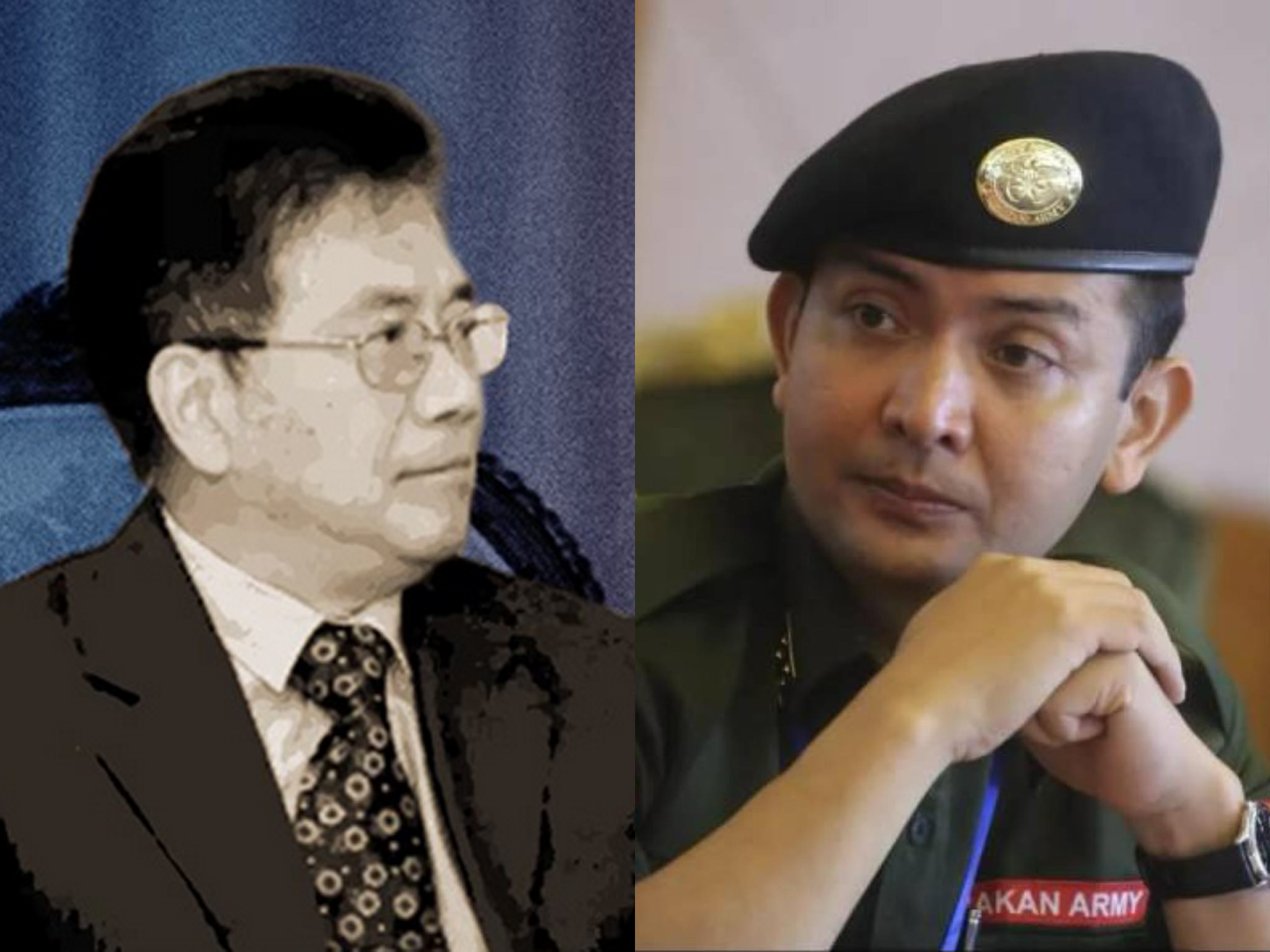
Information blackout on Daw Aung San Suu Kyi; AA and Chinese representatives set for separate meeting
Following the New Year Day amnesty announcement after Thingyan, in which NLD Vice Chairman and former President U Win Myint was released, calls for the release of Daw Aung San Suu Kyi and for information about her situation have intensified.
As early as New Year’s Day, some domestic NLD leaders traveled from Yangon to Naypyitaw in advance so they would be ready in case any significant developments emerged regarding Daw Aung San Suu Kyi and U Win Myint. While no information surfaced regarding Daw Aung San Suu Kyi, former President U Win Myint was released under Section 401 of the Criminal Procedure Code (conditional remission). On the day of his release, some NLD leaders were able to meet him.
There is little doubt that Min Aung Hlaing—who became president five years after the coup—released U Win Myint in an attempt to project the image that conditions in Myanmar are changing.
The release may also be intended to create an impression internationally similar to the post-2010 election period, when political prisoners were freed. However, regarding Daw Aung San Suu Kyi, aside from a minor sentence reduction announced this time, there has been no information released about her health or even her location. This lack of transparency has raised concerns among her supporters in Myanmar and governments abroad. Her son in the UK has also called on the military authorities to provide proof that she is alive and in good health. Meanwhile, the Philippine foreign minister—whose country currently chairs ASEAN—has publicly stated that her release is important.
ASEAN and the international community generally believe that releasing Daw Aung San Suu Kyi could be a key step toward resolving Myanmar’s political crisis and internal conflict.
Amid this situation, a social media campaign calling for proof that Daw Aung San Suu Kyi is alive and well has been spreading.
The fact that U Win Myint—who was serving as president at the time of the coup—has been released, while no information at all has been disclosed about Daw Aung San Suu Kyi, has led supporters to grow increasingly suspicious.
It is likely that junta leader Min Aung Hlaing expects that by releasing U Win Myint, NLD leaders might publicly distance themselves from the NUG and PDF. While meetings between U Win Myint and some NLD leaders have not been blocked, reports indicate that Dr. Myo Nyunt was summoned and questioned for hours to prevent continued commentary or criticism regarding Daw Aung San Suu Kyi. This appears to be an attempt to deter or intimidate further public statements about her release.
U Win Myint himself is unlikely to have the freedom to publicly express positions on the NLD’s stance toward the NUG and PDF, or even to openly share his personal views.
The military regime may also be taking a calculated step—with relatively low risk after forming a government post-election—to weaken the organizational and military strength of the NUG and PDF. By releasing U Win Myint, they may be hoping he will state that he does not support armed resistance, thereby undermining the NUG’s legitimacy and recognition.
In this context, U Win Myint will need to exercise extreme caution to avoid making statements that align with the junta’s narrative or could be used for propaganda purposes.
Another development today is the report that the Arakan Army (AA) and Chinese representatives are expected to hold separate meetings in the coming days. According to reports, Chinese representatives met with three ethnic armed groups—MNDAA, UWSA, and SSPP/SSA—in Lashio just before Thingyan. The meeting is believed to be related to China’s major global initiative, the “Belt and Road” (often referred to as the New Silk Road), particularly involving groups active in northeastern Myanmar.
It can be inferred that discussions included plans for a रेलवे corridor running from northern Shan State along the China-Myanmar border, through central Myanmar, to Kyaukphyu in Rakhine State.
Similarly, China will likely need to engage with the Arakan Army, which is currently engaged in conflict with the military in Kyaukphyu, Rakhine State.
Myanmar is a key component of China’s Belt and Road Initiative, serving as a strategic corridor from Yunnan Province to the sea. Ongoing armed conflicts across border regions, central Myanmar, and western Rakhine State present obstacles that China is seeking to manage using its available leverage.
Myanmar’s geographic importance is further heightened by Kyaukphyu’s role as a seaport and by the Kaladan River, which connects to a transport project linking to India’s northeastern region.
Given these factors, key questions now are how China will negotiate with the AA, and whether it can strike a balance—maintaining relations with the junta while also reaching agreements with the AA. These developments are becoming increasingly significant to watch.