

Myanmar Spring Chronicle – June 27 View(MoeMaKa, June 28, 2025) U Kyaw Moe Tun Calls at UN Assembly for Swift R2P Action and ICC Arrest Warrant Against Min Aung Hlaing Ambassador U Kyaw Moe Tun, representing the National Unity Government…
News Features on Burma & Burmese issues
Myanmar Spring Chronicle – June 27 View(MoeMaKa, June 28, 2025) U Kyaw Moe Tun Calls at UN Assembly for Swift R2P Action and ICC Arrest Warrant Against Min Aung Hlaing Ambassador U Kyaw Moe Tun, representing the National Unity Government…

Myanmar Spring Chronicle – June 26 View (MoeMaKa, June 27, 2025): Sexual Abuse and Exploitation Under a Lawless Environment In recent weeks, multiple incidents of sexual abuse and exploitation have surfaced in Myanmar’s displaced and revolution-affiliated communities. One of the…
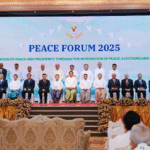
Myanmar Spring Chronicle – June 25 View (MoeMaKa, June 26, 2025): The “Peace Forum 2025” in Naypyidaw Amid Civil War While large parts of Myanmar remain under the control of ethnic armed groups and PDF forces—and while fierce clashes continue…

Myanmar Spring Chronicle – June 24 View (MoeMaKa, June 25, 2025): Junta Forces Advance Toward Naungcho; Civilian Casualties from Airstrike in Kyaukme The town of Naungcho, seized by the Ta’ang National Liberation Army (TNLA) since last year, has now come…

The recent commentary on inter-ethnic conflicts in Shan State highlights a dialogue between the MNDAA and SSPP/SSA, a postponement of territorial disputes, and growing cooperation among local defense forces. However, tensions persist due to territorial disputes and the impact of the 2021 military coup, raising concerns over ethnic representation and governance.

The escalating conflict between the U.S. and Iran amid ongoing Israeli strikes raises fears of a potential global war, impacting nations like Myanmar. The violation of international norms by powerful countries threatens global stability. The erosion of moral authority, unchecked use of nuclear technology, and biased media narratives lead to anxiety over future conflicts and human suffering.

Thailand is nearing another military coup, which could threaten the stability of Burmese migrants and anti-junta activists living there. Past coups have worsened conditions for these communities, with increased police crackdowns and economic instability likely following such a political shift. The future of Burmese migrants in Thailand depends on political developments.

On World Refugee Day, the plight of 122 million displaced people globally highlights the urgent need for solidarity and protection. Myanmar faces a devastating civil war, displacing millions. U.S. policy shifts undermine refugee support, contrasting with the potential of young populations in poorer nations to drive future economies. Refugee empowerment is essential for global survival.

Daw Aung San Suu Kyi’s 80th birthday on June 19, 2025, sparked public reflection on Myanmar’s political landscape. Despite her continued detention, birthday messages from ethnic leaders and foreign governments highlighted her enduring legacy. Social media tributes surged, while various protests occurred. Her future leadership remains uncertain amidst ongoing political struggles.

The establishment of the Ta’ang Land Council (TLC) has been welcomed by the National Unity Consultative Council (NUCC), yet it raises concerns regarding the representation of diverse ethnic groups in Shan State. Critics argue the TLC contradicts the autonomy rights of the Shan majority under a federal framework, highlighting regional complexities and ongoing territorial disputes.

The ongoing Iran-Israel war raises critical questions about Myanmar’s anti-junta activists’ stances on global conflicts. Many express support for Israel despite its history of militaristic ties to Myanmar’s junta. This hypocrisy undermines their claimed values of democracy and human rights, highlighting the complexities of foreign relations and moral accountability in activism.

On June 15, a school principal and her husband were assassinated in Myanmar for not joining the Civil Disobedience Movement. Armed resistance members executed them, believing they collaborated with the junta. This incident raises concerns over increasing violence, the legitimacy of retaliatory actions, and the lack of accountability among anti-junta forces.

Myanmar Spring Chronicle – June 15 View (MoeMaKa, June 16, 2025): The CRPH’s Controversial CDM Law On June 13, the Committee Representing the Pyidaungsu Hluttaw (CRPH) announced the promulgation of a new law titled the “Civil Service Law Relating to…

Amid Myanmar’s ongoing civil war and a major earthquake, regions like southern Shan State face imminent flood risks, exacerbated by climate change and resource extraction. Local communities, already strained from conflict, must prioritize escape from either civil unrest or flooding, while inadequate government disaster responses hinder recovery efforts.

On June 13, Israel launched strikes on Iran, escalating tensions to open war amid ongoing conflicts in Gaza, where over 50,000 civilians have died. Despite U.S. claims of non-involvement, support for Israel continues. The conflict risks diverting global attention from the Myanmar revolution and increasing authoritarianism worldwide.