
Myanmar Spring Chronicle — November 16 Perspective
(MoeMaKa), November 17, 2026
The ICJ’s Upcoming November 19 Ruling and Divided Opinions Among Myanmar Citizens
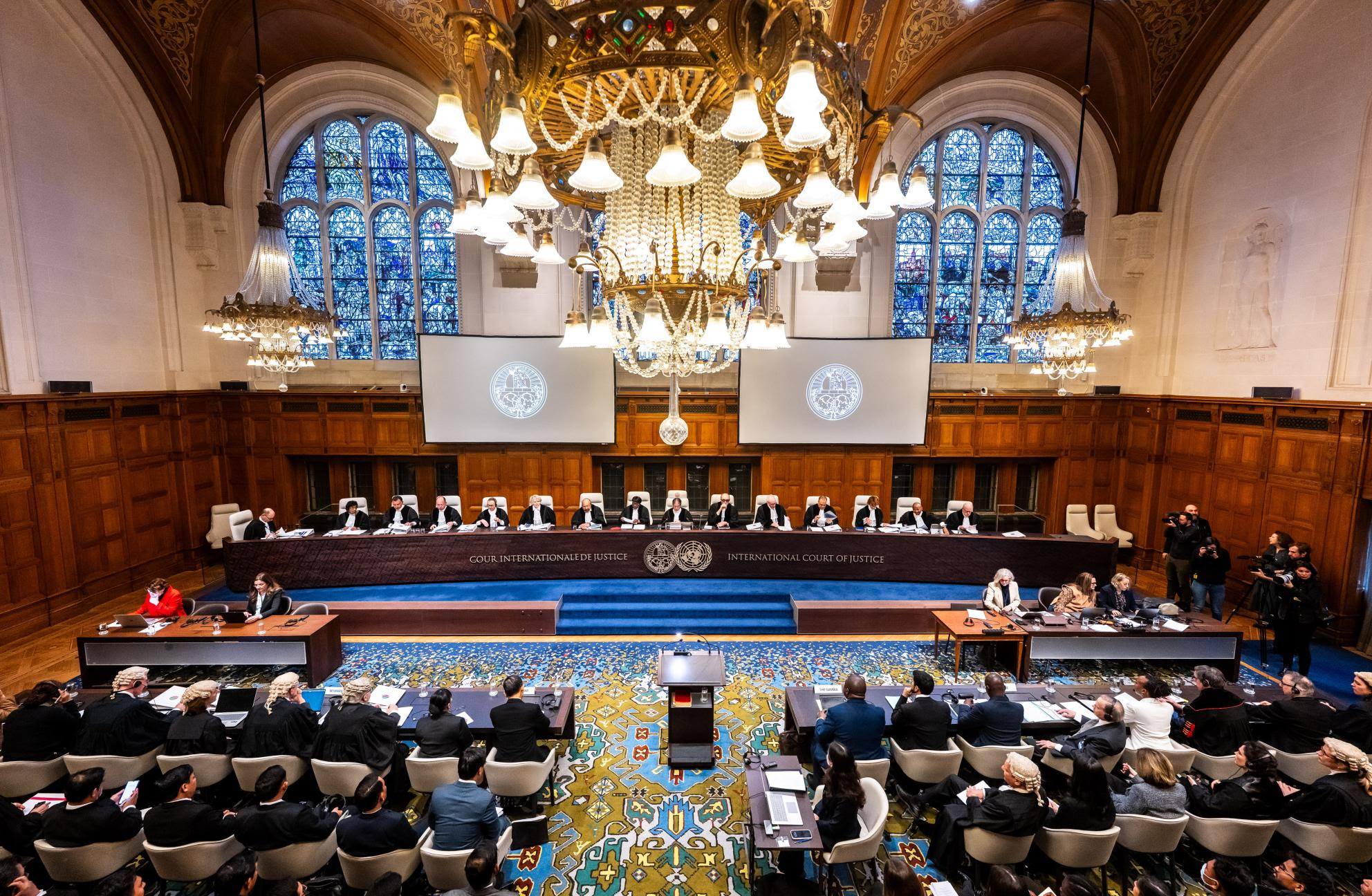
In three days, on Thursday, November 19, the International Court of Justice (ICJ) is expected to deliver its final judgment in the genocide case brought against Myanmar by The Gambia, a country in Africa.
In 2019, The Gambia filed a case against Myanmar at the International Court of Justice, based in The Hague, Netherlands, alleging that Myanmar’s military had deliberately targeted and killed Rohingya people during military operations in northern Rakhine State in August and September 2017.
The ICJ does not hear criminal cases against individuals. Rather, it deals with disputes between states, including cases in which one country brings legal proceedings against another.
In connection with the same events, the International Criminal Court (ICC), also based in The Hague, decided in October 2019 to investigate crimes committed against the Rohingya in Myanmar. Unlike the ICJ, the ICC deals with criminal responsibility at the individual level.
Prior to that decision, the Burmese Rohingya Organisation UK (BROUK), a British-based Rohingya advocacy organization, had filed a case in Argentina under the principle of universal jurisdiction concerning the killings of Rohingya in 2017. The complaint named military generals, including Commander-in-Chief Min Aung Hlaing, as well as political leaders.
Subsequently, the ICC gathered evidence concerning crimes committed against the Rohingya. In November 2024, the ICC Prosecutor requested that the court issue an arrest warrant for military leader Min Aung Hlaing in connection with those crimes. However, as of now, the ICC has not issued such a warrant.
Meanwhile, the ICJ case against Myanmar as a state has proceeded through several stages of hearings and decisions. Earlier this year, The Gambia and Myanmar’s military-led government presented their respective arguments before the court. The final judgment is now expected to be delivered this coming Thursday.
There has been considerable speculation about what the court might decide. According to some observers, there are three broad possibilities: a ruling that Myanmar is responsible for genocide, a finding of partial responsibility, or a ruling that Myanmar is not responsible. These possibilities represent a simplified, theoretical classification of the potential outcomes.
If Myanmar is found responsible, observers anticipate that the judgment could include obligations to take specific measures and potentially provide compensation for the harm suffered. Under this scenario, Myanmar would become the first country to be found by the ICJ to have committed genocide.
If the court finds Myanmar partially responsible, the ruling could specify which violations Myanmar must address and which allegations have not been established. If Myanmar is found not responsible, it is generally assumed that the country would not face additional obligations arising from a finding of responsibility in this case.
Once the anticipated judgment is announced in three days, a wide range of opinions and reactions is likely to emerge within Myanmar’s political circles and among the general public.
The Rohingya issue remains one of the most divisive subjects in Myanmar.
Even among people who share similar political principles and positions, views on the Rohingya issue can be diametrically opposed. Some democracy activists approach the issue from a strongly nationalist perspective, while others who stand on opposite sides of Myanmar’s broader political divide find themselves sharing the same position on the Rohingya question.
During the period before the military coup, particularly in November 2019, when proceedings were underway at the ICJ concerning whether the case against Myanmar should be accepted, some individuals strongly defended the military and insisted that no genocide against the Rohingya had taken place.
However, following the military coup in 2021, some of those same individuals reversed their positions, explaining that their earlier support had been based on an incomplete understanding of what had actually happened.
When it comes to the Rohingya issue, public discussion has often been shaped less by carefully verified and reliable information about events in northern Rakhine State than by longstanding beliefs, religious and ethnic prejudices, deeply rooted assumptions, and hatred.
It is also important to recognize how the atrocities committed against the Rohingya, including alleged war crimes and crimes against humanity, are connected to the longstanding practice of successive rulers and armed forces using hatred and propaganda to divide the population and maintain their grip on power.
These practices of dividing communities and ruling through fear and hostility have had profound and lasting consequences.
It is equally important to understand how political leaders seeking power and militarists seeking to preserve their rule have exploited religious and ethnic extremism, mobilized public support through hatred, and promoted narratives intended to justify the killing of innocent people and civilians.
Recognizing the consequences of such manipulation, and understanding how hatred has been used to legitimize violence, are essential to understanding both the Rohingya tragedy and the broader political realities of Myanmar.