
Myanmar Spring Chronicle — November 22 Perspective
(MoeMaKa), November 23, 2026
The Definition of Genocide and How Myanmar Society Understands It
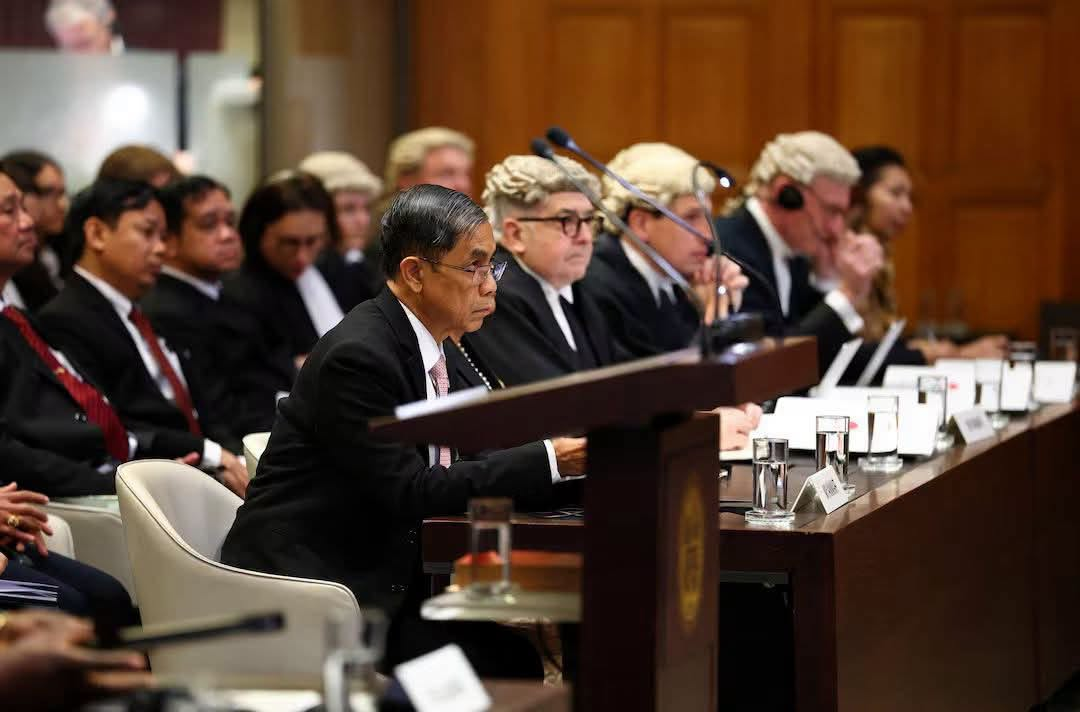
Following seven years of hearings and legal proceedings, the International Court of Justice (ICJ) ruled that Myanmar was responsible for committing genocide against the Rohingya, in a case brought by The Gambia. Since the ruling, a wide range of interpretations, opinions, and reactions has emerged among Myanmar citizens.
Although the ICJ does not have its own enforcement mechanisms to compel compliance with its judgments, the ruling is likely to have significant consequences. There are differing views about its potential implications, including concerns that a judgment against Myanmar as a state could damage the dignity and reputation of the country and its citizens.
The ruling has also created unexpected divisions and complicated political positions among groups that, before the judgment, had been clearly separated into supporters of military dictatorship and advocates of democracy. Conflicting attitudes and seemingly contradictory positions have emerged across these political divides.
The ICJ’s definition of genocide is based on the 1948 United Nations Convention on the Prevention and Punishment of the Crime of Genocide. The convention itself was established in response to the Holocaust, during which Nazi Germany systematically murdered Jews across Europe during World War II. Its purpose was to prevent similar atrocities from occurring in the future.
Under the UN definition applied by the ICJ, genocide is not determined simply by the number of people killed. Rather, it involves acts committed with the specific intent to destroy, in whole or in part, a national, ethnic, racial, or religious group.
This distinction helps explain why killings of Bamar people by other Bamar people, or killings within the same ethnic community, are not automatically classified as genocide.
The definition focuses not on the numerical scale of killings but on whether the perpetrators specifically intended to destroy a protected national, ethnic, racial, or religious group.
Under this interpretation, the Khmer Rouge regime’s mass killings of its own population, or the mass murder of hundreds of thousands of people accused of communist affiliations in Indonesia because of their political beliefs, would not necessarily fall within the legal definition of genocide. Political groups, as such, are not among the groups protected under the Genocide Convention.
In Myanmar’s case, the interpretation is that the combination of discriminatory legal restrictions imposed on the Rohingya, the denial of citizenship rights to people born to families that had lived in Myanmar for generations, discrimination under immigration laws, and the mass killings of 2017 collectively constituted genocide.
The ICJ’s interpretation, therefore, goes beyond the killings committed during the military’s so-called clearance operations against the Rohingya minority. It also encompasses the broader legal and institutional oppression imposed on the community by the Myanmar state.
However, some Myanmar government officials, politicians, and a segment of the civilian population continue to maintain that the Rohingya do not exist as a distinct ethnic group.
They firmly hold the belief that the Rohingya are descendants of people from Chittagong and other communities in Bangladesh, or that they are simply Bangladeshi nationals or Bengalis.
During the British colonial period, colonial administrators facilitated the movement of people across territories under British rule to provide labor for agriculture and other economic activities. Tens and hundreds of thousands of people migrated across colonial boundaries to settle and work in different areas.
These movements contributed to tensions between ethnic communities and religious groups. The colonial administration’s divide-and-rule policies further aggravated these divisions, contributing to ethnic and religious conflicts and communal violence.
Even after independence, successive rulers continued to exploit ethnic and religious differences for political advantage. They benefited from divisions among the population and, in some cases, deliberately encouraged disunity among the people they governed.
These historical developments help explain the continued existence of extremist nationalist movements in Myanmar today.
Some nationalists declare that they are prepared to sacrifice their lives to defend their race, religion, and Buddhist faith. Others, when confronted with a choice between nationalism and democracy, would choose nationalism.
Such nationalist indoctrination has the potential to slow down or divert the ongoing struggle for federal democracy, the Spring Revolution, and efforts to dismantle military dictatorship.
We increasingly encounter people within our own communities, including acquaintances, friends, and colleagues, who reject military rule but, at the same time, refuse to recognize the Rohingya as an ethnic community.
Of course, everyone has the right to hold their own opinions and beliefs freely.
Nevertheless, the point I wish to emphasize is that certain forms of extreme nationalism have the potential to obstruct, undermine, or delay the Spring Revolution, the struggle for ethnic liberation, and the broader pursuit of freedom and equality for all ethnic communities in Myanmar.