
Myanmar Spring Chronicle — November 11 Perspective
(MoeMaKa), November 12, 2026
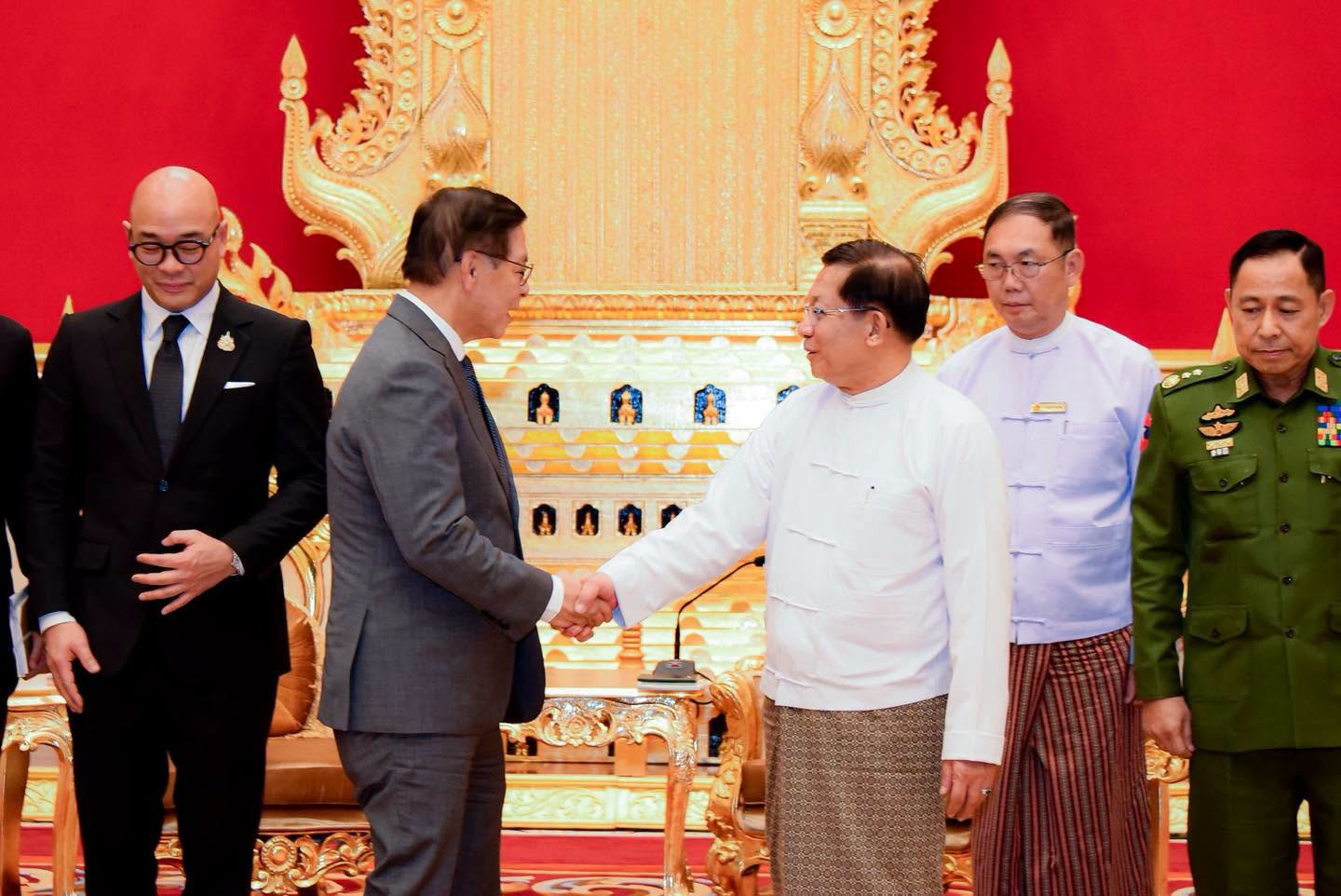
Thai Foreign Minister’s Visit to Naypyidaw Ahead of the ASEAN Summit
Ahead of the 49th ASEAN Summit, which will soon be held in the Philippines with the participation of leaders from ASEAN member states, Thai Foreign Minister Sihasak is scheduled to visit Naypyidaw on November 12 to meet with Myanmar’s military government leaders.
Min Aung Hlaing, who assumed the presidency in April, has not been invited to attend the ASEAN Summit. Instead, Myanmar has been invited to send only a director-general-level representative from its Ministry of Foreign Affairs.
In recent months, Min Aung Hlaing, in his capacity as president, has received official invitations to visit several ASEAN member states, including Malaysia, Thailand, Laos, and Cambodia. These visits had raised expectations among Myanmar’s military leadership that ASEAN might once again allow Myanmar’s leaders to participate in meetings attended by ASEAN heads of state and government.
However, it appears that such a decision would require the agreement of all ASEAN member states. As that consensus has apparently not yet been reached, Myanmar’s military leaders remain excluded from the summit.
Myanmar’s political situation is expected to be discussed at the ASEAN Summit, which is traditionally held toward the end of the year. Against this backdrop, the Thai foreign minister’s visit to Naypyidaw may be intended to assess the Myanmar military leadership’s latest positions and perspectives ahead of those discussions.
At a press conference held one day before his departure for Naypyidaw, the Thai foreign minister outlined the issues he intended to discuss during the visit. These included border trade, border security, Myanmar’s domestic peace process, transboundary haze pollution, and river pollution flowing across the border.
In reality, however, the issues affecting relations between the two countries extend beyond those officially identified. They also include online scam operations along the border and matters involving Myanmar migrant workers, particularly the military government’s policies linking family remittances, income tax payments, and the issuance of Certificates of Identity (CI).
Nevertheless, the foreign minister’s visit is scheduled to last only one day. During that time, he is expected to meet military leader Min Aung Hlaing, Vice President Nyo Saw, and Foreign Minister Tin Maung Swe, whom he would be expected to meet under normal diplomatic protocol.
Given this schedule, the visit is unlikely to involve detailed face-to-face negotiations among the relevant ministries and security officials of both countries. Rather, it appears more likely that the Thai foreign minister will convey Thailand’s positions on these issues and communicate the actions Thailand would like Myanmar’s military leadership to take.
At the same time, military-to-military contacts have continued between the Thai government and armed forces and Myanmar’s military authorities.
Reports in recent days have indicated that the commander-in-chief of Myanmar’s air force met with his Thai counterpart. These discussions may have addressed the spillover effects of Myanmar’s military operations along the border, including artillery shells landing across the frontier and the consequences for Thailand of airstrikes conducted on the Myanmar side.
There are numerous issues requiring discussion between Thailand and Myanmar, some of which have persisted for years.
Border security has been a problem for decades. Although these concerns were less prominent during periods of ceasefire, the unprecedented intensification of armed conflict since 2021 has increased the spillover effects on Thailand. These include cross-border security incidents, arms smuggling, and growing numbers of refugees entering Thai territory.
Online scam operations have become an increasingly serious problem over the past four or five years. Meanwhile, river pollution and toxic contamination resulting from rare-earth and other mineral extraction in eastern Shan State have emerged as more recent concerns.
Border trade, which had operated relatively normally for decades, has also declined significantly. This deterioration has been driven in part by the Myanmar military government’s foreign currency conservation measures, including the seizure of goods entering through border crossings and increasingly restrictive import licensing requirements.
The situation of Myanmar migrant workers in Thailand presents another set of difficulties.
Efforts to provide these workers with legal documentation, together with the Myanmar military government’s income tax requirements and family remittance arrangements, have created considerable discomfort for Thailand.
At the same time, Thailand must manage a complicated relationship with its neighbor, balancing the benefits it derives from Myanmar against the negative consequences of instability and policies across the border.
Thailand’s own political system adds another layer of complexity.
Although the Thai military’s political influence is not necessarily defined by the country’s constitutional framework, the armed forces continue to exercise a degree of power in Thai politics. There is also a tendency within the Thai military to sympathize with and support governments elsewhere in the region in which the military holds significant authority.
For leaders and organizations involved in Myanmar’s Spring Revolution, understanding the realities of Thai politics is therefore essential when assessing Thailand’s position on Myanmar’s struggle for democracy.
This includes understanding the differences between Thailand’s stated policies, its political interests, and the actions it actually takes.
Governments that come to power in Thailand generally have only three or four years at most to implement their policies.
Even the political party and family associated with former Prime Minister Thaksin Shinawatra, which have returned to power several times over the past one or two decades, cannot be certain of regaining power in the next political cycle.
Some ethnic armed organizations based along the Thai-Myanmar border have developed a strong understanding of Thai politics through their experiences with successive Thai governments over many decades.
For the leaders and organizations of Myanmar’s Spring Revolution who are fighting against military dictatorship, a similarly realistic understanding of Thailand’s political environment is necessary.
Only by recognizing the actual dynamics of Thai politics can these revolutionary forces pursue their objectives while minimizing unnecessary obstacles and complications.
That is the central point this commentary seeks to emphasize.