
Myanmar Spring Chronicle — November 1 Perspective
(MoeMaKa), November 2, 2026
How Can We Cope With and Survive Airstrikes?
The Myanmar military has been carrying out airstrikes day and night across vast areas of the country, launching aircraft from various air bases to bomb targets stretching thousands of miles—from western Myanmar to southeastern Karen State, northern Kachin State, northwestern Chin State, and the central regions of Sagaing and Magway.
On November 1, the Arakan Army (AA) reported that military airstrikes on Kyauktaw, Mrauk-U, Kyaukphyu, and Wira Htana (Pauktaw) in Rakhine State killed 12 civilians and injured 32 others. All four towns, which are under AA control, were reportedly attacked on the same day.
About two days earlier, an airstrike reportedly hit a school for internally displaced children in a village in Loikaw Township, Karenni (Kayah) State. According to news reports, three students were killed and five others injured.
It would not be an exaggeration to say that airstrikes have become an everyday occurrence in Myanmar. Yet describing them as routine should not diminish the devastating consequences of each attack. Every incident brings deaths, injuries, and the destruction of homes, schools, monasteries, and displacement camps—structures that communities have struggled to build under extremely difficult circumstances. Beyond the physical destruction, survivors also suffer psychological trauma, sometimes requiring years of treatment and recovery.
According to figures released by the National Unity Government (NUG), Myanmar experienced 5,222 airstrike incidents involving 8,821 attacks during 2025. The NUG’s statistics indicate that the number of incidents rose from 262 in January to more than 500 in some months, reaching over 600 in October, the month with the highest recorded number. News organizations citing these statistics have reported that more than 2,300 people lost their lives in these attacks during 2025.
It remains unclear whether the NUG’s figures include aerial attacks involving drones and paramotors, or whether the counting methodology considers the number of aircraft involved in attacks on a particular day.
By comparison, Myanmar Peace Monitor recorded 3,534 airstrike incidents between February 1, 2021, and October 9, 2026. Its methodology reportedly counts all airstrikes occurring within a single township on a given day as one incident.
Although complete statistics for 2026 are not yet available, Myanmar Peace Monitor reported that airstrikes more than doubled during the period from September 10 to October 7 compared with previous months. Rakhine State experienced the highest number of attacks during that period, followed by Sagaing Region, Karenni (Kayah) State, Magway Region, and Chin State.
These developments raise an important question: Why is the military under Min Aung Hlaing continuing to spend enormous sums on aviation fuel, aircraft maintenance, and repeated air operations?
At a time when the conflict involving Iran, the United States, and Israel in the Middle East has driven up global fuel prices, including aviation fuel costs, Myanmar is already suffering from civil war and severe deterioration in its economy, healthcare, education, and other essential sectors.
Nevertheless, dozens of military aircraft reportedly take off each day to conduct repeated bombing missions.
One possible explanation is that the military is increasingly relying on airpower to compensate for its difficulties in maintaining territorial control and achieving success in ground offensives.
Airstrikes may also be intended to undermine the ability of resistance organizations to administer territories under their control, disrupt governance in areas operating outside military authority, and pressure armed groups into agreeing to ceasefires, returning captured towns, or accepting unfavorable terms during negotiations.
These are broad conclusions that can be drawn from the military’s current pattern of operations.
Some airstrikes are directly connected to ongoing ground battles and are intended to provide tactical advantages to military forces. However, many of the daily airstrikes appear to take place without direct connections to active ground combat. Instead, they seem to be conducted against targets identified through intelligence gathering.
Myanmar’s military leadership is not necessarily unaware that airpower alone cannot establish effective control over territory.
Airstrikes also target locations within territories controlled by ethnic armed organizations and People’s Defence Forces (PDFs), including areas where resistance forces operate, establish bases, conduct administrative activities, or assemble personnel. Other targets reportedly include supply facilities, food storage locations, taxation checkpoints, and infrastructure that supports armed resistance organizations.
Such attacks are often carried out after intelligence has been collected about the locations and activities of these groups.
Meanwhile, resistance armed organizations generally lack the weapons and systems necessary to defend effectively against military aircraft.
Acquiring air-defense weapons and technology through informal or black-market channels is extremely difficult, if not impossible. The enormous financial costs involved present another major obstacle for resistance forces.
Under these circumstances, resistance organizations need to take greater precautions to reduce the effectiveness of airstrikes. This includes carefully considering the risks associated with large gatherings and the placement of personnel or facilities in exposed, easily identifiable locations.
At the same time, protecting civilian lives must become an urgent priority.
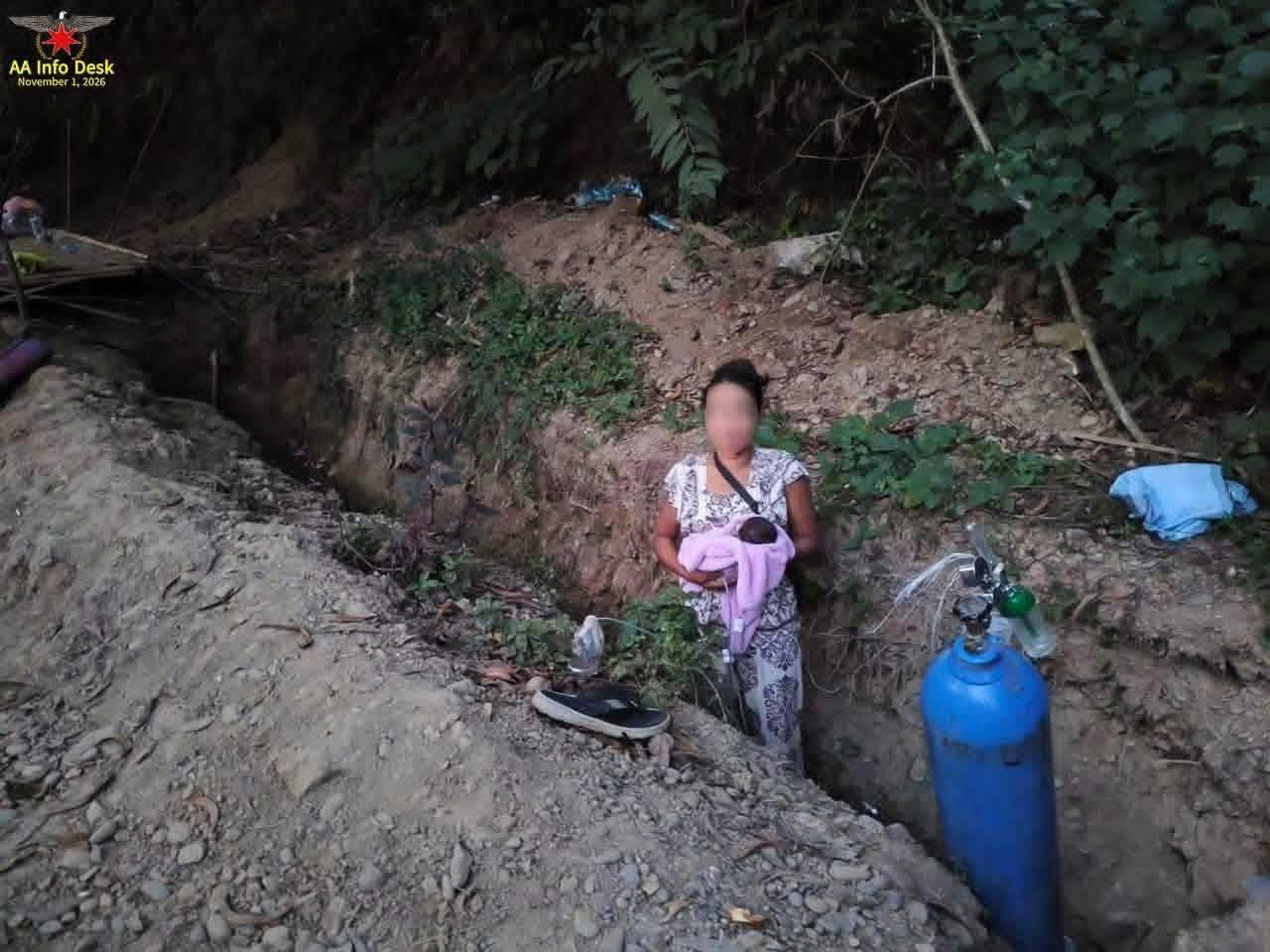
More bomb shelters and protective trenches should be prepared near schools, residential communities, and other public facilities to minimize casualties during airstrikes.
Communities also need more effective early-warning systems capable of passing information through multiple levels as soon as military aircraft take off, followed by immediate public alerts when aircraft approach threatened areas.
Public education and practical training on how to respond to airstrikes are equally essential.
The central message is clear: As airstrikes continue to threaten communities across Myanmar, strengthening early-warning systems, preparing adequate shelters, and educating civilians about protective measures have become urgent necessities for saving lives.