
Myanmar Spring Chronicle – Scenes from October 9
(MoeMaKa), October 10, 2026
Garment Factories Are Closing as Job Opportunities Become Increasingly Scarce in Myanmar
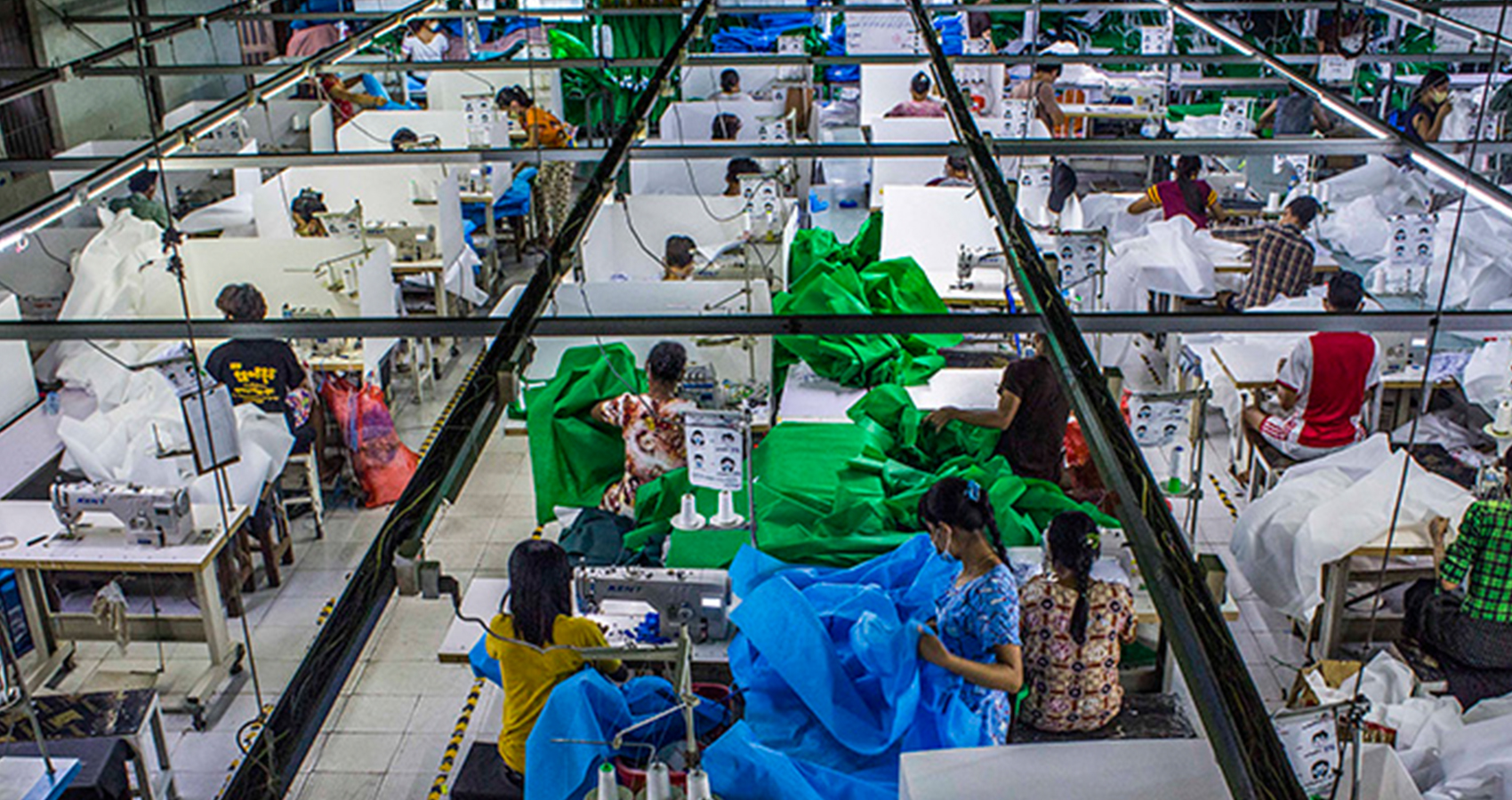
In Myanmar, where civil war is raging across the country, job opportunities and livelihoods have been steadily disappearing as a result of armed conflict. Employment in agriculture, livestock farming, and related industries has become increasingly scarce. Against this backdrop, garment factories, one of the country’s major foreign-invested industries, are also shutting down in growing numbers.
One recent example is the closure of the Chinese-owned Teng Hui garment factory, which has been reported in the news over the past several months. The shutdown is expected to leave more than 3,000 workers unemployed.
Although news reports indicate that officials from the military government’s Ministry of Labour have been negotiating with other garment factories to find employment for those affected by the closure, the prospects for other factories are also far from encouraging.
The reasons behind the successive closures of garment factories are not limited to a single factor. According to news reports, businesses have been forced to suspend operations because of one or more overlapping problems, including labor rights violations, electricity shortages, discrepancies between official and market exchange rates, difficulties and delays in obtaining import licenses, and tariffs imposed by U.S. President Donald Trump.
In the case of the Teng Hui garment factory, the closure has generally been attributed to a decision by the Swedish-based global fashion retailer H&M to discontinue placing orders with the factory.
Following Myanmar’s military coup, the military authorities began treating labor rights organizations engaged in worker education, organizing, and advocacy as political opponents or as groups associated with those resisting military rule. Labor activists were arrested and imprisoned, while workers’ protests demanding better wages and working conditions were increasingly treated as political activities, subjected to restrictions and close surveillance.
During the two to three years following the coup, numerous labor rights activists were arrested and sentenced to prison. The International Labour Organization (ILO) subsequently took measures against Myanmar’s military authorities in response to these developments.
These conditions have prompted major international fashion companies to reconsider sourcing garments from Myanmar, where labor rights violations have been widely reported.
As early as 2023, the British fashion retailer Primark decided to stop sourcing garments from Myanmar. Several years later, the Swedish company H&M made a similar decision.
Myanmar’s garment industry largely operates under a cut-make-pack manufacturing system, producing clothing for export to the United States and Western European markets.
Just weeks after President Trump returned to office, his administration announced substantial increases in import tariffs affecting numerous countries around the world.
Under the announced measures, tariffs on goods exported from Myanmar rose to more than 40 percent, effective August 1 of last year. Previously, the applicable rates had been approximately 12 to 16.5 percent. The increase to around 40 percent became another significant factor affecting foreign-invested garment manufacturers operating in Myanmar.
Other problems, including difficulties obtaining import licenses, unreliable electricity supplies, and the existence of multiple official exchange rates that differ substantially from market rates, are consequences of the military government’s misguided economic policies and administrative practices.
More than 80 percent of workers currently employed in Myanmar’s garment industry are women. Many come not from Yangon itself but from economically underdeveloped regions such as Ayeyarwady Region, Rakhine State, Bago Region, and Magway Region.
Many of these areas are now affected by civil war. Consequently, even when garment workers in Yangon lose their jobs, returning to their hometowns is often not a realistic option.
Myanmar has reached a point where securing both a livelihood and personal safety has become extremely difficult.
Rather than functioning as a normal economy, the country is increasingly operating under a wartime economic system shaped by armed conflict. Among those falling most rapidly into poverty and hunger are the most economically vulnerable members of society, including farmers, wage laborers, and garment factory workers.
In some conflict-affected areas, communities face blockades that restrict the movement of food and essential supplies. Residents are forced to pay exorbitant prices for basic food items and medicines.
At the same time, agricultural production has become increasingly difficult because fuel and fertilizer prices have risen to unaffordable levels. Even when farmers manage to produce crops, transporting and selling their harvests presents additional obstacles.
Looking at the country as a whole, whether people live in areas controlled by the military authorities or by revolutionary armed groups, they are struggling to survive under a wartime economy in which economic resources and restrictions are increasingly used as instruments of warfare.
Under these circumstances, approximately 500,000 garment workers, the majority of them women, continue working in major cities such as Yangon for extremely low wages.
Their daily earnings amount to just 7,800 kyats without overtime, rising to a maximum of approximately 12,000 kyats when overtime is included.
With such limited incomes, workers must survive through extreme frugality, placing them among the lowest-income groups in society.
This raises an important question about international campaigns urging companies and consumers to stop ordering or purchasing garments manufactured in Myanmar because of labor exploitation and the failure of factory owners to respect workers’ rights.
Given Myanmar’s current circumstances, are such boycotts truly the right course of action?
While these campaigns seek to hold factory owners accountable for exploiting workers and violating labor rights, they may also threaten the livelihoods of the very workers they are intended to protect.
The situation calls to mind the famous judgment of Mahosadha in the Buddhist Jataka tales, in which the true mother of a child is identified through her willingness to protect the child rather than cause harm.
Myanmar’s garment workers should not be placed in a similarly painful predicament, where competing claims of protecting their interests ultimately put their survival at risk.
That is a situation that must be avoided.