
Myanmar Spring Chronicle — October 28 Perspective
(MoeMaKa), October 29, 2026
ASEAN Chair’s Foreign Minister Begins Visit to Myanmar
Philippine Foreign Secretary Maria Theresa Lazaro, representing the Philippines as the 2026 rotating chair of ASEAN, began a three-day visit to Myanmar on October 28.
The visit has been described in official statements and media briefings as primarily focused on humanitarian assistance. However, it remains to be seen whether discussions will also address Myanmar’s full participation in ASEAN meetings and the possibility of recognizing Min Aung Hlaing’s government.
As ASEAN chair in 2026, the Philippines had previously maintained a relatively distant relationship with Myanmar’s military-led government and had openly criticized its actions.
In May, Philippine President Ferdinand Marcos Jr. said there had been no progress on the Myanmar crisis. By late October, however, his assessment appeared to have changed. He said ASEAN’s new approach to Myanmar had succeeded in bringing Myanmar’s military leaders toward the negotiating table and that increased engagement with neighboring countries was producing positive results.
In an exclusive interview with Singapore’s The Straits Times, President Marcos Jr. also commented on ASEAN’s Five-Point Consensus, describing it as entirely correct in principle but ineffective in practice.
These remarks by the president of the ASEAN chair country came after a series of official visits by Myanmar military leader Min Aung Hlaing to neighboring countries between May and October. They suggest that ASEAN member states themselves may be reconsidering their approach toward Myanmar.
Min Aung Hlaing’s government has sought to demonstrate its close relationships with the two major regional powers, China and India. Both countries extended official invitations to Min Aung Hlaing after he assumed the presidency following the election. Subsequently, other neighboring countries and ASEAN members also began extending invitations.
This sequence of diplomatic engagements suggests that the Myanmar military government’s efforts to regain international acceptance have begun producing results.
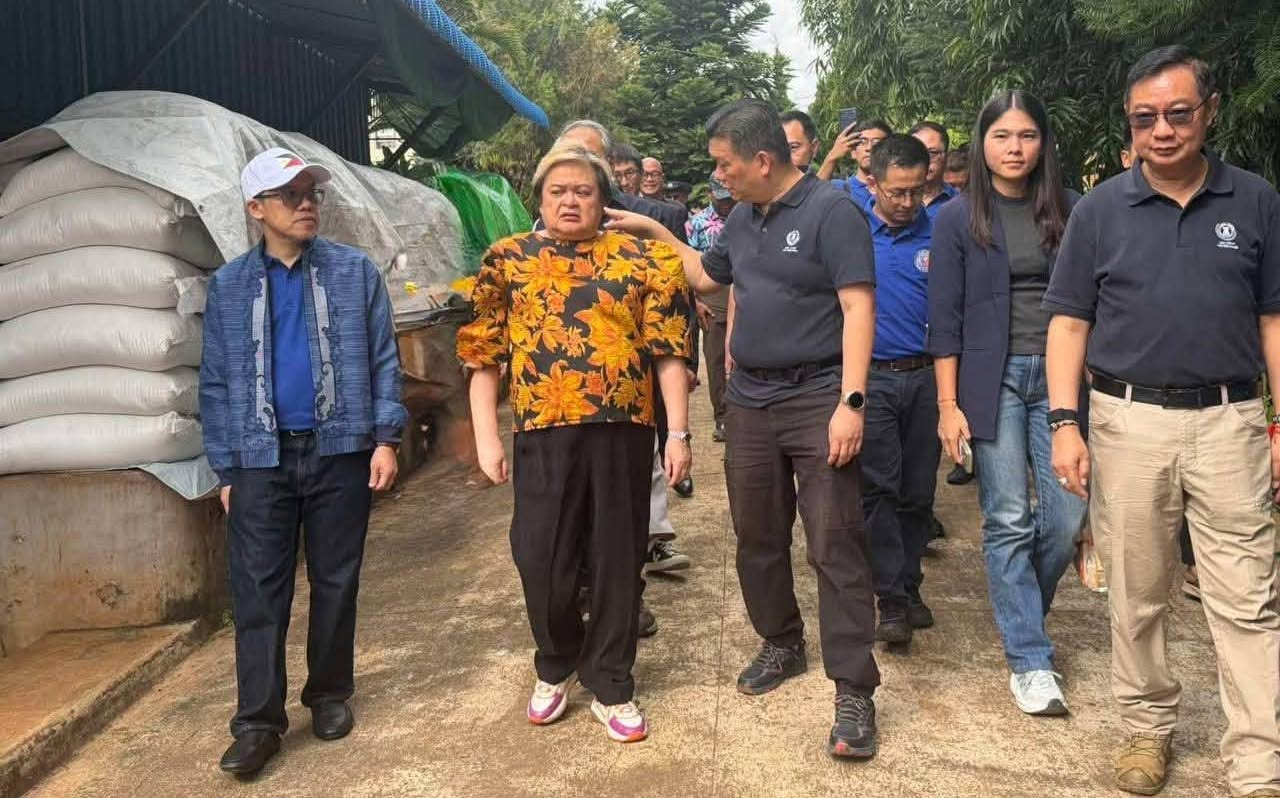
Rather than beginning her visit with a meeting with the president in Naypyidaw, Philippine Foreign Secretary Maria Theresa Lazaro started her trip by visiting internally displaced people in Taunggyi, consistent with the stated humanitarian purpose of her visit.
According to media reports, she traveled to Taunggyi on October 28, visiting a Catholic church sheltering displaced people and another village in the area.
Accompanied by representatives of the ASEAN Coordinating Centre for Humanitarian Assistance on Disaster Management (AHA Centre) and diplomats from ASEAN embassies, she observed humanitarian assistance being provided to displaced communities with support from the Myanmar Red Cross Society.
Most of the displaced people sheltering in Taunggyi have fled from Karenni (Kayah) State. Some people displaced by intensified fighting in northern Shan State have also sought refuge in the city.
The Philippine Department of Foreign Affairs has also announced that Lazaro will visit northern Shan State and Karen State.
Displaced populations are scattered across Myanmar, with conditions in Rakhine State among the most severe.
People displaced by fighting in Rakhine have extremely limited access to humanitarian assistance. The military authorities have also imposed restrictions on the transportation of goods, making the delivery of essential aid even more difficult.
Under these circumstances, it is reasonable to conclude that the AHA Centre has little practical capacity to reach displaced communities in areas experiencing intense fighting or subjected to the military’s four-cuts strategy.
As Myanmar’s civil war enters its sixth year, there are growing indications that ASEAN is beginning to question whether its policy of diplomatically isolating Myanmar’s military leaders has been effective.
Throughout nearly six years of conflict, ASEAN has consistently advocated dialogue and ceasefires between ethnic armed organizations, People’s Defence Forces (PDF) operating under the National Unity Government (NUG), and the military that seized power in 2021.
Even during the most intense phases of the civil war following the launch of Operation 1027, ASEAN continued to adhere to its Five-Point Consensus.
However, nearly six years after the coup, following an election widely criticized as a sham, some of Myanmar’s neighboring countries appear increasingly interested in ending the diplomatic isolation of the military leadership.
ASEAN, too, appears to be looking for signs of flexibility from Myanmar’s military leaders and expressions of willingness to pursue reconciliation.
The fact that the ASEAN chair country itself is now openly acknowledging the ineffectiveness of the Five-Point Consensus, which the organization had firmly upheld for more than five years, suggests a growing willingness to soften its position if an opportunity presents itself.
ASEAN may also be seeking to change the pattern of devoting substantial time to the Myanmar crisis at virtually every summit over the past five to six years.
At a time when ASEAN member states are seeking to focus more attention on regional security, changing global circumstances, and the organization’s broader strategic direction, they may be increasingly inclined to reach some form of decision on Myanmar so that they can redirect their attention to other pressing regional priorities.