
Myanmar Spring Chronicle – Scenes from September 10
(MoeMaKa), September 11, 2026
Drone Attack Targets Military Aircraft Area at Tada-U Airport
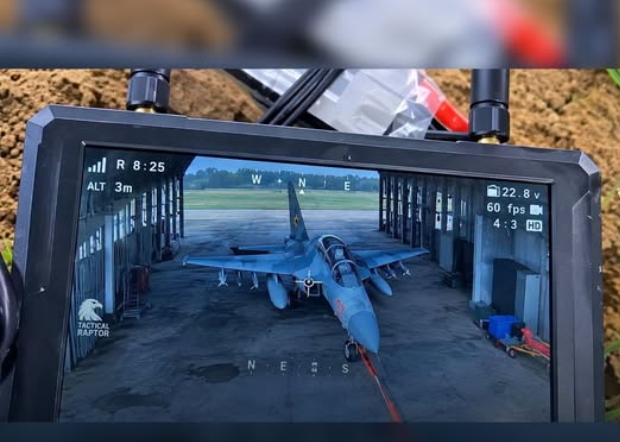
On the afternoon of September 10, PDF forces reportedly launched six FPV drones at an area where military aircraft are stationed at Tada-U Airport, which also serves as Mandalay’s main civilian airport. Resistance groups claimed that some of the military aircraft used for airstrikes across Upper Myanmar were hit and damaged.
The military, however, gave a different account. It said six FPV suicide drones attempted to attack Tada-U International Airport, but the drones were intercepted through air-defense systems and counter-drone measures.
Resistance forces released video footage recorded by the drones’ control cameras. The final images appeared to show one of the drones heading toward an aircraft believed to be a Yak-130 inside a military aircraft shelter. However, it remains unclear whether the drone was able to cause significant damage to the aircraft, particularly if the military had installed protective netting around the shelters.
Some reports identified the group responsible for the attack as resistance forces from Kyaukse District. Footage from the drone-control system also showed the marking “SHWEBO 8-5.”
Following the drone attack on the military aircraft area, troops from the Tada-U Air Defense Operations Command reportedly moved into villages surrounding the airport, apparently searching for locations from which the drones may have been launched. Fighting subsequently broke out with resistance forces.
Resistance groups claimed that during these clashes, a lieutenant colonel serving as an acting tactical commander with the air-defense forces was shot and killed by a sniper.
The military aircraft are reportedly stationed near the southern edge of Tada-U International Airport. Areas adjoining the airport include Kyaukse Township to the south and Natogyi Township to the southwest.
Tada-U Air Base is used to conduct air operations over Upper Myanmar, including Chin State, northern Rakhine State, Kachin State and areas along the Kachin-Sagaing border. Together with Meiktila Air Base, Tada-U is one of the military’s important bases for conducting air operations across central, western and northern Myanmar.
Although the latest drone attack is unlikely by itself to seriously undermine the military’s overall ability to conduct airstrikes, it carries an important implication: Tada-U Air Base, located only a few miles from Mandalay, can no longer be considered completely secure from resistance attacks.
Following the attack, military columns have reportedly been operating in villages surrounding Tada-U, with clashes continuing in the area. As a result, passengers who had purchased tickets were informed that civilian flights using Mandalay’s Tada-U Airport would be suspended for two days, September 11 and 12.
Some airlines have reportedly informed passengers that flights serving Mandalay may instead use an airport near Pyin Oo Lwin, nearly 40 miles from Mandalay.
Travelers have also reportedly been advised to avoid the section of the Yangon-Mandalay Expressway between Meiktila and Mandalay on September 11 because of its proximity to ongoing fighting. Travelers have been discussing using the old Yangon-Mandalay highway instead of the expressway between Meiktila and Mandalay.
Some international news outlets have also reported that the airport serving Mandalay, Myanmar’s second-largest city, was targeted by drones and that civilian flights were temporarily suspended.
The ability to launch FPV drone attacks against Tada-U Air Base also follows recent attacks on military vessels traveling along the Ayeyarwady River between Shwegu and Bhamo. Those vessels were carrying supplies, weapons and hundreds of troops when KIA forces reportedly attacked them with FPV drones, causing damage to several vessels and resulting in the capture of hundreds of military personnel as prisoners of war.
At present, these developments indicate that resistance forces have increasingly developed the capability to use FPV drones as a tactical tool to disrupt and impede military operations.