
Myanmar Spring Chronicle – Scenes from September 14
(MoeMaKa), September 13, 2026
Crime Surging Across Myanmar’s Communities
Since the 2021 military coup, Myanmar’s administrative and governing systems have steadily deteriorated, while crime has risen across the country. Among the most common offenses are murder, robbery and killing, armed robbery, theft, rape, and sexual abuse of minors. In some cases, two or three of these crimes are committed together.
High-value targets such as gold shops and banks have been robbed, but people have also been killed for relatively small amounts of property — mobile phones, gold, jewelry, and gemstones.
It could be argued that people are simply hearing more about murders, robberies, rapes, and other violent crimes because social media is now so widely used. But the reality on the ground suggests that crime itself has increased to levels difficult to compare with previous periods.
If asked why crime has risen so rapidly over the past five years, the general answer would probably be the breakdown of law and order. That answer is not wrong. But it leads to another question: Why has the rule of law deteriorated so severely? There are many reasons.
In areas affected by armed conflict, armed groups often prioritize military control over civilian administration. As a result, investigating crimes and holding offenders accountable may receive little attention. In some cases, members of armed organizations themselves have been accused of committing the kinds of crimes described above.
Killings committed during military operations may constitute war crimes, and numerous incidents involving multiple victims have occurred over the past five years. Such incidents have not been confined to one or two prominent cases but have occurred across northern, western, southern, and central parts of the country.
Setting aside war crimes committed during armed conflict, however, it is also important to examine ordinary crimes taking place in civilian communities, towns, and villages.
Crime has increased in contested areas where control repeatedly changes hands and effective administration has collapsed. But serious crimes are also occurring in major cities such as Yangon and Mandalay, as well as Naypyidaw, the capital and center of the military authorities.
The prevalence of crime in Yangon, Mandalay, and Naypyidaw — areas firmly controlled by the military authorities — demonstrates that the problem is not limited to active conflict zones. Authorities have been unable to solve all murders, armed robberies, and other violent crimes in these cities. Only a proportion of serious cases appear to be solved, while many less serious offenses, including theft, pickpocketing, and fraud, go unresolved.
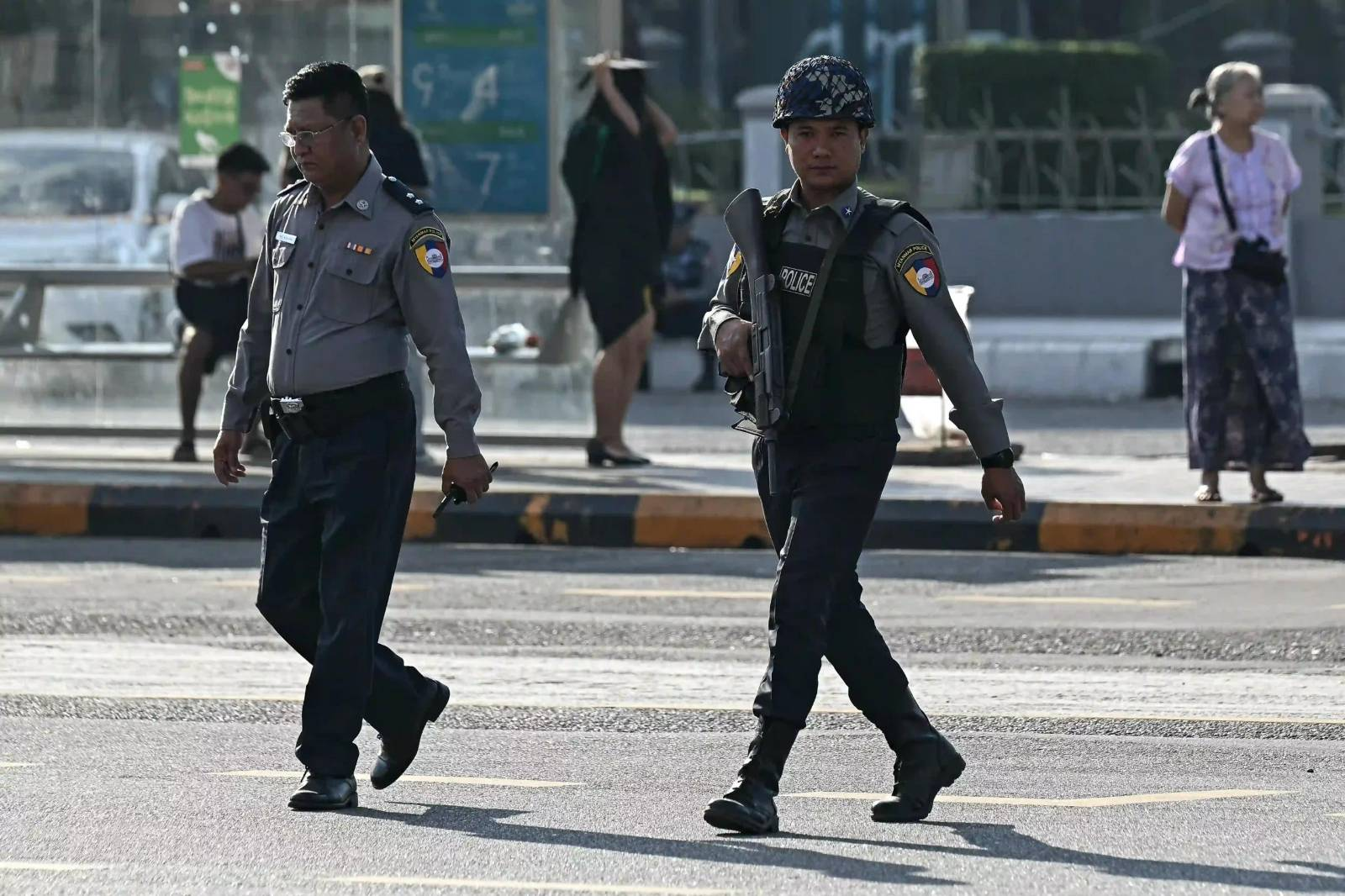
One factor contributing to the increase in murders, robberies, and armed robberies since the coup is the sharp decline in routine police patrols and public-security functions. The police have increasingly been used as an auxiliary force for the military and have focused heavily on arresting and prosecuting political opponents. Against the backdrop of instability, crimes affecting ordinary civilians have often appeared to receive far less attention.
Another factor, alongside the breakdown of law enforcement, is the increased availability of weapons.
As armed resistance against the military expanded, networks emerged to transport small arms into towns and rural areas. Weapons can sometimes be purchased clandestinely through these networks. Some weapons captured during armed clashes also appear to have found their way into illicit markets.
Another disturbing trend is that perpetrators of robberies and armed robberies increasingly kill victims, regardless of age, in an attempt to eliminate witnesses and evidence. This has contributed to a rise in robberies accompanied by murder.
Under more stable conditions, offenders may consider the severity of punishment associated with different crimes. But in the present environment, where the likelihood of being arrested, prosecuted, and tried is perceived to be low, there is less deterrence against committing robbery and murder together.
Another contributing factor may be the military authorities’ repeated release of convicted criminals through amnesties over the past five years. Amnesties have sometimes been announced four or five times a year, meaning that some prisoners sentenced to five to seven years have been released after serving only one or two years.
These releases have also had the effect of creating space in prisons at a time when large numbers of people have been detained for political offenses.
These are among the conditions prevailing in territories controlled by the military authorities.
On the other side, maintaining law and order has also become a major challenge in territories controlled by armed resistance organizations.
Some areas are firmly controlled by a single armed organization, while others repeatedly change hands between opposing forces. In contested territories, functioning administrative and judicial institutions are often difficult to establish. As a result, many communities effectively live under orders imposed by whichever armed group has the greatest power rather than under a consistent system of law.
Even in territories where more structured administrations have been established, reports of rape, child rape, and murder continue to emerge.
In Rakhine State, including areas administered by the ULA/AA, reports of crimes such as murder and rape have appeared repeatedly. Similarly, in parts of Sagaing Region under NUG/PDF administration, news reports have frequently described murders, sexual violence, and killings of entire families.
The growing belief that power belongs to those who possess weapons or superior force, rather than being governed by law, is contributing to an environment in which rape, murder, robbery, and killings can proliferate.
In areas controlled by resistance forces and commonly described as “liberated areas,” efforts to punish murder, rape, and robbery-related killings may also be affected by political bias. At the same time, weak institutional capacity — including inadequate prisons, personnel, judicial mechanisms, and systems for long-term detention — can make fair and consistent justice difficult to administer.
Myanmar therefore faces a fundamental question: How should the country respond to the rapid rise in crime, and which institutions should bear primary responsibility?
The problem affects not only people living under military control but also communities in territories controlled by resistance forces. At present, a comprehensive solution to the breakdown of law and order confronting both sides still appears a long way off.