
Myanmar Spring Chronicle – Scenes from September 5
(MoeMaKa), September 6, 2026
Climate Change and Countries Suffering from Climate-Related Disasters
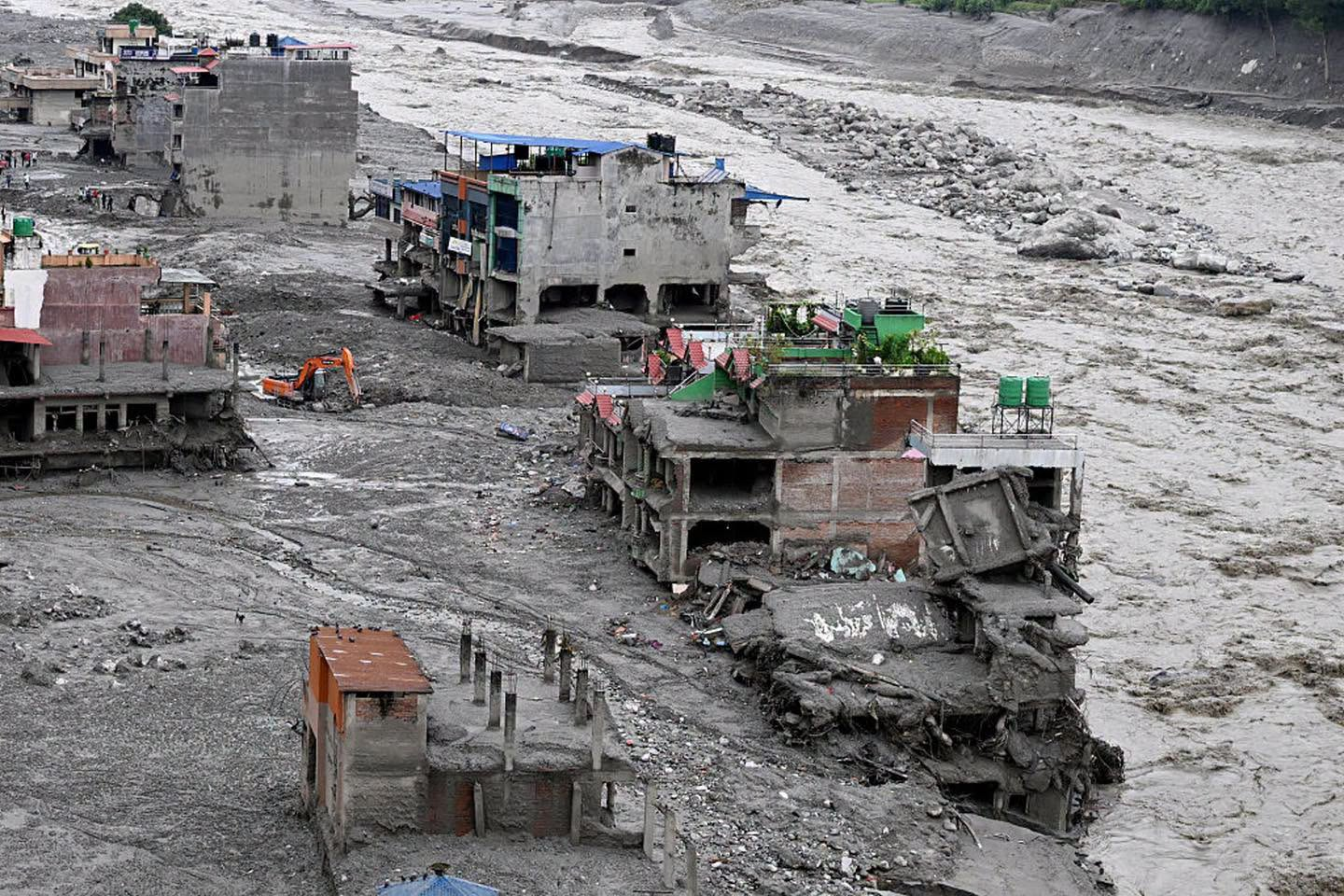
On August 26, a massive collapse of ice and glaciers triggered torrents of mud and water along the Tibet–Nepal border, devastating residential areas, border checkpoints and locations frequented by religious pilgrims and international tourists. Thousands of people were reportedly killed, while thousands more remain missing.
Rising temperatures in the Himalayan region have caused glaciers covering the mountains to melt at an increasing rate. Meltwater gradually accumulates in large glacial lakes in mountain valleys. When these lakes suddenly burst, enormous volumes of water, mud and debris can rush through valleys within minutes, sweeping away everything in their path. This is what occurred in the recent disaster, an event that has already been widely reported.
So far, more than 1,000 bodies have reportedly been confirmed on the Nepalese side, while reports estimate that between 3,000 and 4,000 people remain missing. On the Tibetan side of China, the death toll is believed to be lower than in Nepal, although estimates suggest that several hundred people may have died.
The disaster is being described as one of the deadliest flooding events on record in terms of casualties.
When we ask what is causing changes in the global climate, the main explanation is the warming of the planet caused by the greenhouse effect. As temperatures rise, the consequences appear in many interconnected forms: more severe flooding, increasingly powerful storms, extreme heat and more frequent wildfires. Together, these events are causing destruction, loss of life and serious health consequences in many parts of the world.
At the same time that the glacier collapse and flash flooding have struck Nepal and Tibet, Indonesia has been experiencing major wildfires. Smoke from these fires has spread into neighboring countries, creating serious health concerns.
Western Europe, meanwhile, has experienced some of its highest temperatures in many years. Falling river levels have significantly disrupted transportation and the movement of goods. France also experienced major wildfires in recent weeks. In several countries, water reservoirs have fallen to critically low levels, forcing authorities to issue restrictions and conservation measures on water consumption.
From the middle of this year until approximately February next year, an unusually powerful warming phenomenon sometimes referred to as a “Godzilla El Niño” is expected to occur, prompting emergency warnings from the United Nations. Its effects are expected to be particularly noticeable during the current Northern Hemisphere summer and into the coming autumn and winter months.
Scientists explain that global warming caused by the greenhouse effect is primarily driven by the excessive use of fossil fuels. Human activities have also accelerated deforestation, reducing the ability of forests to absorb carbon dioxide from the atmosphere.
In industrialized countries, the greater the consumption of fossil fuels such as coal, oil and natural gas, the greater the amount of carbon dioxide released into the atmosphere. Scientists say these emissions intensify the greenhouse effect and increase global temperatures.
Yet many of the major countries responsible for large amounts of emissions have failed to give the issue sufficient attention. They are reluctant to reduce their own fossil-fuel consumption and often fail to respond adequately to international appeals for coordinated action.
Some major countries also continue to dispute or resist scientific findings about global warming. As countries compete for economic growth, governments fear that adopting stronger environmental policies will increase costs and slow economic development, potentially leaving them behind their competitors. This attitude continues to influence policy today.
Carbon dioxide emissions do not come only from commercial and industrial activities. Wars also contribute to emissions through weapons systems, military aircraft used in airstrikes, naval vessels and other military operations. There are arguments that ongoing conflicts—including wars in the Middle East involving the United States, Israel and Iran, as well as the Russia–Ukraine war—are adding further greenhouse-gas emissions to the atmosphere.
Regarding the recent disaster in Nepal, Nepal’s foreign minister has reportedly argued that major greenhouse-gas-emitting countries such as the United States, China and India bear responsibility for the damage and should compensate Nepal for its losses. The minister also reportedly intends to raise the issue at the upcoming United Nations General Assembly.
The world’s most powerful military and economic nations do not necessarily reject the reality of global warming entirely. Rather, many appear to believe that they possess sufficient resources to withstand natural disasters and rebuild afterward. As a result, they continue to prioritize large expenditures aimed at expanding their economies and strengthening their military capabilities.
It is deeply troubling to see a decline in the spirit of responsibility, accountability, international cooperation and the idea that humanity shares a common planet and therefore must face its challenges together.
While rescue operations continue following the disaster along the Nepal–Tibet border, wildfires are burning in other parts of the world and temperatures are reaching unprecedented levels. Myanmar, too, is experiencing floods and dam or embankment failures in numerous areas.
More than a month has passed since an embankment failure near Laymyethna in Ayeyarwady Region caused flooding across at least four townships. In Sagaing Region, water overflowing from the Thaphanseik Dam caused flooding in towns and villages throughout the Mu River basin.
Currently, flooding is also affecting Myawaddy, Hpa-An and Kyaikmaraw, communities located near the Thaungyin, Thanlwin and Zami rivers. Hlegu in Yangon Region and Bago are also experiencing flooding.
Myanmar is among the countries considered highly vulnerable to natural disasters. At the same time, the country has been experiencing more than five years of internal conflict. Under these circumstances, disaster relief efforts face discrimination, restrictions and blockages, while adequate funding for reconstruction and recovery is also lacking.
In the political world, countries are divided by national borders, separate governments and differences in wealth and status. Natural disasters, however, recognize none of these boundaries or political divisions.
The latest disaster illustrates this reality vividly. Flash flooding caused by the collapse of ice and glaciers swept across the Tibet–Nepal border within moments. Those who lost their lives or were affected were not only people from Nepal and Tibet. Visitors and travelers from other parts of the world were also tragically caught in the disaster.
Climate-related disasters do not recognize borders. Their consequences ultimately remind us that, regardless of nationality or political divisions, humanity shares the same planet and faces many of the same risks.