
Myanmar Spring Chronicle – Scenes from July 31
(MoeMaKa), August 1, 2026
Thousands Affected After River Embankment Breaches Near Laymyethna
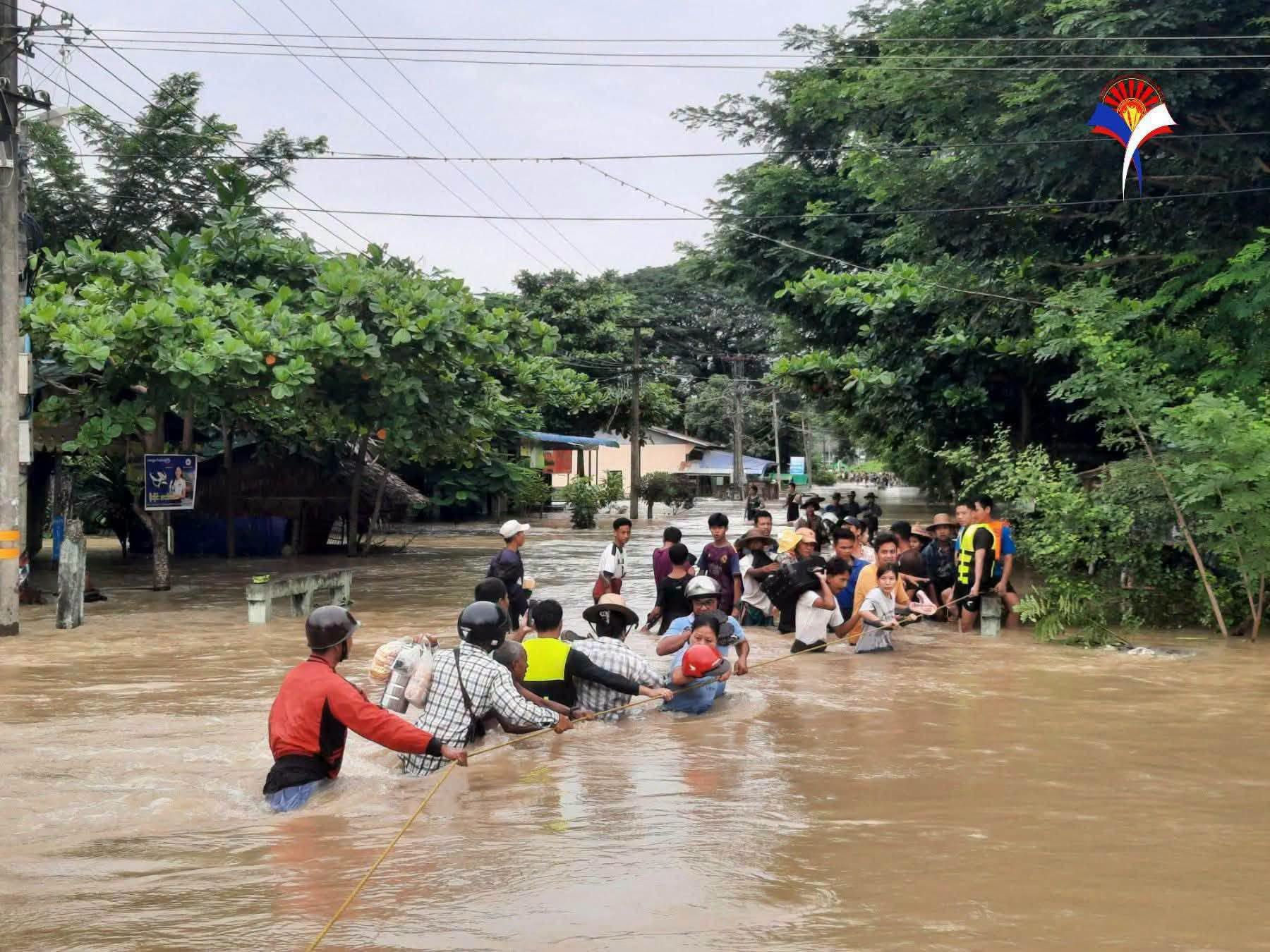
A section of the embankment protecting Laymyethna town in Hinthada District, Ayeyarwady Region, from the Ngawun River reportedly collapsed, allowing river water to rush into the town. According to statements released by the military-controlled authorities, more than 6,000 residents had to be evacuated urgently after a breach of around 30 feet appeared in the embankment.
Around the world, the effects of climate change are increasingly being seen through heavy rainfall, drought, unusually powerful storms and widespread flooding. Myanmar is among the countries considered highly vulnerable to natural disasters, and incidents of severe flooding such as this are likely to occur more frequently.
The growing risk is caused not only by global climate change, but also by environmental destruction within the country. Excessive extraction of sand and stones from rivers damages riverbanks and alters waterways. When these local environmental problems are combined with changing weather patterns, the likelihood of major disasters becomes even greater.
Water flowing downstream from the upper Ayeyarwady River, together with periods of exceptionally high tides around the full moon and new moon, may also have contributed to the flooding.
Laymyethna, where the embankment failed, is located relatively close to the expanding conflict zone stretching from southern Rakhine State into western Ayeyarwady Region. Fighting between the Arakan Army and the military is taking place further west of Laymyethna Township, near the border between southern Rakhine State and Ayeyarwady Region.
In many other countries, armed forces are mobilized in large numbers during natural disasters. Military organizations generally possess far greater manpower, logistics and command capacity than local fire brigades.
However, following the embankment breach west of Laymyethna, emergency evacuations and rescue work appear to have been carried out mainly by municipal firefighters and auxiliary fire brigades.
Nearly 48 hours after the disaster, there had been little visible involvement by the military in flood-relief efforts. Myanmar’s armed forces are currently deployed across multiple battlefronts, fighting ethnic armed organizations and People’s Defence Forces. This may be one reason why military personnel have not been seen participating meaningfully in emergency rescue operations.
Although authorities announced that more than 6,000 residents had already been evacuated, questions remain over whether a fire brigade numbering only in the hundreds could provide effective assistance to such a large population.
Several weeks earlier, northern Rakhine State also experienced prolonged flooding. Reports at the time showed members of the Arakan Army participating in rescue and relief operations.
Communities in northern Rakhine State, already suffering from war, economic hardship and widespread destruction, were forced to endure yet another crisis as weeks of flooding struck the region.
Rakhine State has also faced restrictions on food, medicine and other essential supplies. Despite these conditions, reports indicated that the Arakan Army, which currently controls much of the state, worked with its administrative personnel and armed units to carry out rescue operations.
The close relationship between local communities and the AA may have helped its forces participate more actively in disaster relief. This stands in contrast to the situation in Ayeyarwady Region.
In other parts of Myanmar controlled by the military, the response to the Laymyethna flooding suggests that there is little prospect of the armed forces prioritizing the suffering of local communities during natural disasters.
More than five years after the 2021 military coup, the armed forces have been widely accused of burning villages, killing and torturing civilians of all ages and genders on allegations that they support resistance forces, destroying homes and towns, and conducting airstrikes.
Because the military has become associated more with violence and destruction than with public protection, many people no longer expect assistance from it, even when natural disasters strike.