Myanmar Spring Chronicle – Scenes from August 24
(MoeMaKa), August 25, 2026
Some Political Prisoners Freed When Lashio Prison Opened Forced to Return to Military-Controlled Areas
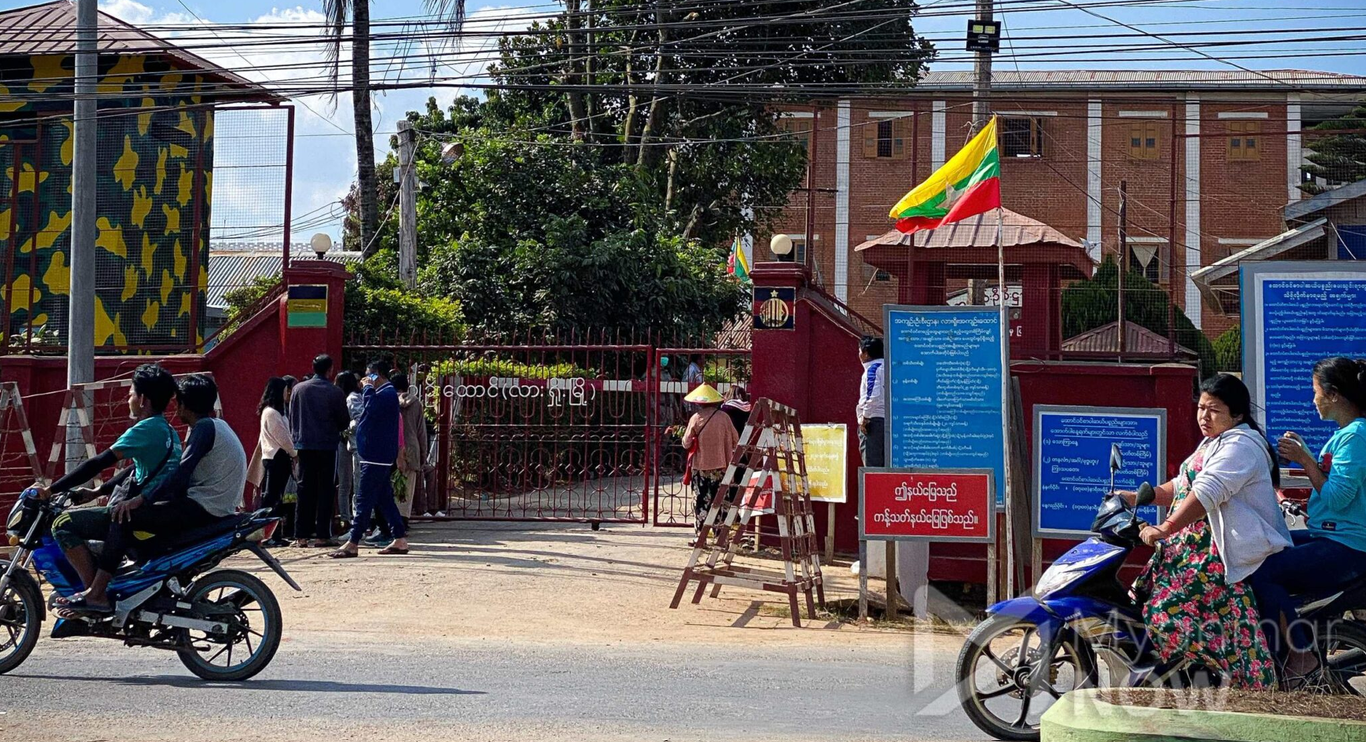
Around 200 political prisoners who escaped when Lashio Prison was opened in the final days of July 2024 had been taking refuge in areas of northern Shan State controlled by ethnic armed organizations—areas that could be described as “liberated territories.” However, because of growing difficulties in finding work and sustaining themselves, around 20 of them have been forced to return to areas controlled by the military regime, according to a recent statement by the JNPP, a network supporting political prisoners.
About two months after the second phase of Operation 1027 began, fighting intensified for control of Lashio, home to the military’s Northeastern Regional Command. Prison staff and military personnel fled and withdrew from Lashio Prison, after which prisoners opened the facility and escaped to areas away from the fighting.
Among those who were freed was U Tun Tun Hein, an NLD leader and former deputy speaker of parliament. He reportedly remains in a liberated area and continues to carry out his party responsibilities.
Lashio Prison held around 1,000 inmates in total. More than 200 of those who escaped were political prisoners. Rather than returning to military-controlled areas, many remained in territories controlled by ethnic armed organizations, where they tried to find work and make a living.
Over time, however, they encountered numerous difficulties. Some lacked identification documents such as national registration cards. In the Kokang region, those suffering from health problems faced difficulties paying for medical treatment. Others struggled because they could not speak Chinese or could not afford housing and rent. Some also came under pressure from family members to return home.
As a result of these accumulated hardships, after roughly two years, about 20 political prisoners who had escaped from Lashio Prison reportedly reached the point where they felt compelled to return to military-controlled territory.
One report also stated that while living in the northeastern region, some of them sought assistance from the National Unity Government (NUG) to obtain some form of identification document but did not receive it. The NUG, however, responded that it had not received such requests for assistance.
According to the report, those returning to military-controlled areas have been required in some cases to sign written declarations or pledges. So far, none are known to have been rearrested, but there is no guarantee that they will not be detained again in the future.
It is striking that people who were imprisoned for political activities, then managed to regain their freedom, ultimately found it so difficult to survive in territories controlled by ethnic armed resistance groups that they felt they had little choice but to return to areas controlled by the military regime.
These political prisoners were fortunate enough to escape imprisonment, yet some were unable to afford treatment for health problems resulting from interrogation, detention, and their time in prison. Their eventual return to military-controlled territory raises a troubling conclusion: the revolutionary forces have not been able to adequately care for and support those who participated in the revolution.
Politicians and activists did not join the revolution because they expected to be looked after. Nevertheless, when people encounter health problems, struggle to meet basic living needs, or cannot obtain necessary identification documents because of their participation in the revolution, the inability of revolutionary organizations to help address those problems can weaken both their ability to mobilize public support and people’s confidence in the revolution.
As part of the Spring Revolution, the National Unity Government has relationships with allied ethnic armed organizations. It would therefore be reasonable for political prisoners facing hardship in territories controlled by those organizations to expect the NUG to coordinate with its allies and help resolve their difficulties.
In practice, however, it remains unclear whether such coordination and assistance simply did not take place, or whether the allied MNDAA/Kokang armed organization was unwilling or unable to provide the necessary support.
The capture of Lashio and the Northeastern Regional Command during the second phase of Operation 1027 was one of the operation’s most significant military victories. The battle for Lashio involved not only the MNDAA but also revolutionary armed forces from southern Shan State, Karenni (Kayah) State, Sagaing Region, and other areas.
In other words, the military success in capturing Lashio and other parts of northern Shan State was achieved through the combined participation and sacrifices of many different revolutionary armed groups.
For precisely this reason, everyone who has participated in the Spring Revolution should be able to share not only in its successes, but also in the protection, assistance, and care that the revolutionary movement ought to provide.