
Myanmar Spring Chronicle – Scenes from August 26
(MoeMaKa), August 27, 2026
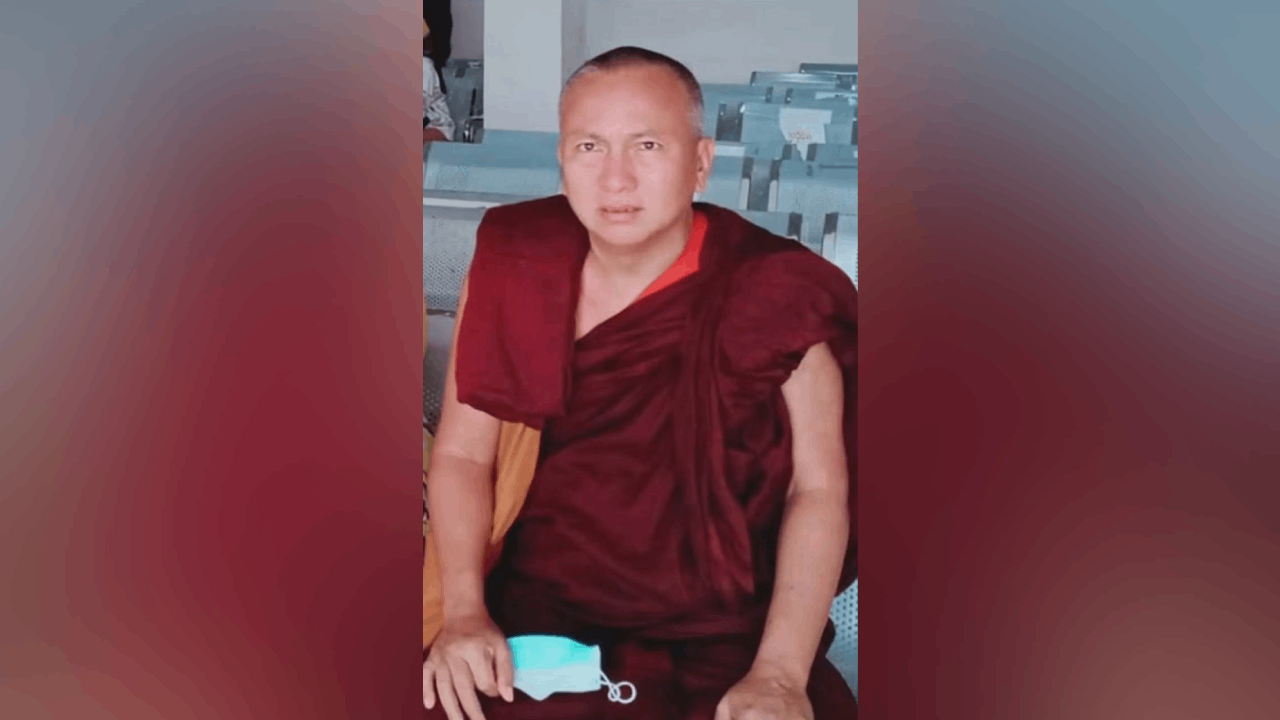
Shwe Da Kyat Village Monastery Abbot Dies After Detention by Chaung-U Township People’s Security Force
On August 18, the abbot of Shwe Da Kyat village monastery in Chaung-U Township, Sagaing Region, along with several civilians from the village, was arrested and taken away by local resistance authorities. About six days later, residents were informed by the Chaung-U Township People’s Security Force (Pa La Pha) to retrieve the abbot’s body. When they did so, they reportedly found numerous injuries consistent with torture. Residents believed that the abbot had died as a result of the abuse, and reports of the incident subsequently spread across multiple media outlets.
In a report dated August 24, Mizzima News published an article under the headline, “Resistance members and local residents, including a village monastery abbot, arrested in Chaung-U Township; abbot and residents yet to be released.” The report stated that on the night of August 18, two members of the Monywa District 5+1 force and four local residents, including the village monastery abbot, were arrested in a village in Chaung-U Township. In the fifth paragraph, Mizzima identified the arresting group as members of the Chaung-U Township People’s Security Force (Pa La Pha).
The same report said that after hearing about the arrests, members of the Monywa District 5+1 force immediately followed up and made inquiries. Their two members were subsequently released, but the abbot and the other civilians remained in custody.
The following day, August 25, reports emerged that the detained abbot had died. According to news reports citing villagers who retrieved his body, they found injuries that appeared to have been caused by burns, marks across his back, and wounds around his wrists that appeared to have resulted from handcuffs cutting into his flesh. Villagers therefore believed that he had died as a result of torture.
However, another news outlet presented a somewhat different sequence of events. According to that account, the abbot and several villagers were initially arrested and interrogated by the Chaung-U District People’s Defense Organization (Pa Ka Pha). After questioning, they were reportedly found not to have committed any wrongdoing and preparations were being made to release them. At that point, the People’s Security Force requested custody of them for further questioning. Five days after their initial arrest, on August 23, they were transferred to the Pa La Pha. The report stated that the Pa Ka Pha conducted health checks and formally documented the transfer before handing them over.
There is therefore a discrepancy between the two versions. Initial reports said that the Pa La Pha itself carried out the arrests and that the abbot subsequently died as a result of torture by the group. The other account says that the Pa Ka Pha initially arrested and questioned the detainees before transferring them to the Pa La Pha, and that villagers were informed of the abbot’s death one day after that transfer.
The precise reason for the arrests also remains unclear. One report suggested that the detainees were questioned because of suspicions that there were plans to establish an armed defense group in Shwe Da Kyat village outside the authority of the Pa Ka Pha and Pa La Pha. Another report said the arrests were connected to allegations that people associated with the military council were attempting to turn the village into a Pyu Saw Htee militia village.
Whatever the reason for the arrests, torture involving methods such as pulling out fingernails, burning a person’s feet with heated objects, or inflicting abuse severe enough to cause death is unacceptable. If such acts were committed by a People’s Security Force operating under the National Unity Government (NUG), they would seriously damage public confidence in and support for the revolutionary forces.
It is not yet known how higher-level authorities will respond to the Chaung-U Township People’s Security Force or how those responsible for this incident will be held accountable.
Abuse and killings of civilians by Myanmar’s military and military-affiliated armed groups existed long before the 2021 coup, particularly in ethnic regions. Since the coup, however, unlawful arrests, torture and killings have spread beyond ethnic areas into central Myanmar, the Dry Zone and other parts of the country, becoming increasingly widespread nationwide.
It was in opposition to precisely these kinds of arbitrary arrests, torture and killings by the authoritarian military that the Spring Revolution emerged and armed organizations such as the People’s Defense Forces and People’s Security Forces were established.
During the early stages of the Spring Revolution, many local defense groups operated independently of the NUG. More than five years later, their proportion appears to have declined considerably. When independent local defense groups abuse or kill civilians, the NUG may not bear direct responsibility. But when serious crimes are committed by People’s Defense or People’s Security organizations operating under the NUG, they damage not only the reputation of the National Unity Government but also that of the Spring Revolution itself.
The alleged torture and killing in Chaung-U Township is particularly damaging because the victim was a Buddhist monk revered by many villagers. The consequences for public trust could therefore extend far beyond Shwe Da Kyat village and Chaung-U Township and affect perceptions across the country.
Even before this incident, there had been cases involving the killings of religious figures, including Buddhist monks and Christian pastors. There have also been cases in which civilians accused of being military informants or “dalan” were tortured and killed. In Chaung-U Township itself, there was also a case involving approximately seven underage boys and girls who were allegedly detained on suspicion of gathering intelligence and subjected to sexual violence and killing.
It would not be unreasonable to argue that the recurrence of such abuses is partly a consequence of the failure to investigate previous cases impartially and impose appropriate punishment on perpetrators regardless of which side they belonged to.
It has often been said that armed revolution is not like writing an essay or composing a poem; the realities of armed struggle cannot be handled with the gentleness of an imagined story. Nevertheless, beating, torturing and killing monks, civilian women, elderly people or other noncombatants will inevitably erode public support for the revolution.
Without a functioning chain of command, military discipline, codes of conduct for armed organizations, and genuine accountability at every level when incidents such as this occur, the central purpose of the Spring Revolution—the aspiration to replace the existing system with something better—risks becoming increasingly blurred and ultimately being lost.