
Myanmar Spring Chronicle – Scenes from August 12
(MoeMaKa), August 13, 2026
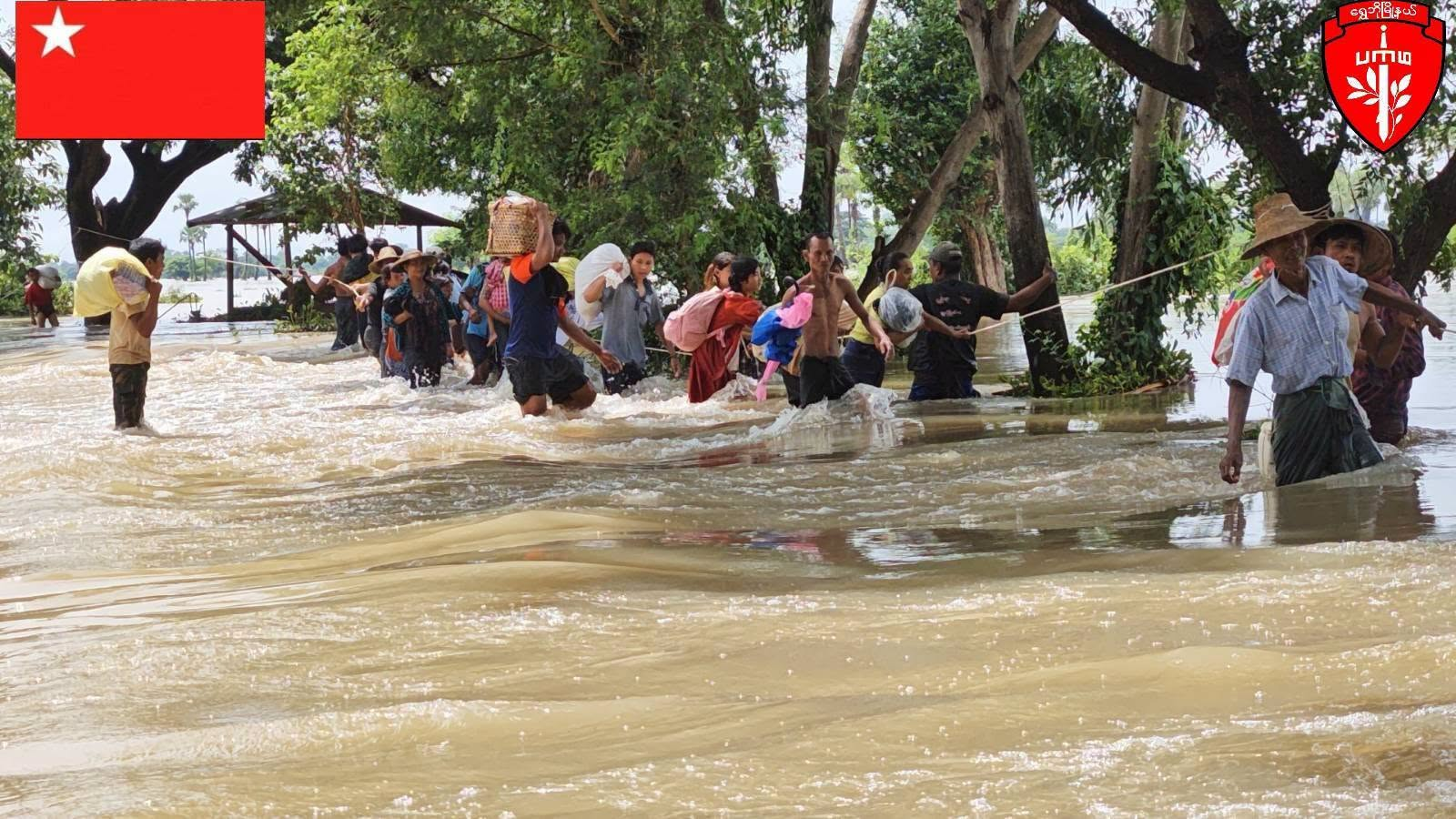
Flood Situation in Lemyethna, Ayeyarwady Region, and the Mu River Basin in Sagaing Region
Nearly two weeks—about 13 to 14 days—have passed since an embankment along the Ngawun River on the western side of Lemyethna Township in Ayeyarwady Region breached. Efforts are underway to close the breach, but the work has yet to be completed.
According to DNA News, construction cranes are being used to drive steel sheet piles into the breach. Of the more than 280 steel piles required, only around 70 have so far been installed. It is therefore expected that completing the repair will take considerably more time.
Nearly half a month after the embankment failed, water entering through the breach at Lemyethna has caused flooding not only in Lemyethna Township but also in Hinthada, Yegyi, and Kyonpyaw townships. The breached section of the embankment is approximately 290 feet wide. Engineers from the relevant construction and irrigation authorities are working to seal the gap.
A similar breach of the Ngawun River embankment occurred about 35 years ago, and it reportedly took two and a half months to close. At present, it remains impossible to estimate precisely how long it will take to repair the Lemyethna breach.
Meanwhile, heavy rainfall has been occurring in catchment areas in upper Myanmar that feed into the Ayeyarwady River, causing fluctuations in the volume of water flowing from north to south. Although the Ngawun River level had declined slightly in recent days, some monitoring groups have reported signs that it began rising again after August 12.
If the volume of water flowing downstream from the upper, northern reaches of the Ayeyarwady rises again, it could further delay efforts to close the breached embankment near Lemyethna.
People affected by the extensive flooding in Lemyethna, Hinthada, Kyonpyaw, and Yegyi townships have been able to receive humanitarian and rescue assistance from civil society groups within Ayeyarwady Region as well as from other states and regions.
News reports said that the leader of the military that seized power received 23 billion kyats in financial contributions from major businesspeople in Pathein the day after returning from Thailand. However, there are few signs that this money will quickly reach people affected by the floods.
For the time being, flood-affected communities are surviving with some assistance from local administrative bodies, together with humanitarian and rescue support provided through mutual aid among the public.
About six or seven days after the flooding began in Lemyethna, communities in Sagaing Region were also hit by flooding after excess water was released from the Thaphanseik Dam, inundating numerous villages and large areas of farmland throughout the Mu River basin. Water releases began on August 6, and within a week, around 10 townships in the Mu River basin of Sagaing Region had been affected by flooding.
Although Ayeyarwady Region in southern Myanmar and Sagaing Region in upper Myanmar are experiencing floods at roughly the same time, the circumstances confronting affected communities are markedly different.
In many townships in Sagaing Region, areas affected by flooding are under the control of the National Unity Government (NUG) and other armed resistance organizations. Even amid the flood emergency, the military that seized power has imposed restrictions that prevent humanitarian assistance from reaching these areas. Flood-relief workers and vehicles carrying aid supplies have reportedly been prevented from traveling north from Sagaing.
Nearly all rural areas in the 10 flood-affected townships of Sagaing Region are controlled by resistance forces. Because of this, the military has not relaxed its “Four Cuts” restrictions even during the natural disaster.
More than 200,000 residents across the 10 townships have been affected by flooding, yet there has been little visible assistance from the Sagaing Region administration under the military government. Apart from reports of assistance being provided to some pro-military villages in Kanbalu and Kyunhla townships, hundreds of thousands of people affected by flooding across the other areas have largely had to rely on self-help initiatives and mutual assistance within their communities.
Aside from some photographs and videos showing the distribution of meal packages in places such as Nyaungpinwun village along the Mandalay–Monywa highway, there have been few signs of humanitarian and rescue organizations reaching other towns and villages in Sagaing Region that have been severely affected by the floods.
The military government may view the flooding in Sagaing Region as something that could weaken armed resistance. It can be inferred that the military authorities may expect the disaster to make it more difficult for resistance forces in the region to raise funds and sustain their activities.
Using a natural disaster as a weapon—and thereby deepening the suffering not only of armed groups resisting the military but also of ordinary civilians caught in the floods—can only be described as a crime against humanity.