
Myanmar Spring Chronicle – Scenes from August 3
(MoeMaKa), August 4, 2026
Daw Aung San Suu Kyi Granted Meeting with Head of the ICRC Myanmar Office
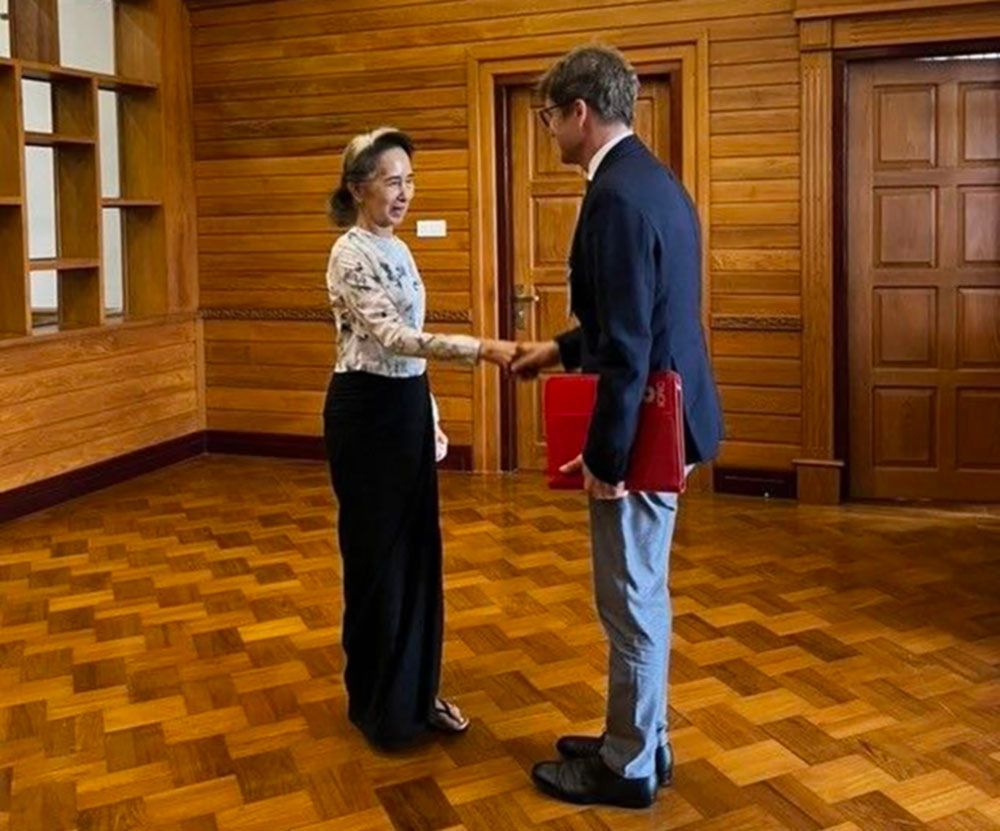
Daw Aung San Suu Kyi, Chair of the National League for Democracy (NLD) and Myanmar’s former State Counsellor, who has been detained since the military coup and sentenced to more than 30 years in prison, has been granted a meeting with Mr. Arnaud de Baecque, Head of the International Committee of the Red Cross (ICRC) delegation in Myanmar.
The meeting reportedly took place on the morning of August 3 at a residence in Naypyidaw. A few hours later, a spokesperson for Min Aung Hlaing’s administration announced the meeting on the Presidential Office’s Telegram channel, releasing four photographs. The images spread rapidly across social media within minutes.
The development immediately raised questions. Although China, ASEAN, and numerous international leaders and organizations have repeatedly requested permission to meet Daw Aung San Suu Kyi over the years, the military had consistently refused, citing her status as a convicted prisoner. As a result, many questioned why an ICRC representative was suddenly allowed access and whether the released photographs were authentic.
One possible explanation is that the meeting falls within the ICRC’s humanitarian mandate, particularly its role in monitoring the treatment and rights of detainees. The ICRC’s responsibilities include protecting prisoners’ rights, providing humanitarian assistance to civilians affected by armed conflict, reconnecting separated families, promoting international humanitarian law, and assisting landmine victims and persons with disabilities. Viewed from this perspective, the meeting appears to have been authorized primarily because Daw Aung San Suu Kyi is being treated as a prisoner rather than because of her political status.
The meeting may also have served another purpose: responding indirectly to repeated ASEAN and international requests regarding Daw Aung San Suu Kyi’s health. Instead of allowing foreign leaders or officials to visit her, the military authorities may have intended to signal, through the ICRC visit, that she remains in good health.
No Indication of Political Dialogue
The meeting, however, does not appear to signal any willingness by coup leader Min Aung Hlaing to pursue the political dialogue sought by ASEAN and several Western governments, including the release of political prisoners and negotiations aimed at ending Myanmar’s civil war.
Observers may conclude that Min Aung Hlaing remains determined to prevent both Daw Aung San Suu Kyi and the National League for Democracy from returning to Myanmar’s political stage. Although releasing her could potentially weaken the appeal of armed resistance embraced by some former NLD figures, it would also likely allow her supporters to reorganize politically—a scenario the military leadership appears unwilling to accept.
Looking at the military’s approach over more than five years since the coup, it appears to have chosen a strategy of buying time: preventing the NLD from re-emerging as a viable political party and keeping Daw Aung San Suu Kyi out of active politics for as long as possible.
A Country Still Consumed by War
Meanwhile, Myanmar continues to sink deeper into civil war. Armed conflict is occurring across much of the country, with daily reports of casualties, airstrikes, village burnings, and widespread destruction. Millions of citizens have fled to neighboring countries, both legally and illegally, seeking employment opportunities or escaping forced military conscription.
Despite these realities, Min Aung Hlaing continues to claim that the country can be rebuilt within five to ten years if the public cooperates with his administration.
At the same time, the military continues to prioritize scarce foreign currency for military expenditures while restricting imports of essential goods such as fuel and industrial raw materials. These policies have further weakened the domestic economy and increased hardship for ordinary people. Unless significant changes are made, the country is likely to face even greater economic and social instability in the coming months and years.
A Humanitarian Gesture, Not a Political Breakthrough
The military continues to speak publicly about peace and ceasefires while simultaneously carrying out daily airstrikes, military offensives, village burnings, and other operations aimed at maintaining power through force.
Against this backdrop, allowing the ICRC to visit Daw Aung San Suu Kyi may provide reassurance to her supporters that she remains alive and in reasonably good health. However, it should not be interpreted as evidence of a broader political opening, meaningful peace negotiations, or a genuine effort to resolve Myanmar’s political divisions through dialogue and national reconciliation. At present, the visit appears to be a humanitarian gesture rather than the beginning of a political breakthrough.