
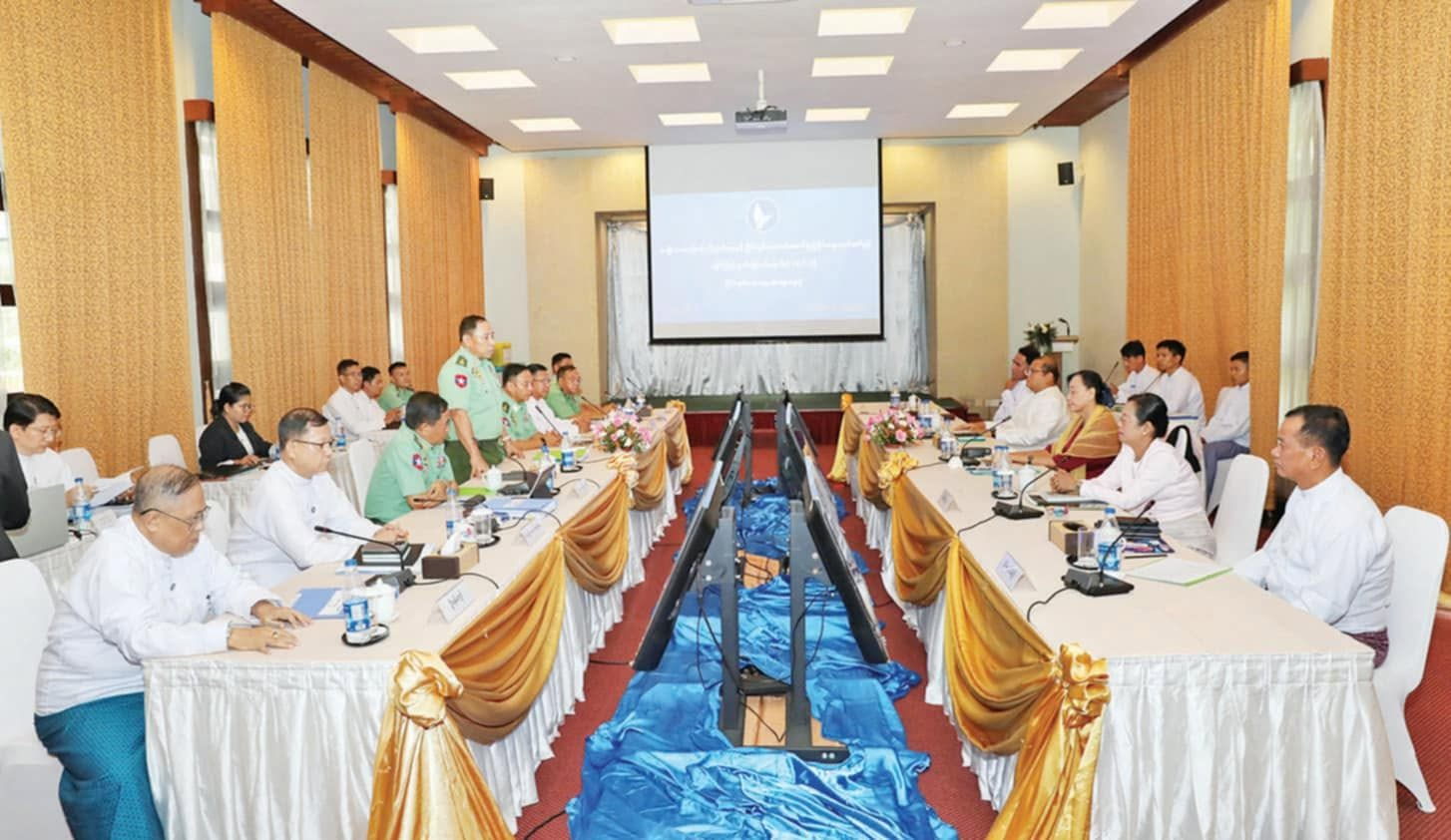
Myanmar Spring Chronicle – Scenes from July 27
(MoeMaKa), July 28, 2026
War, Ceasefires, and Peace Talks
In recent years, armed conflicts have become more widespread around the world. Many countries are increasing their military spending, while wars between states and civil wars within countries have led to growing numbers of displaced people, famine, and civilian deaths.
In Europe, the Russia–Ukraine war has entered its fifth year. In the Middle East, conflicts in Gaza and Lebanon, as well as the recent confrontation that began with Israeli and U.S. strikes on Iran and later spread to include attacks involving U.S. military bases in Gulf countries, illustrate the continuing rise of interstate conflicts. Alongside these are civil wars in parts of Africa and Asia. Among them, Myanmar’s civil war stands out as one of the longest-running conflicts, having reignited nationwide with renewed intensity over the past few years.
War is often described as the continuation of politics by military means when political solutions fail. However, not every war can simply be attributed to political deadlock; each conflict has its own historical background and underlying causes. In Myanmar, most of the armed conflicts that emerged after the February 1, 2021 military coup stemmed from widespread rejection of the coup and the growing belief that the military could only be removed through armed resistance rather than negotiations. As a result, fighting spread across much of the country.
Conducting war requires both manpower and financial resources. After the 2021 coup, both became easier for the opposing sides to mobilize. Many ethnic armed organizations that had never signed ceasefire agreements resumed fighting the military, while even some groups that had previously maintained ceasefires also took up arms against the junta. This contributed to the rapid escalation of Myanmar’s civil war.
As the conflict intensified, both sides required increasing numbers of troops and greater financial support. The military, which controls the central government, relied on state resources, tax revenues, and existing personnel. Heavy losses during the 2023 “Operation 1027,” including thousands of captured soldiers and significant battlefield casualties, prompted the junta to activate its long-dormant conscription law, which began to be enforced in early 2024.
During this period, resistance forces generally did not face major difficulties recruiting volunteers. Instead, their primary challenges were securing sufficient weapons, ammunition, and funding.
From 2024 into early 2025, resistance groups managed to overcome many obstacles, including geopolitical pressures and shortages of manpower, funding, and arms. However, by early 2025, several groups agreed to ceasefires and returned some of the towns they had captured. This marked the beginning of a shift from active warfare toward ceasefire negotiations.
China has played a significant role in this transition. Seeking to protect its strategic interests and maintain stability along its border with Myanmar, Beijing has continued supporting the military government while pressuring ethnic armed organizations operating along the border to align with its preferred policies. Groups that resisted Chinese pressure reportedly faced military, economic, and cross-border trade restrictions. To varying degrees, China succeeded in influencing organizations such as the MNDAA, TNLA, and UWSA to adjust their positions.
Following elections held under laws drafted by the military, the junta formed a civilian-labeled government in April this year and proposed a “100-day peace initiative” to promote ceasefire talks. The offer was extended only to ethnic armed organizations and excluded the National Unity Government (NUG). For People’s Defense Force (PDF) units aligned with the NUG, the junta presented surrender as the only option.
Although supporters of the Spring Revolution argue they did not fight simply to surrender or accept a ceasefire, some ethnic armed organizations that now control significant territory may see negotiations differently. For them, a ceasefire with the central military authorities could provide an opportunity to gain formal recognition of the territories they administer as self-administered areas or even future states.
As is already well known, the MNDAA and TNLA—both of which fought fiercely against the military during Operation 1027—have since agreed to ceasefires, returned several towns, and sought official recognition of the areas they currently control.
Their decision raises an important question: will other ethnic armed organizations also choose the ceasefire path?
There are several possible reasons for doing so. Rather than believing they can continue achieving military victories, some groups may see preserving their current gains as the more practical objective. At the same time, competing territorial claims, taxation disputes, and other conflicting interests among neighboring ethnic armed organizations have weakened some alliances, leading groups to focus more on protecting their own positions.
Even organizations that remain militarily capable may recognize that, if fighting continues independently, they will eventually reach a point where ceasefire negotiations become unavoidable.
Although politicians, armed groups, and the media increasingly refer to “peace talks,” genuine peace requires political dialogue that addresses the root causes of the conflict. Myanmar remains far from reaching that stage. For now, ceasefires appear to be viewed less as a pathway to a comprehensive political settlement and more as a practical means of preserving the current balance of power while avoiding further military escalation.