Myanmar Spring Chronicle – Scenes from July 28
(MoeMaKa), July 29, 2026
How Might Myanmar’s Federal Union Take Shape After the Changes Since 2023?
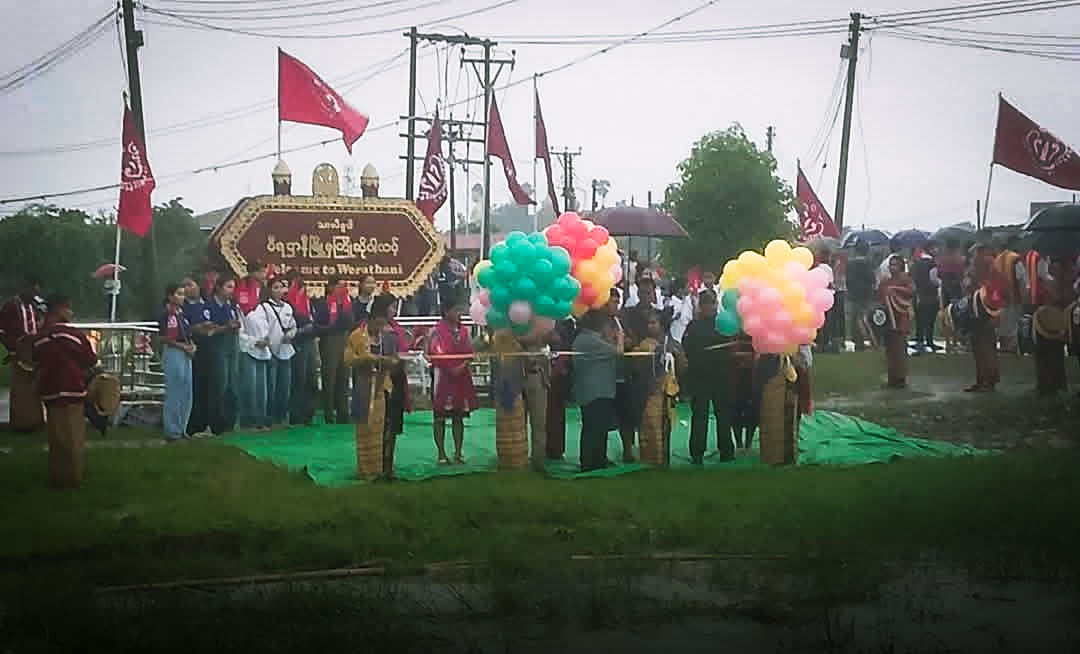
Recent reports say that the Arakan Army (AA) has officially renamed Pauk Taw and Minbya townships in Rakhine State as Wirathani and Anjanapura, respectively. The change comes more than two years after the AA captured the two towns following the resumption of fighting with Myanmar’s military on November 13, 2023.
Today, the AA controls 14 of Rakhine State’s 17 townships, with only Sittwe, Manaung, and Kyaukphyu remaining outside its control. In areas under its administration, the AA has gradually established governing institutions, including local administration, immigration services, schools, and police forces. However, because Rakhine remains under heavy trade restrictions, residents continue to face serious economic hardship. Essential goods often reach the state through long, difficult routes or informal cross-border networks, increasing costs and limiting supplies.
Among Myanmar’s conflict-affected regions, Rakhine has become one of the most expensive places to live due to the blockade. Employment opportunities remain limited, and unlike some other ethnic regions, Rakhine lacks accessible industries such as mining, gemstone extraction, oil production, or cross-border commerce that could generate income for ordinary people. As a result, many residents face both high living costs and limited earning opportunities.
One area where the emerging Arakan administration has made little progress is foreign relations with neighboring Bangladesh. Although Bangladeshi authorities reportedly communicate with the AA on practical border issues, such as incidents involving fishermen crossing the border, there has been no formal engagement on broader issues including border security, Rohingya repatriation, or cross-border trade. Bangladesh continues to recognize the military-led government in Naypyidaw as Myanmar’s official government and appears careful not to treat the AA as a government-level counterpart.
The developments in Rakhine reflect a broader trend that has emerged since Operation 1027. Ethnic armed organizations and People’s Defense Force (PDF) groups that have gained control of territory have moved quickly to establish administrative, educational, and healthcare systems. They have also sought recognition—either because they now govern these areas militarily or because of historical and ethnic claims to the territory.
The Myanmar National Democratic Alliance Army (MNDAA), for example, placed towns such as Hsenwi and Kutkai—areas it had not previously governed—under the administration of the Kokang Special Region (1). Likewise, the Ta’ang National Liberation Army (TNLA) established administration in towns including Namkham, Kutkai, Hsipaw, Kyaukme, and Nawnghkio after capturing them, although some of these areas were later relinquished following ceasefire arrangements.
During its administration between 2024 and 2025, the TNLA issued vehicle registrations, driver’s licenses, and Ta’ang regional identity cards. It also established the Ta’ang Education Council and introduced new administrative and educational systems. Similar measures were implemented in Kokang, where regional identification cards and vehicle registrations were also issued. Rakhine has likewise been building its own administrative, education, and healthcare institutions.
These developments suggest that several ethnic regions are already implementing elements of a federal system in practice by creating their own governance structures and public services.
While many welcome the fact that these territories are no longer under the direct control of Senior General Min Aung Hlaing’s military, concerns have also emerged about the possibility of disputes between neighboring ethnic armed organizations. Observers have noted tensions between the MNDAA and Shan armed groups, between the TNLA and the Kachin Independence Army (KIA), and between the TNLA and the MNDAA. More recently, reports have also suggested efforts to encourage some armed groups in central Myanmar that are not under the NUG Ministry of Defence (MOD) to come under two separate chains of command (COCs).
Although most resistance groups broadly agree on building a Federal Democratic Union, there is still no shared blueprint for how such a union should be organized or governed. Organizations such as the National Unity Consultative Council (NUCC) and the Steering Committee for the Emergence of a Federal Democratic Union (SCEF) include only some ethnic armed organizations, while many others continue to operate through regional alliances shaped by local and geopolitical considerations. As a result, there is still no clear or comprehensive answer to what Myanmar’s future federal union will ultimately look like.
One point, however, appears increasingly evident: any future Union of Myanmar is unlikely to resemble the constitutional systems established under the 1947, 1974, or 2008 constitutions.