Myanmar Spring Chronicle – Scenes from July 30
(MoeMaKa), July 31, 2026
Common Political Agreement (CPA) First Draft Unveiled in Mae Sot
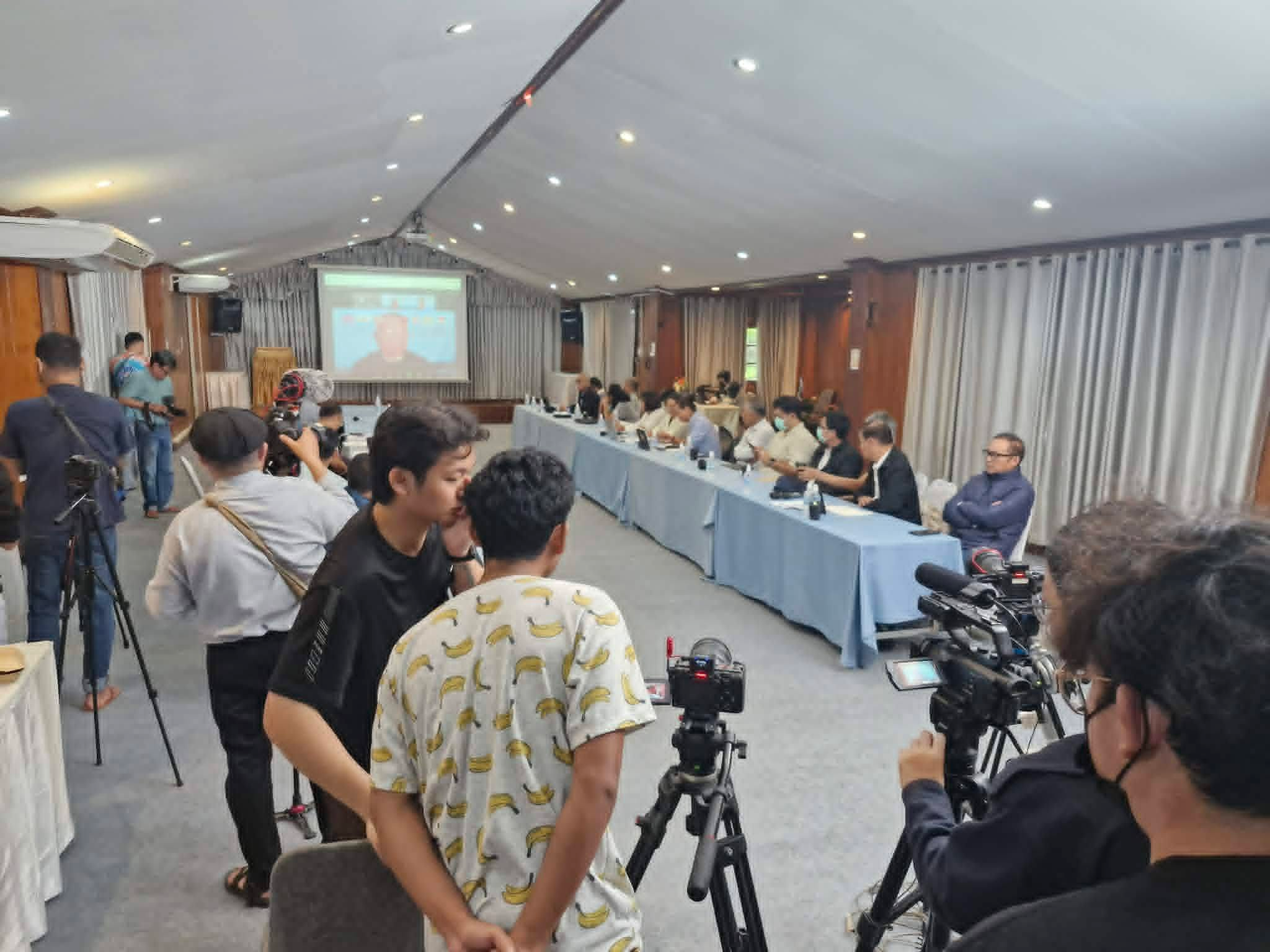
A public event was held in Mae Sot to announce the first draft of the Common Political Agreement (CPA), a proposed framework aimed at the complete dismantling of military dictatorship and all forms of authoritarian rule in Myanmar, while laying the foundation for a future federal democratic union. The organizers also invited members of the media to explain the objectives and contents of the draft.
The agreement has been formally endorsed by seven organizations: the Committee Representing Pyidaungsu Hluttaw (CRPH), the National Unity Consultative Council (NUCC), the National Unity Government (NUG), the Sagaing Region Parliament, the Sagaing Interim Government, the Mandalay Interim Government, and the Mandalay Region Parliament.
It is important to note that the CPA is not a military alliance. While some of the signatories have links to armed resistance movements, organizations such as the NUCC, CRPH, and the regional parliaments are political institutions rather than armed groups. The NUCC, in particular, is widely understood to have taken the lead in coordinating and drafting the agreement. According to its representatives, the draft will also be shared with the Steering Committee for the Emergence of a Federal Democratic Union (SCEF) and other revolutionary stakeholders for further discussion.
According to media reports, the draft includes several key principles. It calls for disputes among revolutionary forces to be resolved exclusively through peaceful dialogue rather than armed confrontation. It also emphasizes that the struggle should focus on the liberation of the entire country, rather than only individual regions or organizations. If political negotiations with the military authorities become necessary in the future, the draft proposes that revolutionary organizations first consult one another and develop a common position based on the CPA before responding collectively. Another notable provision recognizes the 2020 general election results not as a mandate to restore the political system created under the 2008 Constitution, but as a democratic mandate supporting the revolution and the establishment of a federal democratic union.
Among the seven groups endorsing the draft, four are the interim governments and legislatures of Sagaing and Mandalay, while the remaining three are the NUCC, CRPH, and NUG. Organizers have also indicated that the draft will be circulated to other armed organizations, including independent People’s Defence Force (PDF) units outside the NUG command structure and ethnic armed organizations (EAOs).
However, one of the more challenging provisions may be the requirement that revolutionary groups coordinate among themselves before engaging in any political negotiations with the military. Based on past experience, ethnic armed organizations have generally made decisions on ceasefires independently, according to their own political and military circumstances. For example, after Operation 1027, the Kokang and Ta’ang armed groups reached separate ceasefire agreements without first consulting other resistance organizations, illustrating the practical difficulties of adopting a collective decision-making framework.
In its current form, the CPA remains relatively limited in scope. Although it is backed by the NUCC, CRPH, NUG, and several regional institutions, no ethnic armed organizations have yet formally joined the agreement. Likewise, many independent armed groups operating in Sagaing, Mandalay, Magway, and other regions outside the NUG’s command structure have not yet become participants.
Questions also remain about whether organizations such as the PLA operating in Mingin, Yinmabin, and parts of Sagaing and Mandalay, along with other non-NUG armed groups, will eventually be invited to endorse the agreement. This issue is particularly significant because tensions among resistance groups in central Myanmar have often stemmed from practical disputes over taxation, local administration, and recruitment rather than broader political disagreements.
While the CPA promotes political unity and peaceful conflict resolution, it does not appear to directly address these day-to-day governance and resource-sharing issues that have contributed to friction between armed groups on the ground.
Ultimately, the success of the first CPA draft will depend on how many additional organizations choose to endorse it and, most importantly, whether Myanmar’s major ethnic armed organizations decide to participate. Those developments are likely to determine whether the agreement evolves into a broadly accepted political framework or remains a more limited initiative.