
Myanmar Spring Chronicle – Scenes from July 25
(MoeMaKa), July 26, 2026
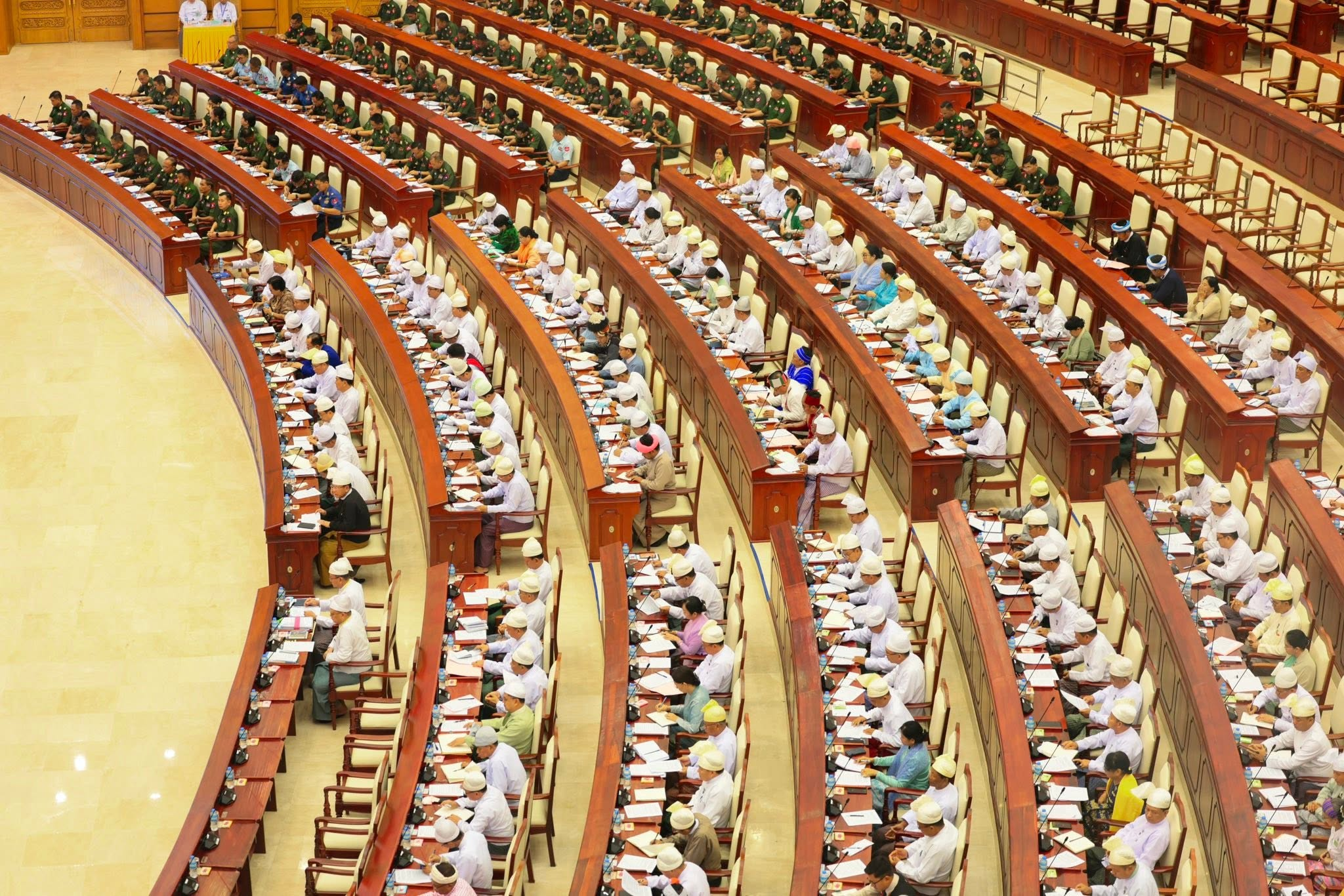
A Parliament Dominated by the USDP Begins Questioning Min Aung Hlaing’s Military Government
Reports have begun to emerge that Myanmar’s post-election parliament—dominated by the military-backed Union Solidarity and Development Party (USDP), led by former military generals—has started raising questions about weaknesses in the administration of Senior General Min Aung Hlaing.
Although many countries refused to recognize the 2025/26 election as free or legitimate, the military proceeded with it after rewriting election laws to heavily favor the USDP and the National Unity Party (NUP), while restricting the activities of other political parties. Voting was held in only about half of the country’s territory. Nevertheless, parliament convened in March 2026, and in early April it elected Min Aung Hlaing, who was still serving as commander-in-chief at the time, as president. He then formed a government largely according to his own preferences.
Some observers initially hoped the 2026 government might resemble the administration formed under President Thein Sein after the 2010 election. In reality, however, the two situations are fundamentally different.
When Thein Sein took office in 2011, although the USDP and the military remained the pillars of power, the government attempted to project an image of greater political tolerance. This was demonstrated by the release of opposition leader Aung San Suu Kyi shortly after the election and by allowing the National League for Democracy (NLD) to resume political activities. At that time, the military-backed government held firm military and political control over the country, giving it enough confidence to seek international recognition while permitting limited opposition activity.
By contrast, the Min Aung Hlaing government in 2026 controls far less territory and faces significantly stronger public resistance.
Compared with the parliament formed in 2011, the current parliament appears to operate under much tighter control. The military engineered the election to ensure the USDP secured an overwhelming majority while allocating a smaller share of seats to the National Unity Party (NUP), which traces its origins to members of the former Burma Socialist Programme Party after the 1988 uprising. Some retired military officers were reportedly encouraged to run under the NUP banner, allowing the party to win a number of seats.
Overall, the arrangement appears designed to create the appearance of a more diverse parliament while keeping it firmly under military influence.
However, despite these controls, representatives from the NUP and several ethnic political parties have begun raising sensitive issues in parliament. They have questioned the military’s forced conscription practices, the controversial odd-even vehicle and fuel rationing system introduced under Min Aung Hlaing’s orders, and the continued closure of the Hsipaw Bridge by the military.
It is unlikely that the Min Aung Hlaing administration welcomes such questions. The military may have expected that a parliament composed mainly of USDP, NUP, and ethnic party representatives elected under the post-coup electoral framework would overwhelmingly support the government.
Instead, some ethnic party and NUP lawmakers appear to be responding to widespread public frustration, particularly over forced military recruitment and the government’s failure to review or revise the controversial odd-even system despite months of criticism.
Another possible explanation is that, although these lawmakers contested elections held under military-designed rules, they now feel an obligation to represent the concerns of their constituencies and address nationwide problems once inside parliament.
A comparison can be drawn with the parliament during Thein Sein’s administration beginning in 2011. At that time, some USDP lawmakers, together with representatives from the National Democratic Force (NDF) led by Khin Maung Swe and Dr. Than Nyein, attempted to provide a degree of parliamentary oversight by questioning government policies and even reducing budget allocations for certain government projects.
Today’s parliament, however, has considerably less independence than its predecessor. Unlike the reform-oriented approach taken under Thein Sein, Min Aung Hlaing’s government has shown little indication that it is willing to tolerate meaningful parliamentary scrutiny or pursue political reforms.
Even so, it remains to be seen whether the military will be able to exercise complete control over the very lawmakers who were elected through an electoral process that it carefully designed and managed.