
Myanmar Spring Chronicle – Scenes from June 4
(MoeMaKa), June 5, 2026
How Should We Interpret the U.S. Secretary of State’s Remarks on Myanmar Before a Congressional Committee?
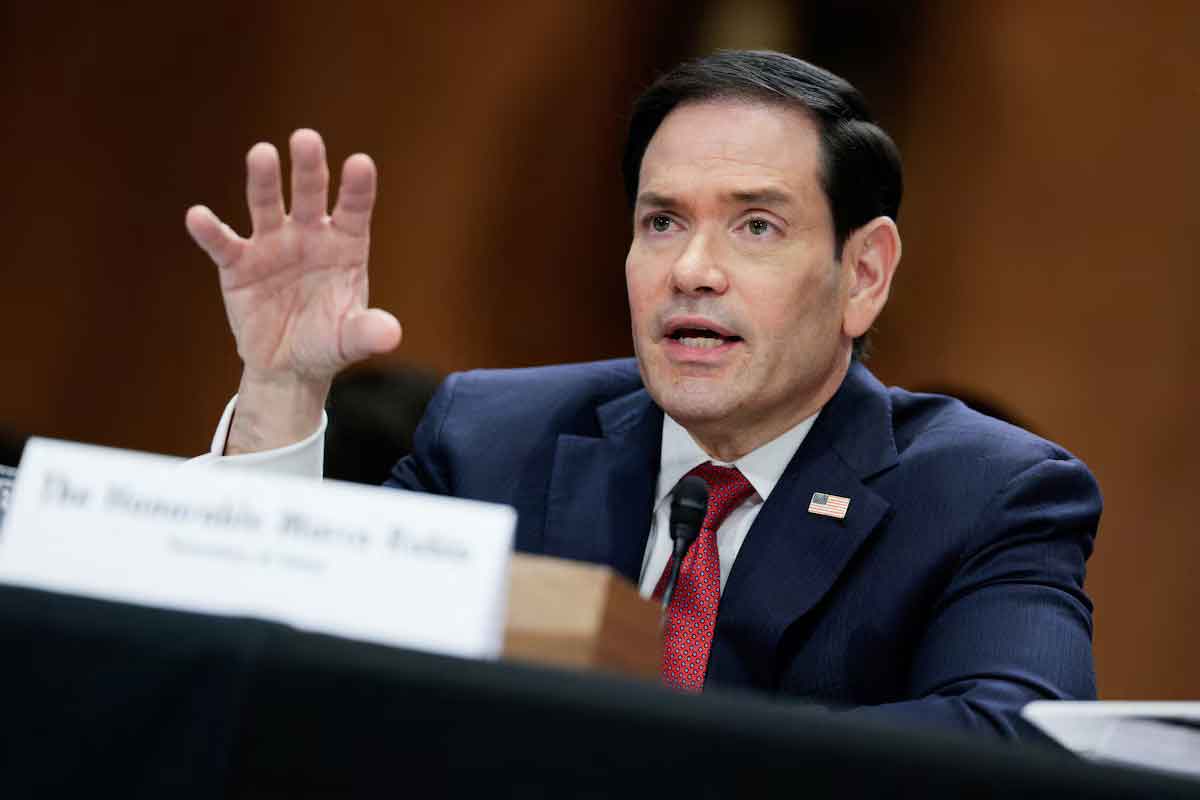
In recent days, U.S. Secretary of State Marco Rubio appeared before a congressional committee hearing, where Senator Mitch McConnell raised questions regarding U.S. policy toward Myanmar.
Senator Mitch McConnell, a Republican lawmaker, has been a longstanding advocate for democracy in Myanmar. Since the 1990s, he has consistently supported sanctions against Myanmar’s military governments and backed legislative and policy initiatives promoting democratic reform.
During the hearing, McConnell questioned the current U.S. foreign policy approach toward Myanmar, asking whether the United States was effectively taking a neutral stance between the military regime and the pro-democracy opposition forces. He also raised concerns about delays in disbursing congressionally approved assistance intended to support Myanmar’s democratic transition.
McConnell, often described as a friend of Myanmar’s democratic movement, was once one of the most influential figures in the U.S. Senate. In recent years, however, age and health concerns have reduced some of his political influence and his ability to shape policy outcomes as strongly as before.
Nevertheless, he continues to speak out and advocate for Myanmar’s democracy movement and for measures responding to the military’s authoritarian rule, a cause he has championed for more than three decades.
Responding to McConnell’s questions, Secretary Rubio stated that the United States would prefer to see a civilian democratic government in power rather than a military-led government backed by China. He emphasized that Washington is not neutral between those two alternatives. However, he also noted that China’s influence makes the situation particularly difficult to address.
Regarding delays in democracy-related assistance, Rubio explained that the administration is reviewing spending policies based on U.S. national interests and is restructuring how foreign assistance funds are allocated.
Looking at Rubio’s response, one could argue that it was a diplomatic answer, carefully framed in language designed to be politically acceptable. His assertion that China’s influence makes Myanmar difficult to address can be viewed as a justification rather than a complete explanation. Evidence for this interpretation can be found in the fact that Myanmar was reportedly not a significant topic of discussion during recent meetings between senior U.S. and Chinese officials, including the American president and cabinet members, during visits related to U.S.-China relations.
Although Myanmar occupies an important geopolitical position in Southeast Asia, it has received little attention in high-level discussions between Washington and Beijing. This, in itself, reflects the Trump administration’s broader approach toward Myanmar.
Most observers recognize that U.S. attention to Myanmar has declined compared with the level seen during the Biden administration. Over the past year, the Trump administration has taken actions such as terminating Temporary Protected Status (TPS) for Myanmar nationals in the United States and suspending visa applications for Myanmar citizens seeking to enter the country.
Congress previously passed the Burma Act to support Myanmar’s democracy movement and provide humanitarian assistance to people affected by the crisis. However, despite congressional approval, the U.S. State Department has not moved aggressively to establish the policies and implementation mechanisms needed to put much of that assistance into practice.
Since taking office, the Trump administration has significantly reduced foreign aid programs, dismantled USAID, and adopted an “America First” approach that prioritizes U.S. national interests above all else.
Observers have also noted signs that Washington may not be maintaining strict distance from Myanmar’s military regime. For example, in recent months, the U.S. Embassy in Yangon has promoted topics such as Myanmar’s purchase of U.S. soybean products and the sale of Ford vehicles in Myanmar through its social media channels. Some interpret these actions as indications of a more pragmatic relationship.
For supporters of Myanmar’s democratic transition and the ongoing Spring Revolution, it may be unrealistic to expect strong and sustained U.S. assistance. Instead, greater emphasis should be placed on relying on domestic capabilities, local resources, and strategic planning to advance their objectives.
Whether the Trump administration chooses to negotiate with China, compete economically and diplomatically, or pursue containment strategies, Myanmar appears likely to remain a relatively low priority within broader U.S. policy calculations. Those concerned with Myanmar’s future should recognize that the country risks being overlooked amid larger geopolitical considerations.