
Myanmar Spring Chronicle – Scenes from May 12
(MoeMaKa), May 13, 2026
Consequences of the junta regaining control of the Mandalay–Myitkyina road
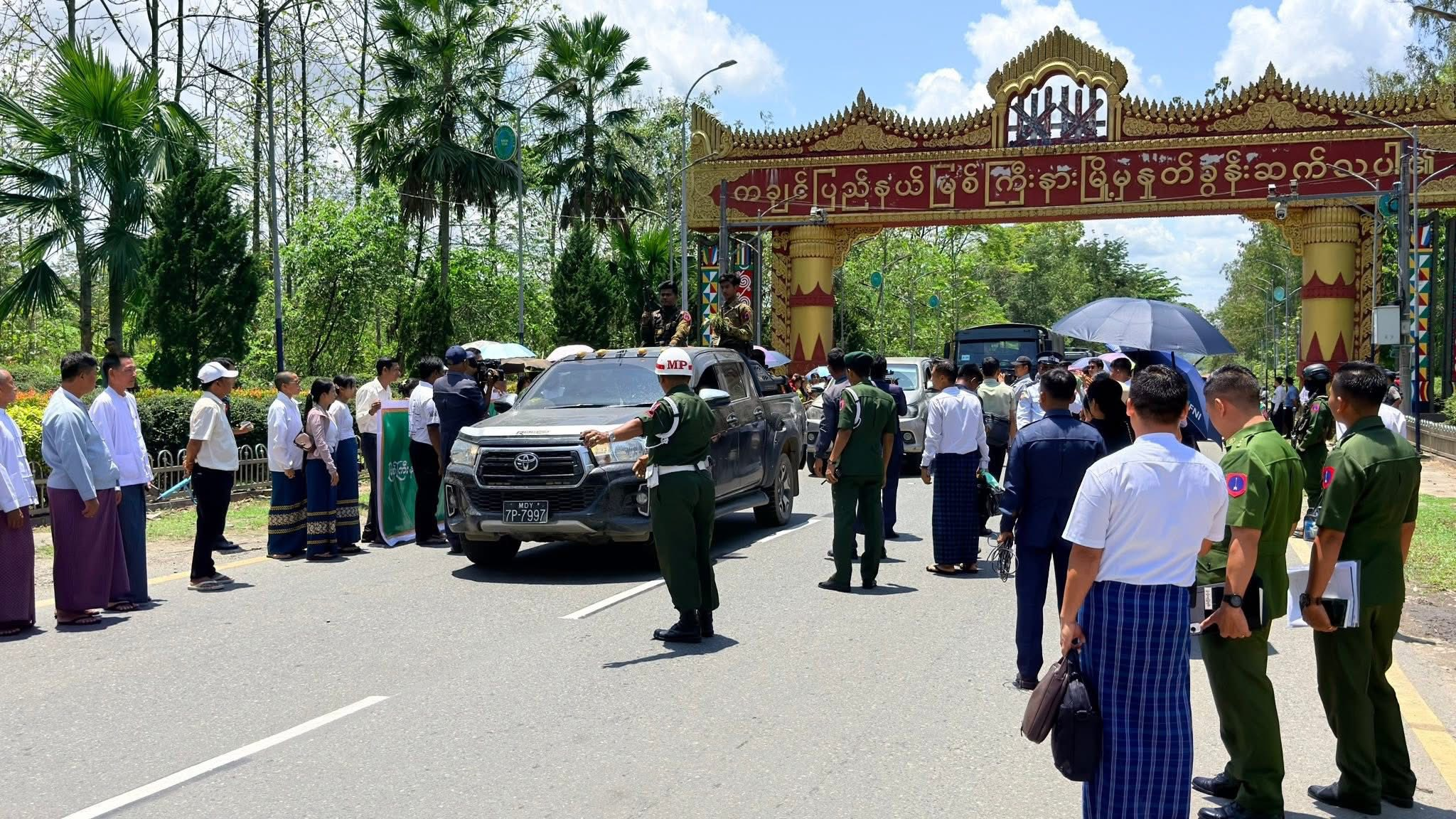
In recent days, a convoy estimated to include over 300 to nearly 400 vehicles—carrying junta troops, civil servants, supplies, and ammunition—arrived in Myitkyina, Kachin State, from Mandalay within 2–3 days. This convoy traveled via the Mandalay–Mogok road, which runs north–south along the eastern bank of the Irrawaddy River, passing through Thabeikkyin and Htigyaing, crossing from Sagaing Region into Kachin State.
After regaining control in recent months over the Myitkyina road corridor, this marks the first time the junta has been able to send a large convoy of troops, weapons, and supplies along this route.
Starting in late 2024, intense fighting broke out in Bhamo. Around mid-July to early August 2025, the junta sent a resupply flotilla carrying troops and weapons along the Irrawaddy River for about two weeks during peak water levels. Along the river route, the convoy came under repeated attacks from various PDF armed groups. At that time, the junta relied on river transport because it did not control the Mandalay–Mogok road.
The flotilla initially consisted of 17 vessels, but only around 10 reached Bhamo. During that period, ethnic armed organizations and PDF forces had cut off key supply routes, forcing the junta to rely heavily on air transport to sustain operations in Kachin State.
From late 2025 into early 2026, the junta gradually launched offensives to retake areas along the eastern bank of the Irrawaddy in upper Mandalay Region. As a result, it has now regained effective control of the land route connecting Mandalay and Kachin State. This development is likely to deal a blow to both the KIA and PDF forces operating along the Sagaing–Kachin border.
In warfare, cutting off an enemy’s supply lines is considered just as critical as direct battlefield engagement. During Operation 1027, resistance forces successfully disrupted many of the junta’s logistics routes, then encircled and defeated remaining troops and positions. Similar patterns were seen across northern Shan State, Kachin State, Mandalay, Sagaing, Magway, and elsewhere, contributing to resistance successes.
After suffering numerous defeats, the junta has used ceasefires, counteroffensives, and other tactics to gradually retake lost bases, towns, territories, and strategic roadways. Over the past year, it has reportedly regained more than a dozen towns and surrounding areas.
Although many towns and regions remain outside its control, the junta appears to be prioritizing the recapture of strategically important transportation routes—roads and waterways in central Myanmar.
Regaining firm control over the Mandalay–Kachin road enables faster logistical support to northern Myanmar and could facilitate resupply to active conflict zones such as the jade-rich Hpakant area.
At the same time, the junta continues military operations along the eastern bank of the Irrawaddy and in areas connected to northern Kachin State. It is also launching offensives in western Myanmar, targeting key towns and routes linking northern and southern Chin State.
In recent weeks, the junta retook Falam in Chin State after deploying large forces and suffering significant losses. It also recaptured strategic positions such as Kennedy Peak along the road connecting to Tedim in northern Chin State.
The junta is increasingly focusing on controlling key routes and towns linked to Kachin and Chin States. It is also attempting to control trade routes connecting southern Chin State (Mindat and Matupi) to northern Rakhine State. Recently, junta forces moved into Kan Gyi village in Htilin Township, signaling efforts to cut off goods flowing into Rakhine via Paletwa in southern Chin State.
As the junta pushes to control land and river routes connecting central Myanmar to border regions, resistance forces are likely aware of these developments. It is important for resistance groups to recognize the strategic significance of maintaining and protecting their own supply and communication lines, as disruptions to these networks can have major consequences.