Myanmar Spring Chronicle – Scenes from May 26
(MoeMaKa), May 27, 2026
Conflicts Among Revolutionary Forces
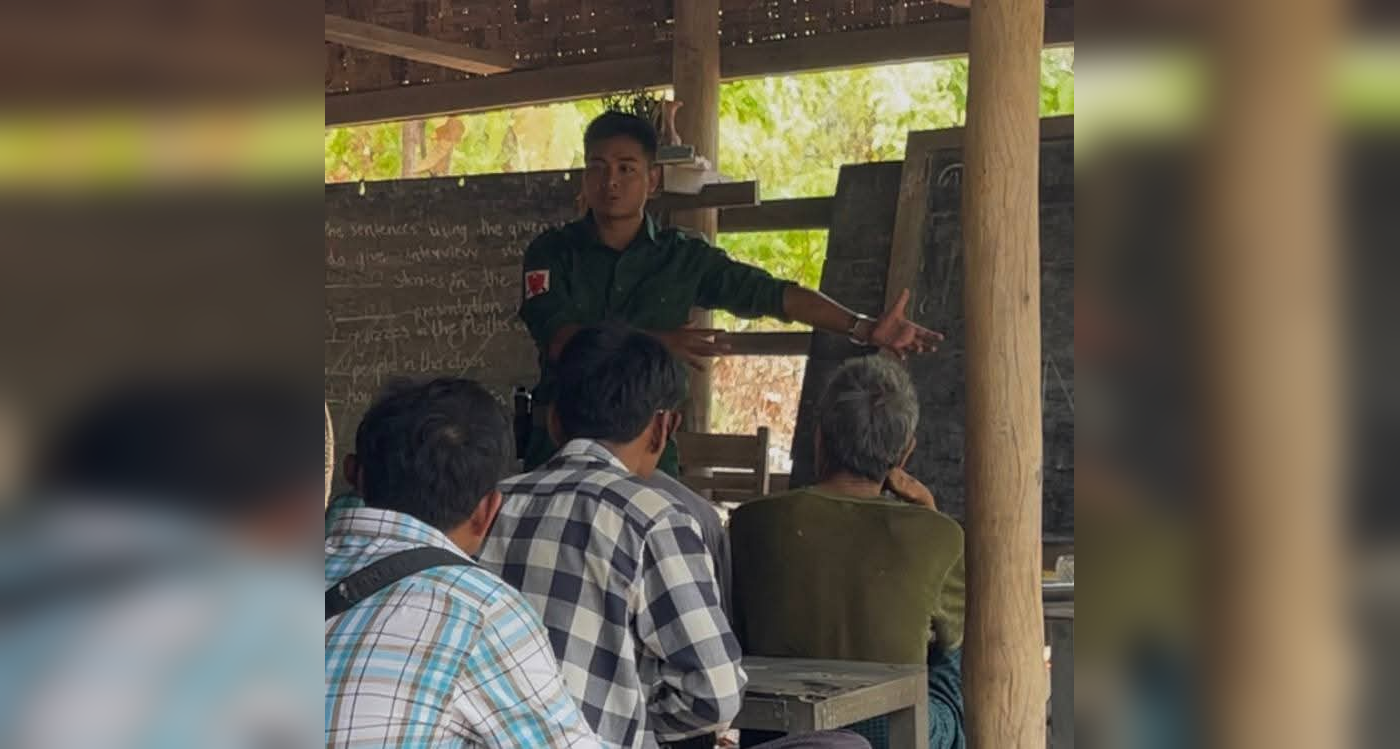
Reports have emerged of tensions between the Student Revolutionary Force (SRF), a student resistance group, and the National Unity Government (NUG) Ministry of Defense-affiliated Minkin Township People’s Administration Team (Pa-Ah-Phah) and People’s Defense Force (Pa-Ka-Phah). According to the reports, six SRF members had been detained by the Minkin Township Pa-Ka-Phah. On May 26, an incident also occurred in which Ko San Tin Htun, chairman of the SRF Central Executive Committee, was reportedly shot at and arrested by forces from the Minkin Pa-Ka-Phah, Pa-Ah-Phah, and local battalions while traveling to meet village administrators.
In recent days, news of these conflicts in Minkin Township has been occupying headlines. The disagreements between the SRF operating in Minkin Township and the township Pa-Ah-Phah and Pa-Ka-Phah battalions have reportedly existed for several months. Earlier this year, in January, tensions were reported between the SRF and NUG-affiliated forces over administrative implementation. Even before that, beginning in 2025, there had already been mutual accusations between the two armed groups regarding military recruitment and tax collection in certain villages where the SRF operated, leading to escalating tensions.
Additionally, reports indicate that there were disputes between local residents and the SRF concerning taxation related to gold dredging operations along the Chindwin River villages.
The issue of gold dredging concessions reportedly caused dissatisfaction not only between the SRF and the Pa-Ka-Phah, Pa-Ah-Phah, and armed units, but also between local residents and township-level Pa-Ka-Phah and Pa-Ah-Phah officials. Since the Minkin region, like some other areas, contains gold dredging businesses capable of generating tax revenue, questions have arisen as to whether competition over taxation rights contributed to these frictions, disputes, and conflicts.
Some reports state that from 2022 to 2024, taxes collected from gold dredging operations along the Chindwin River were proportionally shared among NUG-affiliated administrative bodies, battalions, the SRF armed group, and local communities.
Regarding the recent incidents, some reports quote the Minkin Pa-Ah-Phah under the NUG government as accusing the SRF of organizing protests that damaged the NUG’s reputation and committing unlawful killings, and stating that armed operations would be conducted to arrest them.
There are also claims that the People’s Administration Team and People’s Defense Force had filed complaints to the Ministry of Home Affairs concerning crimes allegedly committed by certain SRF members, and therefore raids and arrests were necessary. Similar incidents had previously occurred with the BNRA led by Bo Naga, where armed encirclements and attacks were justified using allegations of criminal misconduct. Likewise, Bo Let Yar, who served as a minister in the Magway Federal Unit government, was also reportedly surrounded by armed forces under similar accusations.
Looking at these events, similar incidents have occurred not only in Minkin but also in Pale and Yinmabin townships in Sagaing Region and Myaing Township in Magway Region. Some revolutionary groups view armed clashes, raids, and military pressure among forces that are all fighting against the military dictatorship as developments that weaken the revolution itself.
The National Unity Government is both one of the strongest armed political organizations and a body expected to play a leading role in armed resistance movements in predominantly Bamar-populated regions during the Spring Revolution. This has led to questions over whether smaller armed groups could instead be brought together through political persuasion and organizational engagement rather than through force.
There are growing concerns that armed attacks and forceful arrests among revolutionary groups could damage unity-building efforts within the revolution. Since the 2021 military coup, rather than forming a nationwide armed force independently from the beginning, the NUG later attempted to consolidate numerous revolutionary groups that had already emerged separately across different regions. This background is one of the fundamental causes behind the current problems.
This situation can be seen less as something deliberately created by the NUG and more as a unique characteristic and circumstance of the Spring Revolution itself. Among ethnic armed organizations, some have unified under strong nationalist foundations, while in other cases multiple armed groups exist within the same ethnic community. In Shan, Pa-O, Chin, Mon, Karen, and Karenni areas, for example, multiple armed organizations exist among the same ethnic populations. This raises further questions about whether these groups can politically negotiate, coordinate, and cooperate without becoming adversaries.
Likewise, in Bamar-majority regions such as Upper Myanmar (Anyar), Bago, Ayeyarwady, Mandalay, Sagaing, and Magway, the key challenge today is how to unify armed groups — or at least prevent them from turning against one another while cooperating in the shared struggle against military dictatorship. It is arguably one of the most critical and existential questions facing the revolution today.