
Myanmar Spring Chronicle – Scenes from May 27
(MoeMaKa), May 28, 2026
Civil War and Forced Recruitment
As Myanmar’s civil war drags on year after year, the problem of forced military recruitment is something faced not only by civilians living under the military junta, but increasingly also in some territories controlled by revolutionary armed groups.
The prolonged duration of the war, rising numbers of casualties and deaths, continuous exposure to intense fighting, and weaknesses in command and administration have all contributed to growing numbers of deserters from armed organizations. This, in turn, has become one of the driving forces behind forced recruitment efforts.
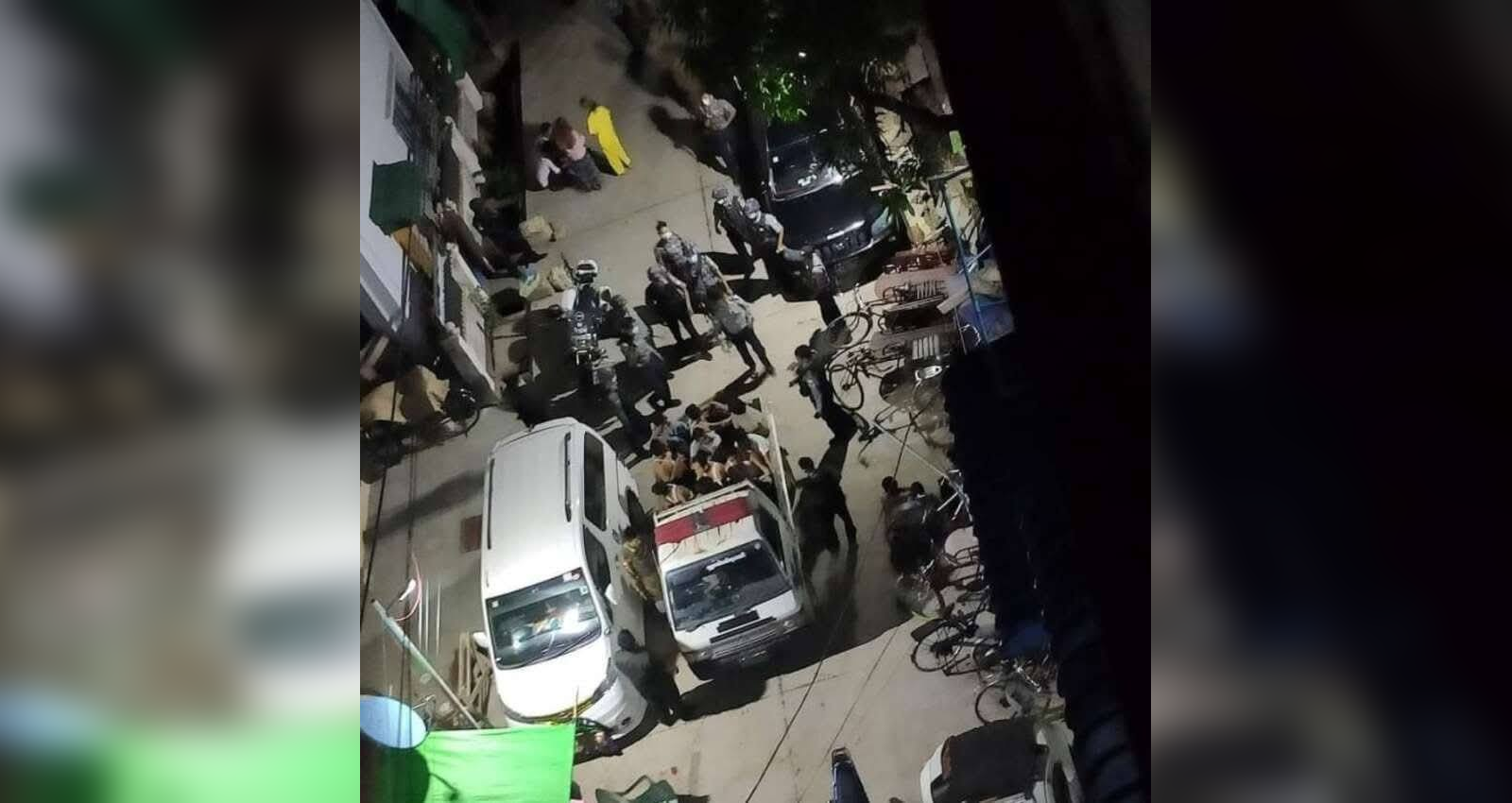
In Yangon, Mandalay, and other major cities, young people working in urban areas are reportedly being stopped while walking on the streets under the pretext of “inspection” and then forcibly detained for recruitment. In recent weeks, there have also been daily reports of recruitment teams entering residential neighborhoods and even homes to forcibly take away young people for military service.
Under the Conscription Law activated in February 2024, those within the eligible age range are supposedly to be recruited through a rotation or lottery system. In practice, however, those targeted first are usually people with limited financial means or weak social connections. Wealthier families are often able to send their children abroad, or even pay hundreds of millions of kyats to hire substitutes when conscription orders arrive. But for day laborers and poorer people who cannot afford substitutes, there is effectively no choice but to serve.
For those involved in the junta’s recruitment machinery—including the military, police, ward administrators, hundred-household heads, and unofficial pro-military networks—the conscription system has increasingly become a source of profit. During the substitution process, more people than necessary are reportedly detained, with release possible only after paying large sums of money. As a result, forced recruitment has evolved into a system driven by corruption and bribery involving enormous amounts of money.
Under the conscription system, around 5,000 recruits are reportedly trained each month and then sent to active battlefronts. Over time, this has become a growing pressure on opposing revolutionary forces. Although resistance groups encourage forcibly conscripted soldiers to defect with their weapons, there has not been a mass wave of defections. The junta appears to be using propaganda and tight control measures to prevent recruits from easily defecting or accessing information related to resistance groups. So far, the People’s Military Service recruits—often abbreviated as “Pa Sa” (ပစ)—have not become a major source of defections threatening the junta.
This describes the situation on the junta side, which is estimated to control only around 40 to at most 60 percent of the country’s territory. However, revolutionary forces have also increasingly resorted to authoritative methods and directives to recruit new soldiers.
One recent report stated that in northern Rakhine State, villagers from Thinbaw Hla village in Taungbro Letwe sub-township—an area inhabited by the Thet Kama (also called Daingnet) ethnic group—were forcibly recruited by the Arakan Army (AA). According to a statement released by 12 Thet Kama civil society organizations, AA personnel allegedly fired weapons, beat villagers, and detained over 100 men and women during recruitment operations.
This is only one recent incident. Similar reports of compulsory recruitment, as well as restrictions preventing military-age men and women from leaving their home areas, have emerged from Rakhine State, Chin State, Shan State, and Kachin State.
The problem of military recruitment predates the 2021 coup. Even before then, compulsory recruitment already existed in areas such as Kachin State, northern Shan, southern Shan, and eastern Shan. Ethnic armed organizations competing militarily with the central government—including the KIA, SSPP/SSA, RCSS, and PNO/PNA—had long issued mandatory service orders within their controlled territories.
In some ethnic regions, it was also common knowledge that children as young as around ten years old were sent away to monasteries or nunneries in distant areas for education and protection. Over the decades-long civil war, the large numbers of students at monastic schools in cities like Mandalay and Yangon were partly a consequence of forced recruitment pressures in conflict areas.
Only after the 2021 coup did residents of cities such as Yangon, Mandalay, Taunggyi, Mawlamyine, and Pathein begin to directly experience forced recruitment. For people living in rural state regions, however, this had already been a reality for decades. During earlier periods, fighting was not occurring everywhere every day, so conscription did not necessarily mean an immediate threat to life. However, service in some ethnic armed organizations had no fixed term, and conscripts often could not financially support their families, which led many parents to resist sending their children.
Since 2021, however, with the war escalating rapidly across the country, military service has become closely tied to the risk of death. As a result, many recruits and their families try to avoid service if possible.
Nevertheless, armed organizations on all sides continue using various methods to expand their forces in order to win battles and military campaigns. This has become one of the defining realities of the current era.