
Myanmar Spring Chronicle – Scenes from May 8
(MoeMaKa), May 9, 2026
ASEAN Leaders’ Summit and the Myanmar Issue
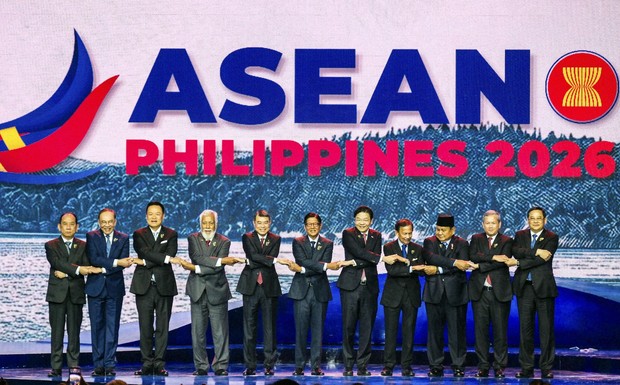
The ASEAN Leaders’ Summit, attended by presidents and prime ministers from the 11 member states, has begun in Cebu, Philippines, which is hosting the meeting on a rotating basis.
As is widely known, Myanmar—one of the member states—has been barred from attending at the leaders’ and foreign minister levels for nearly five years. This restriction stems from its failure to implement the Five-Point Consensus agreed upon in April 2021, which includes allowing humanitarian assistance and ending violence by armed forces amid the country’s ongoing civil war.
Instead, only a representative at the permanent secretary level from Myanmar’s military-run foreign ministry has been invited and is attending the current summit in the Philippines.
ASEAN has consistently raised concerns about Myanmar’s internal conflict, cross-border refugee flows, urgent humanitarian needs, drug production and trafficking, as well as human smuggling and trafficking. Over the past five years, the bloc has repeatedly called on Myanmar’s military leaders to release political prisoners—including opposition leaders—and to permit humanitarian access.
However, Myanmar’s military government has not fully complied with these demands. It has also later indicated that it never fully agreed with the Five-Point Consensus adopted at the Jakarta summit in 2021.
Now, more than five years after the coup, the military has held an election under its own arrangement. Following this, the coup leader assumed the presidency and appears to be seeking ASEAN recognition through a nominal civilian government.
On the first day of the summit, May 8, Thailand’s prime minister stated that the Myanmar issue is testing the unity of ASEAN member states.
In early April, just days after assuming the presidency, Myanmar’s military leader released former President U Win Myint from prison. A few days later, Daw Aung San Suu Kyi was transferred from prison to a residence in Naypyidaw. Some ASEAN member states view these moves as possible steps toward re-engaging Myanmar’s military leaders in ASEAN meetings. However, others consider them insufficient and prefer maintaining the current restrictions.
There are also indications that some countries are open to engaging with Myanmar’s military officials, even if only through online channels, suggesting a desire to slightly soften ASEAN’s stance toward the junta.
ASEAN aims to encourage dialogue and push for the release of political prisoners, including Daw Aung San Suu Kyi, and has acknowledged the release of U Win Myint as a positive step.
At a meeting held shortly after assuming the presidency, Myanmar’s military leader invited ethnic armed groups to engage in dialogue within a 100-day timeframe regarding the ongoing conflicts. However, forces under the National Unity Government (NUG), such as the People’s Defense Forces (PDF), were only told to surrender.
ASEAN as a bloc has not officially recognized the election results in Myanmar. However, some individual member states have engaged with Senior General Min Aung Hlaing as the head of the newly formed government.
Thailand, in particular—given its close ties and the direct impacts it faces from developments in Myanmar—has taken a relatively more flexible stance toward Myanmar’s military leadership.
At this summit, however, the Myanmar issue is competing with more immediate regional concerns. Chief among them is the fuel crisis triggered by the U.S.-Iran conflict affecting East Asian countries. The closure of the Strait of Hormuz has disrupted supplies of oil and natural gas, leading to shortages of fertilizers and rising prices—significantly impacting many ASEAN countries, especially Thailand, Vietnam, Singapore, Myanmar, Laos, and the Philippines.
As a result, the summit is also focused on finding cooperative solutions among ASEAN members to address shortages and rising costs of essential goods derived from oil and gas, including energy, fertilizers, and plastics.
Against this backdrop, Myanmar’s ongoing civil war and armed conflict continue to weigh heavily on the ASEAN Leaders’ Summit.