
Myanmar Spring Chronicle – Scenes from May 17
(MoeMaKa), May 18, 2026
A notice has been issued announcing the closure of the Chinese-owned Wuhan Kingsrich garment factory
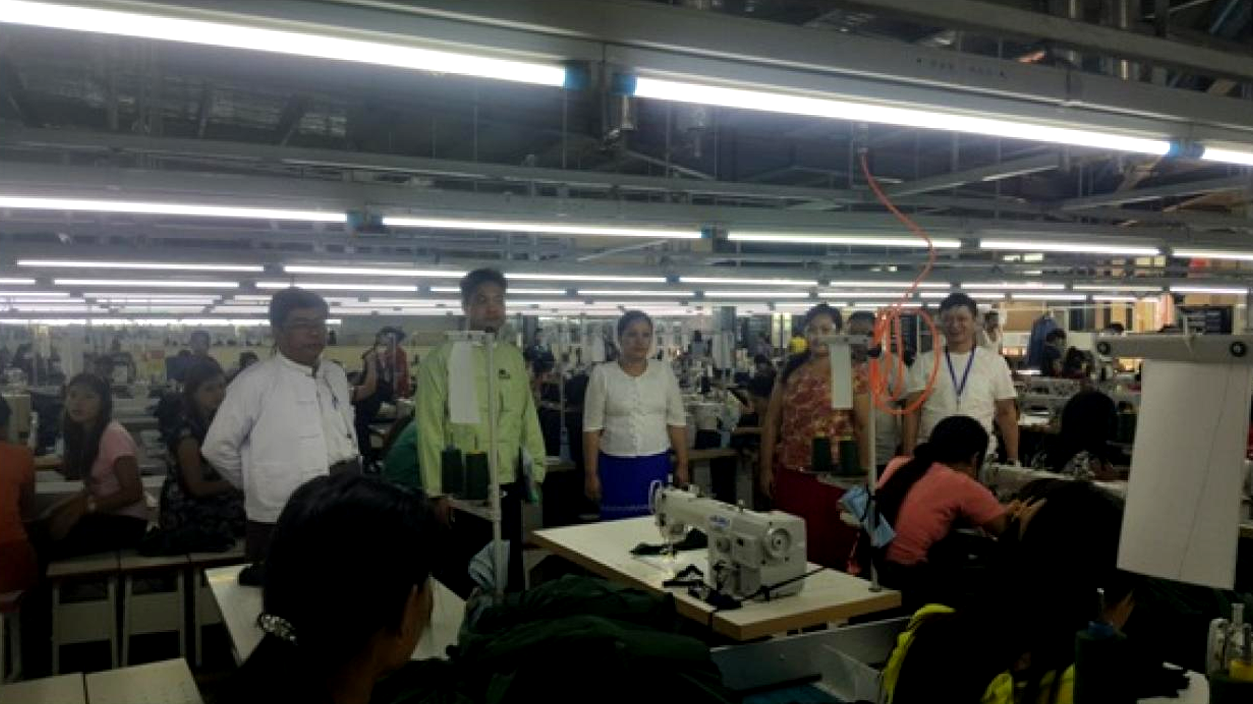
A notice has been issued announcing the closure of the Chinese-owned Wuhan Kingsrich garment factory, located in the Shwepyithar Industrial Zone in Yangon. The factory, which was established with Chinese investment, is expected to cease operations by the end of June. Thousands of Myanmar workers are employed there, meaning that the shutdown will likely leave a large number of garment workers unemployed.
The company stated that the closure was due to a reassessment of global strategic plans and changes in external market conditions. However, it is believed that several factors in Myanmar contributed to the decision, including inconsistent import-export regulations, suspension of orders from major clothing retailers such as H&M over labor rights violations, currency instability, and frequent electricity outages.
Many garment factories operate in developing countries with low labor costs — such as Bangladesh, Indonesia, Myanmar, and Cambodia — where imported raw materials are assembled for export to third-country markets. In Myanmar, garment industry investments from China, South Korea, and Taiwan began during the SLORC/SPDC military eras and have now existed for nearly three decades.
The products manufactured by these factories are mainly exported to developed markets such as Western Europe and the United States. Civil society organizations and labor rights activists in those countries have often pressured major clothing retailers not to source products from countries accused of labor rights abuses.
Even during the previous military regime, international retailers sourcing garments from Myanmar faced public pressure. At that time, debates also arose regarding sanctions and their consequences — especially whether sanctions harmed garment workers by eliminating employment opportunities. Opinions differed over whether the garment industry itself should be included in sanctions.
Following the military coup on February 1, 2021, calls for renewed sanctions emerged again, although the current situation differs from the previous military era. Advocates argued that sanctions could reduce tax revenues flowing to the junta and respond to the failure to fully implement labor rights laws and protections.
At present, organizations such as the European Union have not imposed direct bans on garments produced in Myanmar. Nevertheless, major clothing retailers appear to be independently withdrawing or suspending sourcing operations due to reputational and political pressure.
Since the outbreak of widespread civil war after 2021, large numbers of internally displaced people have fled to cities such as Yangon and Mandalay in search of safety and work. Some have migrated abroad for employment, while others remain trapped inside the country. For many of them, garment factory jobs — despite offering wages below what workers truly deserve — have become a lifeline.
Under military rule, both garment workers and workers in other industries face serious obstacles in obtaining fair wages and labor rights protections. Labor rights activists have often been treated as political opponents of the junta and subjected to arrests and imprisonment. Last year, leaders and members of the labor organization STUM were arrested and prosecuted under criminal charges. After the International Labour Organization (ILO) took action against the military regime over these arrests, they were reportedly released.
Since the coup, corruption within the administrative system has worsened. Labor rights activism has increasingly been restricted as political activity, and electricity shortages have driven up production costs, with some employers offsetting those costs by cutting worker benefits. As a result, workers’ daily wages have failed to keep pace with inflation.
The current daily wage of 6,800 kyats is worth only about US$1.50, meaning its real value has nearly halved compared with the pre-coup period, when workers earned 4,800 kyats under a much stronger exchange rate.
Despite these harsh conditions, garment workers have very few alternative employment opportunities. Many cannot return to their hometowns or villages because of ongoing armed conflict, leaving factory work in the cities as one of the only available options.
The difficult dilemma at the heart of this issue is whether the international community should boycott products made by foreign-invested garment factories due to the lack of labor rights, or prioritize the fact that these factories still provide desperately needed livelihoods for workers who otherwise have almost no employment alternatives amid multiple crises and hardships.