
Myanmar Spring Chronicle – Scenes from April 28
(MoeMaKa), April 29, 2026
How Can Excessive Resource Extraction Be Controlled Amid Civil War?
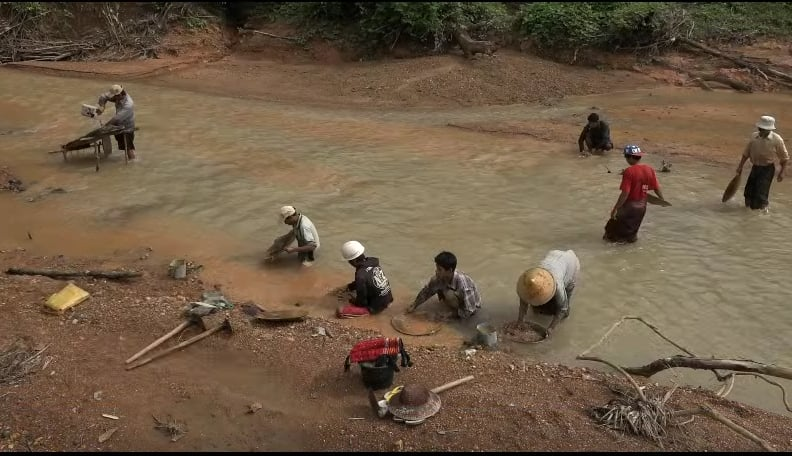
During the five years since the outbreak of the civil war, reports of excessive natural resource extraction have increasingly appeared in the media. Unrestricted logging, illegal timber harvesting, unregulated gemstone extraction without clear policies, excessive gold mining using machinery in rivers and streams, environmentally destructive rare earth processing, and intensive mining activities are now occurring across many parts of Myanmar.
In Kachin State’s Hpakant region, known for jade production, uncontrolled gemstone mining continues. Along the Chindwin and Ayeyarwady rivers, the scale of mechanized gold extraction remains unknown, as no organization has been able to systematically document or record it.
Mechanized gold dredging is no longer limited to rivers and streams—it is now even taking place inside reservoirs such as Thaphanseik Dam. These developments have emerged under the current conditions of widespread conflict. Similarly, in Kachin State, the environmental damage caused by rare earth extraction cannot be accurately measured or documented. In Wa-controlled areas, rare earth production that began in recent years has led to contamination of the Salween River, affecting not only Myanmar but also neighboring Thailand, prompting calls for international intervention.
In Tanintharyi Region, mining activities have significantly increased during the conflict, leading to visible environmental degradation. Media outlets have reported on these impacts and called for better regulation and control.
Excessive resource extraction is occurring across northeastern, northern, central, eastern, and southern Myanmar, indicating that the problem is widespread. These activities are causing immediate harm and will also result in long-term consequences.
In the short term, gold mining in rivers causes sediment buildup that alters water flow, increasing the risk of flooding during the rainy season. Toxic chemicals used in gold extraction contaminate water sources, poisoning those who rely on them. Aquatic life is affected, and people who consume contaminated fish also face health risks. Agriculture is damaged, and changes in river courses can destroy homes and villages.
Deforestation due to logging leads to increased flooding risks during the rainy season and rising temperatures as forest cover diminishes.
Excessive extraction of gemstones not only damages the environment but also depletes resources that belong to all citizens, effectively undermining the country’s future wealth.
Mining and gold extraction also damage agricultural land. Even if farmers wish to continue cultivating their land, they may be forced to sell because surrounding lands have already been sold, making farming unsustainable. Eventually, their land ends up in the hands of mining operators.
This raises the question: what conditions have led to such excessive extraction? The primary cause is the civil war. As conflict intensifies, environmental protection and resource management laws and monitoring mechanisms have weakened or collapsed. At the same time, natural resource concessions are granted to fund military operations.
Armed groups themselves sometimes engage directly in resource extraction to finance weapons and operational costs. In the absence of regulatory enforcement during this period of instability, those granted extraction rights often prioritize profit, disregarding environmental destruction and resource depletion. Such practices have become widespread.
Even protected areas like Alaungdaw Kathapa National Park, which had been preserved for decades, are now subject to unknown levels of logging. Similarly, in Mogok, ruby mining has expanded into areas that were previously untouched, particularly after recent battles and during periods of control by ethnic armed groups such as the TNLA.
In Hpakant, jade mining has reportedly expanded even into areas like village lands and cemeteries. At the same time, intense fighting among armed groups competing for control of resource-rich areas has turned places like Hpakant into conflict zones marked by repeated clashes, arrests, and killings.
In the long term, natural resources and the environment are shared assets belonging not only to specific regions but to the entire country and its people. They must be preserved as a collective responsibility.
As the war drags on and employment opportunities decline, dependence on natural resources is likely to increase, accelerating a cycle of exploitation and degradation.
If the well-being of local communities and long-term national interests are to be protected, all organizations have a responsibility to control excessive resource extraction as much as possible. Natural resources and the environment are an inheritance to be passed on to future generations. It is crucial to ensure that what is handed down is not a legacy of damage and destruction.