
Myanmar Spring Chronicle — November 24 Perspective
(MoeMaKa), November 25 2026
Armed Revolution and Extrajudicial Killings: How Should They Be Addressed?
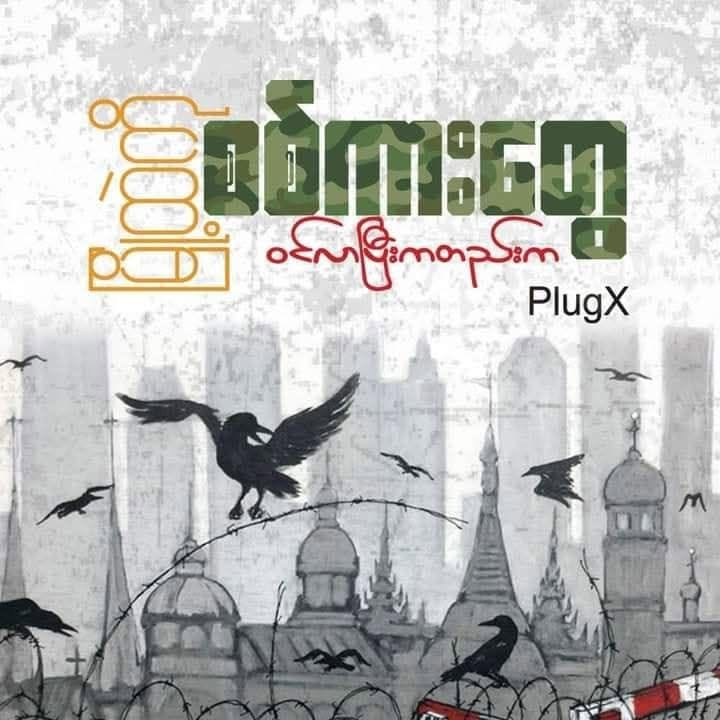
Reports emerged this week that poet Min Phone Naing, also known as Plug X, a former General Administration Department officer who joined the Civil Disobedience Movement (CDM) following the military coup and had been living in revolutionary-controlled territory, was killed by members of a Karenni coalition force in Mese Township, Karenni (Kayah) State.
According to reports published by two news outlets based in Karenni State, the poet was arrested by members of the Karenni coalition force while traveling from Demoso Township to Mese Township. He was reportedly killed on November 19.
Although social media posts have claimed that he was killed while in the custody of the Karenni State Police (KSP), news organizations have been unable to independently verify these allegations.
Min Phone Naing had served as an officer in the General Administration Department in Mandalay Region. After the 2021 military coup, he joined the CDM and subsequently relocated to Karenni State, where he had been living.
Social media posts also indicated that he had experienced psychological distress following allegations of misappropriation of revolutionary funds.
However, his reported killing within days of being arrested has prompted criticism of revolutionary armed organizations over allegations of extrajudicial killings and unlawful conduct.
This particular case has received considerable media attention because the victim was a well-known poet and public figure. Had a similar incident involved an ordinary civilian, it might never have been reported by the media and could have disappeared from public attention.
Incidents involving people being killed without legal proceedings or judicial review while in the custody of armed organizations or law enforcement bodies have occurred not only within the military regime’s forces but also among revolutionary armed groups.
Such killings, carried out without due process or a trial before a court of law, represent a serious concern.
Just as news organizations investigate and report abuses committed by the military regime using whatever evidence they can obtain, they must also investigate and expose violations committed by revolutionary armed organizations, supported by verifiable facts and evidence.
Since late 2021, there have been sporadic incidents in certain revolutionary-controlled territories involving the assassination of civilians and killings of individuals accused by revolutionary armed groups of being military informants.
In some cases, multiple people were killed in a single incident. However, most of these cases have not resulted in effective investigations, identification of perpetrators, or accountability.
Such incidents have been reported in Sagaing Region, Kachin State, central Myanmar, Karen State, Karenni (Kayah) State, southern Shan State, and major cities such as Yangon and Mandalay.
One of the earliest reported cases of extrajudicial killings involved a group led by Bo Thanmani in Thapyay Aye Village, Yinmabin Township.
Subsequent incidents included the killing of approximately six or seven underage youths in a village in Chaung-U Township, allegations that some young girls were raped before being killed, and the murder of an entire family and a guest in the Saw area, where the perpetrators reportedly took gold, money, and vehicles belonging to the victims.
Another incident involved the killing of a woman on a public road in Tamu Township.
In most of these cases, those responsible have not faced effective punishment.
Some may argue that carrying out an armed revolution is not the same as writing an essay or composing a poem, and that excessive violence and killings are therefore inevitable.
Others may defend such incidents by arguing that armed organizations consist of individuals from diverse backgrounds and that misconduct is bound to occur.
However, it is equally important for armed organizations to maintain discipline and establish mechanisms to investigate and punish violations of their rules and laws, particularly when such actions undermine the fundamental objectives of the armed revolution.
One of the central arguments used to mobilize public support for resistance against the authoritarian military and its fascist practices has been the military’s unlawful arrest, torture, killing, and sexual assault of civilians.
These abuses have been repeatedly cited as reasons why resistance against military dictatorship is necessary.
If revolutionary armed organizations themselves commit extrajudicial killings and allow perpetrators to escape punishment, just as the authoritarian military has done, the fundamental principles and moral foundations of the Spring Revolution and the struggle against military dictatorship will be weakened and ultimately undermined.
It is therefore crucial to ensure that incidents of extrajudicial killings are not simply forgotten over time after announcements that investigations have begun or investigative commissions have been established.
There may be reluctance to take action against perpetrators because they are comrades fighting alongside other revolutionary forces.
Some may also fear that punishing members of their own armed organizations could reduce their fighting strength and weaken their military capabilities.
However, such considerations must not become excuses for allowing serious violations to go unpunished.
The argument that armed revolution is not an idealistic exercise like composing poetry may be partly valid. Nevertheless, if the revolutionary movement is genuinely committed to resisting injustice, it must urgently confront the consequences of failing to hold its own members accountable.
This applies particularly to the extrajudicial killing of civilians, civilian employees working under the military administration who are not members of armed forces, and individuals casually accused of being informants without credible supporting evidence.
If perpetrators are shielded from accountability simply because they belong to one’s own side, or because revolutionary leaders are unwilling to punish their comrades, the revolution risks losing the very principles of justice it claims to uphold.
The urgent question, therefore, is whether a revolution committed to ending injustice can preserve its legitimacy while tolerating injustice within its own ranks.