
Myanmar Spring Chronicle – Scenes from April 5
(MoeMaKa), April 6, 2026
Myanmar’s Worsening Economic Hardship
People living in major cities like Yangon and Mandalay are increasingly feeling the pressure of economic hardship. As the ability to sustain daily life weakens and hopes of escaping this crisis fade, there have been growing reports of individuals giving up on life and taking their own lives.
In recent years, incidents of people jumping from bridges into rivers, or from overpasses onto roads, have been reported more frequently. On April 5, a man believed to be around 70 years old reportedly jumped from a pedestrian overpass in Sanchaung Township, Yangon. Among those taking their own lives due to an inability to cope, there are not only elderly individuals like in this case, but also people in their prime working age. While such tragedies have existed in every era, they appear to be occurring more often in recent years.
The ongoing civil war, economic hardship, and rapidly rising cost of living are making survival increasingly suffocating for ordinary urban populations.
The combination of civil conflict, poor governance, corruption, rising crime, and shrinking job opportunities is contributing to these dire conditions.
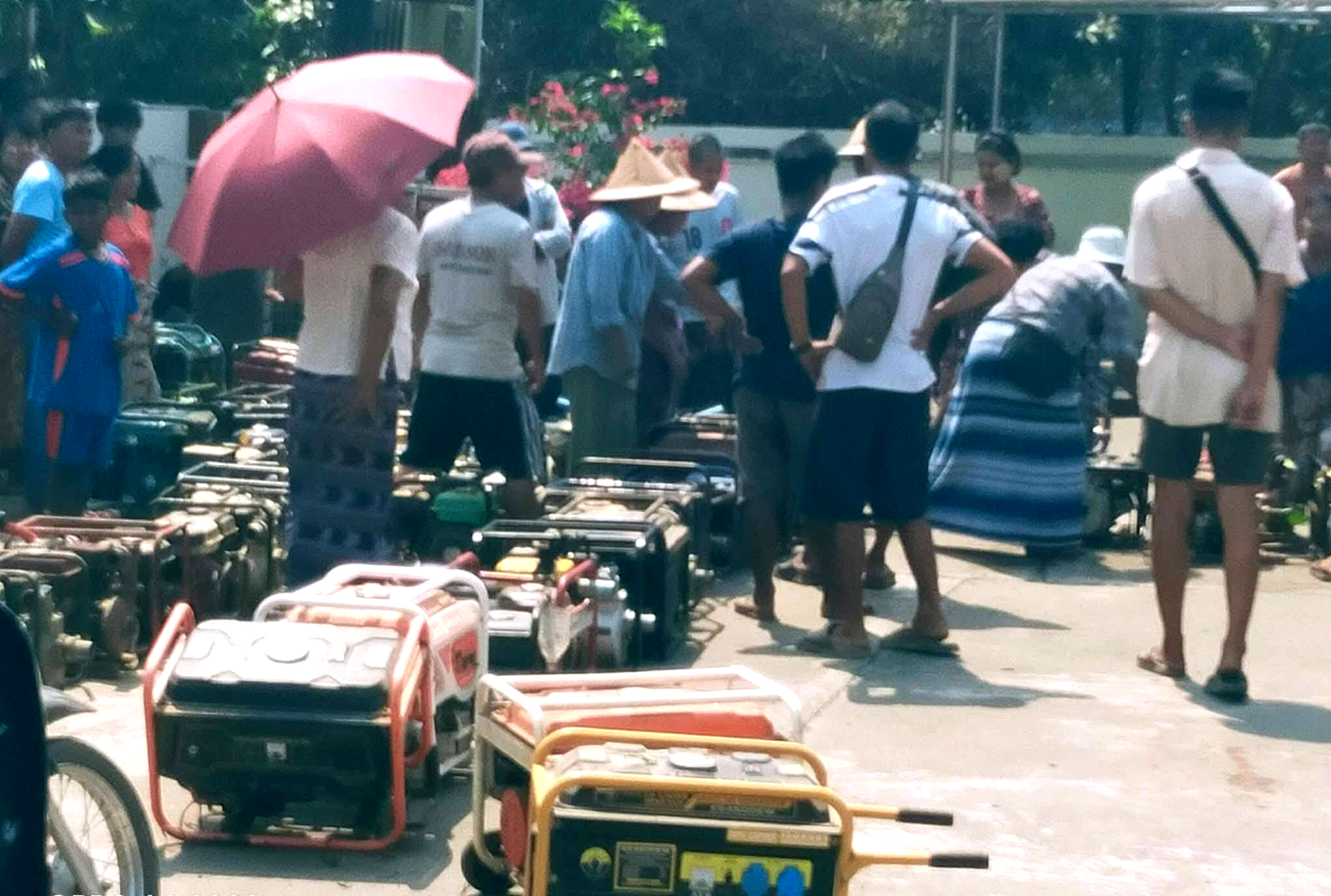
Since the beginning of last month, a fuel shortage has further driven up prices of rice, meat, fish, vegetables, transportation, delivery costs, and even drinking water. Large bottled water deliveries have increased by hundreds of kyats, while food prices continue to climb. Taxi fares for healthcare, education, and daily needs have also reached unexpectedly high levels.
Although the global fuel crisis—triggered by attacks on Iran by Israel and the United States—has affected many countries, those less dependent on Gulf fuel, with strong reserves, or with stable relations allowing oil transport have been less impacted. For Myanmar, already burdened with internal conflict, poor management, and economic instability, this fuel crisis is like adding insult to injury.
Since early March, authorities have experimented with various fuel distribution systems: selling based on odd/even license plates (excluding certain essential vehicles), then shifting to quotas based on engine power, and later to systems based on recorded travel distances.
Amid these changing systems, fuel has been resold on the black market at higher prices. Some buyers queue up to purchase fuel only to resell it, while others collaborate with distributors to buy above official prices and resell for profit. In a country with scarce job opportunities, the fuel crisis itself has become a form of livelihood for some. As a result, those who genuinely need fuel are unable to buy it at fair prices, and must pay extra costs tied to others’ time, labor, and access.
In conflict-affected areas, additional burdens arise from checkpoints, restrictions, and multiple layers of taxation along transportation routes. This drives up the cost of food and travel to extreme levels for local populations.
In some villages in Ayeyarwady Region, not far from Yangon, gasoline prices have reached as high as 15,000 kyats per liter, and even then, supplies are limited. In Yangon and Mandalay, black market prices reportedly range from 10,000 to 12,000 kyats per liter, according to social media posts.
The highest fuel prices are seen in regions such as Rakhine, Upper Sagaing, Kachin State, and northern Shan. In Sittwe, Rakhine State—where both goods and people are heavily restricted—reports indicate gasoline prices reached up to 40,000 kyats per liter since early March. These unprecedented prices are becoming barriers not only to food security but also to accessing life-saving medical care.
While the public struggles with severe economic hardship and near-hopeless conditions for survival, authorities in Naypyidaw appear to operate in a separate reality, focused on forming a new government and appointing ministers, a prime minister, and a president.
Although it may not be a world on fire, for many lower-income communities across Myanmar, the situation has become a stark question of survival—of choosing between life and death.