
Myanmar Spring Chronicle – Scenes from March 21
(MoeMaKa), March 22, 2026
The Middle East War and the Dilemma Facing Supporters of Myanmar’s Democracy
When wars break out between countries, the way they are named often reveals underlying positions and perspectives. The war that most of the world refers to as the “Vietnam War,” which took place from the early 1960s to the 1970s, is instead called the “American War” by the Vietnamese.
In documentary footage about the Vietnam War, interviews with participants and victims consistently show that Vietnamese people refer to it as the American War—implying an American invasion. For someone from Myanmar, a country not directly involved in that conflict, it can be somewhat surprising that the term “Vietnam War,” commonly used by the United States, has become so normalized.
When wars are named, it is rarely neutral. Even when there is insufficient justification for invading another country, the initiating state often promotes narratives to legitimize the war. For example, the U.S. invasion of Iraq in 2003 was justified by claims about weapons of mass destruction (WMD). Similarly, Russia’s 2022 invasion of Ukraine was framed with narratives about protecting Russian-speaking populations in eastern Ukraine and combating alleged fascism in the Ukrainian government.
From these examples, it is clear that the naming of wars often reflects propaganda rather than neutrality. A more accurate name for the Vietnam War, for instance, would be “the U.S. invasion of Vietnam.” The term “Vietnam War” can misleadingly imply that Vietnam initiated the conflict. Thus, terminology is rarely neutral and often carries the influence of one side’s narrative.
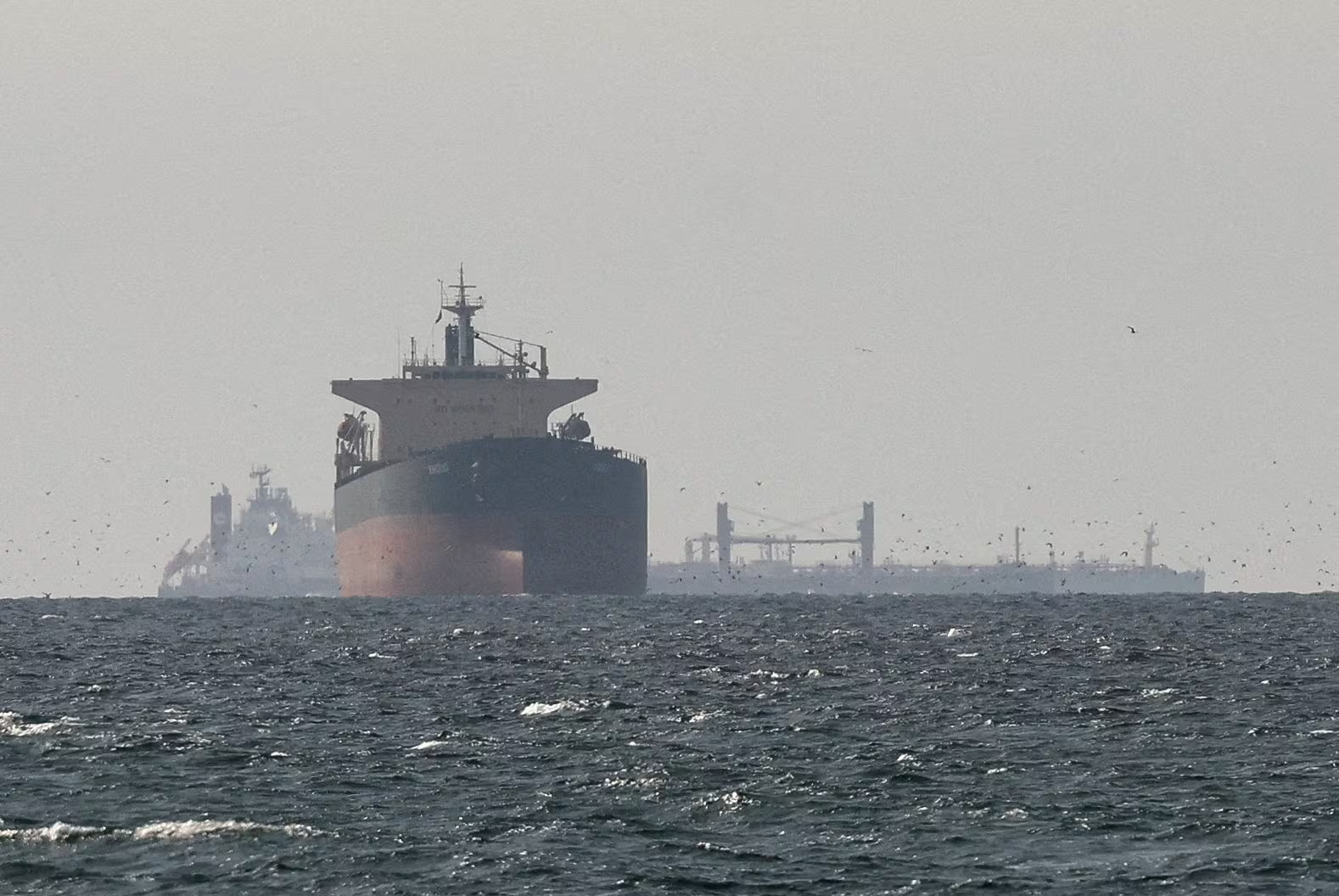
Turning to the present conflict: how should we describe the ongoing war in the Middle East, where the United States and Israel initiated attacks on Iran? The conflict involves airstrikes, missiles, and drones targeting military sites, residential areas, cities, infrastructure, power systems, water treatment facilities, ports, oil storage sites, airports, and maritime vessels across Iran, Israel, and several Gulf countries. It is currently being referred to as a war between Iran and Israel (along with the United States), or more broadly as a Middle East war due to the involvement of multiple countries—some of which are affected even if they are not directly combatants.
The purpose of raising these points is to highlight that warfare is not only fought with weapons, economic sanctions, and diplomatic pressure, but also through narratives and information shaping public perception.
The attacks initiated by Israel and the United States against Iran have been justified through narratives alleging that Iran is developing nuclear weapons and supporting terrorist groups with arms and funding.
The war can also be understood as an attempt to eliminate Iran’s current leadership—an authoritarian system led by religious figures—and replace it with a government more acceptable to the U.S. and Israel. This is a war initiated without provocation, aimed at regime change.
However, the objective is not to establish a government that reflects the will of the Iranian people. What Iranians may desire—a democratic system—is fundamentally different from the kind of government the U.S. and Israel would prefer, which aligns with their own strategic interests. The Netanyahu-led Israeli government appears to seek outcomes such as regime collapse, state failure in Iran, or conditions that would prevent Iran from supporting movements opposed to Israeli expansion in the region. These outcomes could emerge either through internal conflict or through the installation of a U.S.-aligned government.
From the U.S. perspective, despite decades of sanctions on Iran’s oil sector, Iran has maintained economic resilience, developed defense capabilities, and remained a regional power under its current leadership. The U.S. does not favor this situation and uses the justification of nuclear threats and regional instability to pursue regime change.
Similar patterns can be seen over the past 40–50 years: U.S.-led or influenced interventions in Vietnam, Afghanistan, Libya, and Iraq have attempted regime change through military means. These efforts have largely failed. Afghanistan ultimately saw the return of the Taliban. Iraq experienced prolonged civil war, sectarian violence, and the rise of extremist groups like ISIS. Libya remains unstable, with ongoing conflict.
The claim that the U.S. seeks to remove authoritarian regimes often masks underlying economic interests—particularly access to natural resources like oil and the establishment of governments aligned with U.S. influence. These motivations became even more explicit during the Trump administration. For example, even after actions taken against Venezuela’s leadership, the country did not transition toward democracy; instead, U.S. interest appeared focused on oil access.
In conclusion, the current attacks on Iran—using superior military technology and targeting even civilian areas—constitute violations of national sovereignty and demonstrate that powerful countries like the U.S. and Israel act militarily wherever their interests are at stake.
No one who values democracy and human rights should support such invasions carried out under the pretext of removing authoritarian regimes while actually serving geopolitical and corporate interests. Believing that the U.S. and Israel act as champions of democracy simply because they oppose authoritarian governments reflects a serious lack of political judgment and principles.
In the context of Myanmar, while it is understandable that people hope for powerful countries like the U.S. to intervene and remove authoritarian rulers, historical and current realities suggest the need for more critical reflection. There are no shortcuts to dismantling authoritarian systems and building democracy.
Therefore, those advocating for democracy and human rights in Myanmar should learn from these historical lessons and critically assess the true motivations behind global interventions driven by military-industrial and resource interests.
Write to Maung May