
Myanmar Spring Chronicle – Scenes from March 12
(MoeMaKa), March 13, 2026
Military tensions between two members of the Northern Brotherhood Alliance in northern Shan State could deal a blow to the revolutionary forces
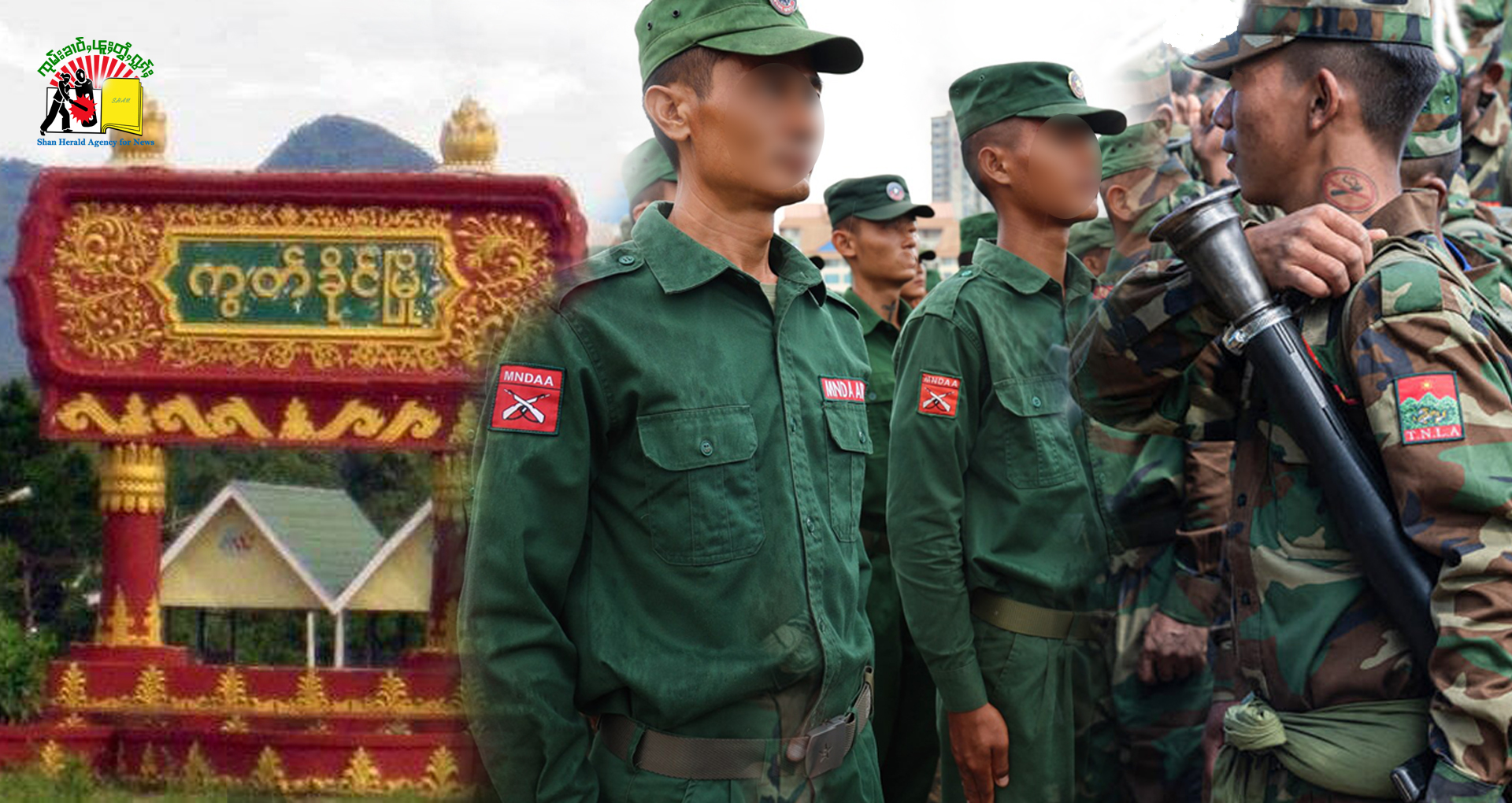
Reports emerged on March 12 that recent military tensions have been occurring between the Ta’ang National Liberation Army (TNLA) and the Myanmar National Democratic Alliance Army (MNDAA) in Kutkai Township, northern Shan State.
In Kutkai, which is under TNLA control, MNDAA troops have also been stationed in certain parts of the town since December 2023, when TNLA first began consolidating control. Kutkai lies along the Mandalay–Muse highway and is home to Ta’ang, Kachin, Shan, and other ethnic communities. It was captured during the first phase of Operation 1027 by TNLA and its allied forces.
During the more than two years of TNLA control in Kutkai, there were frictions and disputes between TNLA and KIA (Kachin Independence Army) troops concerning the KIA liaison office. In previous years, TNLA forcibly removed the KIA liaison office. Clashes between lower-ranking TNLA and KIA troops — including scuffles and physical altercations — occurred not only in Kutkai but also along the Union Highway in places such as Nam Phat Kar. In towns and territories seized by TNLA and its allies, disputes arose over KIA troops traveling in uniform, transit rights along connected roads, and the opening of security checkpoints. TNLA rejected such activities, dismantled checkpoints, and forcibly relocated KIA personnel. Although reports indicated that leadership-level discussions took place between TNLA and KIA regarding these incidents, no details of any agreements were publicly disclosed. In any case, such disputes between TNLA and KIA have not been observed recently.
In recent months, however, frictions between TNLA and MNDAA appear more intense and serious than those previously seen with the KIA. Not long ago, TNLA troops removed CCTV cameras installed by MNDAA along main roads in Kutkai, triggering clashes between the two Northern Brotherhood allies that escalated to gunfire.
Shortly after the incident, MNDAA blocked the transport of food supplies, fuel, and consumer goods from Lashio through Hsenwi to Kutkai, as well as goods, food, and fuel shipments from Lashio to Namtu. It was reported that MNDAA imposed these restrictions on the Ta’ang region in a manner similar to actions taken along the China border and in other ethnic armed territories under its control if its demands were not met.
These actions placed pressure on TNLA. Within the past few days, MNDAA forces have been observed moving toward Kutkai from the east and northeast, appearing to position themselves for a blockade.
Among the three Brotherhood Alliance groups that led Operation 1027, two are now imposing trade blockades and deploying military forces against each other. The underlying cause can be summed up in one phrase: territorial control and administrative authority. Having fought together as allies against the military dictatorship for ethnic liberation, self-administration, and self-determination, they now find themselves on the verge of armed confrontation over territorial dominance and governance.
This raises questions about whether there is a lack of shared political principles capable of resolving disputes over territorial control and transit rights among allied forces. It also prompts speculation about whether narratives promoted by the enemy — or lingering militaristic thinking that views military force as the ultimate arbiter — are influencing decision-making.
Some may accuse the enemy of sowing division and engaging in divide-and-rule tactics to explain the tensions between allied armed groups. While such attempts may indeed exist, if allied groups address emerging conflicts of interest through political dialogue, such divisive tactics would lose their effectiveness. In other words, strong internal resilience prevents external infection.
It is crucial that revolutionary allied armed groups refrain from adopting unilateral “seize and rule” military policies regarding territorial administration. The historical presence of various ethnic communities in these regions, as well as demographic changes caused by social, economic, military, and political upheavals — including displacement and migration — must not be ignored.
Ultimately, the true meaning of “alliance” requires mechanisms, procedures, and practical commitments to negotiation and compromise whenever military, political, or interest-based differences arise. Only through such dialogue can they avoid being dragged once again into the cycle of armed conflict.