Myanmar Spring Chronicle – Scenes from March 6
(MoeMaKa), March 7, 2026
How should we politically position ourselves in the Israel/U.S.–Iran war?
In recent months, the United States accused the President of Venezuela of involvement in drug trafficking into the U.S., and special forces reportedly entered Venezuela by air, arrested the president, and moved to prosecute him in New York. Around the same period that the U.S. attacked Venezuela, Israeli Prime Minister Netanyahu traveled to Washington and met with President Trump.
Since those events, a news analysis channel on YouTube interviewed a former CIA official. Based on the two incidents, the former CIA officer concluded that an attack on Iran was inevitable. With Venezuela’s oil secured, the U.S. would be prepared to withstand any closure of the Strait of Hormuz. He also suggested that the protests that emerged in Iran’s capital during that period were CIA-backed operations. Reports also noted that Trump was framing a potential attack as a response to Iran’s harsh crackdown on protesters — something that is already widely known.
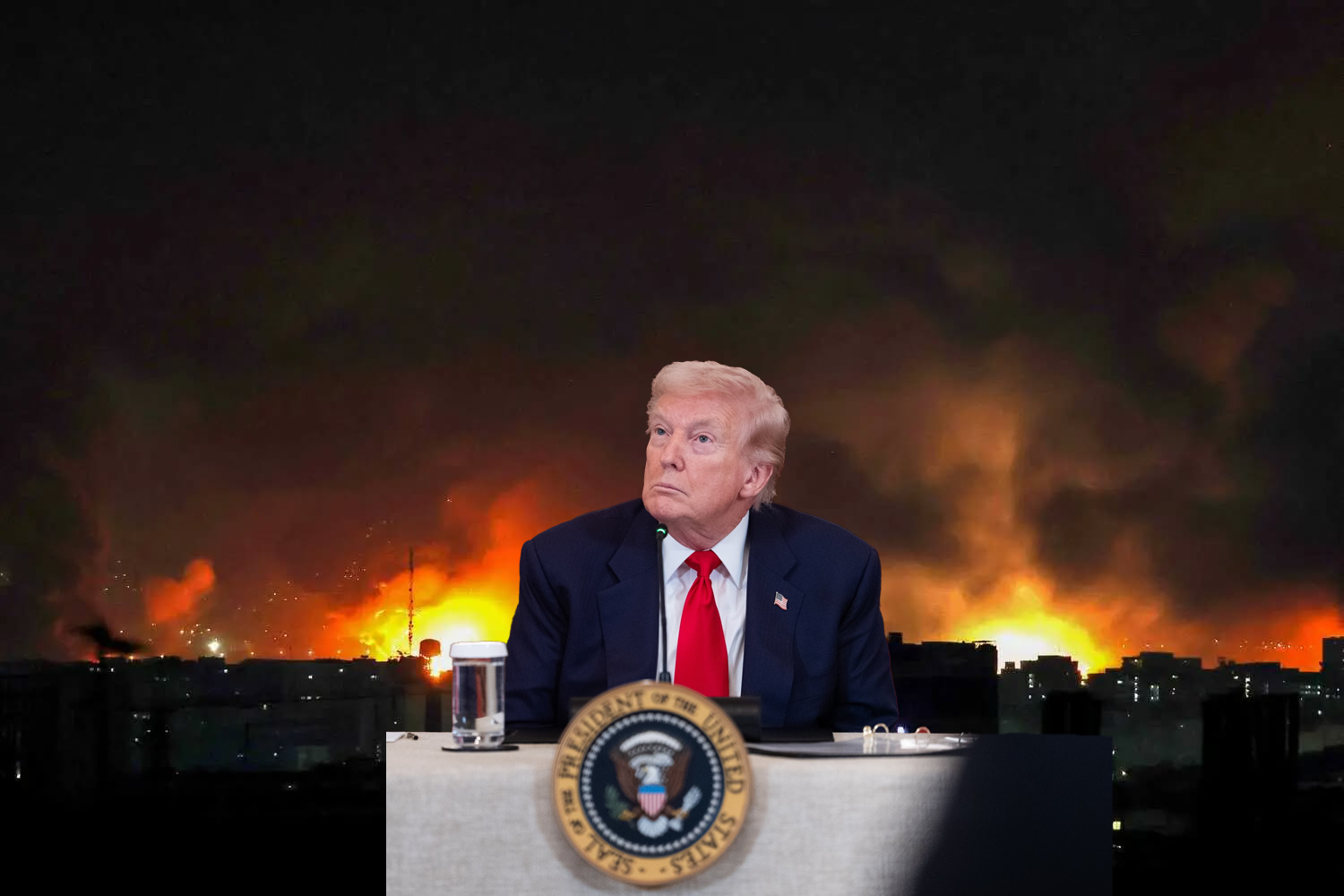
Although the U.S. may have hoped that the protests would lead to the collapse of the Iranian government, that did not happen. Nevertheless, just over two months later, Israel and the United States began attacking Iran. During a gathering of Iranian leaders, they launched a preemptive strike and assassinated them.
The war between Israel/U.S. and Iran has expanded to include attacks on Middle Eastern countries hosting U.S. military bases. This has affected the security, oil production, and transportation across the Arabian Peninsula. Many countries rely on Middle Eastern oil, and the blocking of passage through the Strait of Hormuz — which lies between Iran and Oman/Qatar — has begun impacting global oil consumption, the economy, and social conditions worldwide.
Myanmar, which imports fuel from abroad, has already announced that starting tomorrow it will implement fuel-saving measures, including reducing private car usage.
At this point, the Israel/U.S.–Iran conflict has become another political “test” for Myanmar: how will the military junta, resistance forces, and political actors position themselves? Their stance reflects broader questions of political principles, interests, and policy alignment.
The military junta has purchased military and intelligence technology from Israel, and has also procured weapons, technology, and oil from Iran. After the 2021 coup, when international arms sales to Myanmar were restricted, reports emerged that Iran sold military drones and components to the junta.
These facts show that the junta maintains relations with both Israel and Iran, relying on both sides for military technology and weapons.
For Myanmar’s resistance forces, this Middle Eastern war raises difficult questions of values and principles. Should they condemn Israel and the United States for initiating the attack? Or should they support a war framed as overthrowing an authoritarian government that suppresses democracy under Islamic fundamentalism?
On the first day of the war, Israeli and U.S. strikes directly hit a girls’ school, killing 150 students and 15 teachers — a total of 165 civilians. To date, Israel and the U.S. have not taken responsibility for civilian deaths or for targeting a school.
There are also concerns about statements calling for regime change in Iran and even U.S. involvement in deciding who should form the next government — remarks that disregard Iran’s sovereignty.
In 1979, Iran overthrew a pro-U.S. Shah who had ruled dictatorially for nearly 26 years. Since January of this year, the CIA has reportedly encouraged the Shah’s son — currently living in the United States — to mobilize the Iranian public. This could be seen as a blatant violation of another country’s right to self-determination.
Additionally, the CIA has reportedly begun training and funding Kurdish armed groups operating in northwestern Iran and northern Iraq and Syria, in efforts to destabilize the Iranian government. Such actions violate internationally accepted rule-based order principles and set dangerous precedents in global affairs.
Israel, the only nuclear-armed state in the Middle East, may aim to turn Iran into a failed state, thereby removing obstacles to expanding settlements in Palestinian territories such as Gaza and the West Bank.
The current U.S. president has repeatedly stated within his first year in office that, in pursuit of American interests, he would not hesitate to violate rule-based order — whether by turning territories into dependent states, purchasing them financially, or seizing them militarily.
What is happening in Iran now appears to be open, unmasked neo-colonialism in both rhetoric and practice.
Myanmar’s revolutionary forces, while fighting against military dictatorship, should not support the blood-soaked wars of the United States — which seeks resources and territory through military force — or Netanyahu’s Israeli government, which has been accused of committing genocide resulting in the deaths of tens of thousands of Palestinian civilians.
At the same time, while there is no need to support Iran’s authoritarian government, which has oppressed its own people for decades, the future of Iran must be decided by the Iranian people themselves. No external power seeking to colonize Iran should have the right to determine its future.
The foundational principles and values of the Spring Revolution are based on honesty and opposition to oppression. Therefore, great caution must be exercised to avoid supporting any country that uses excessive military force to dominate resources and territory, resulting in the deaths of tens of thousands of civilians.