
Myanmar Spring Chronicles February 8
Will the military situation really change in 2026 following the PDF commanders’ conference?
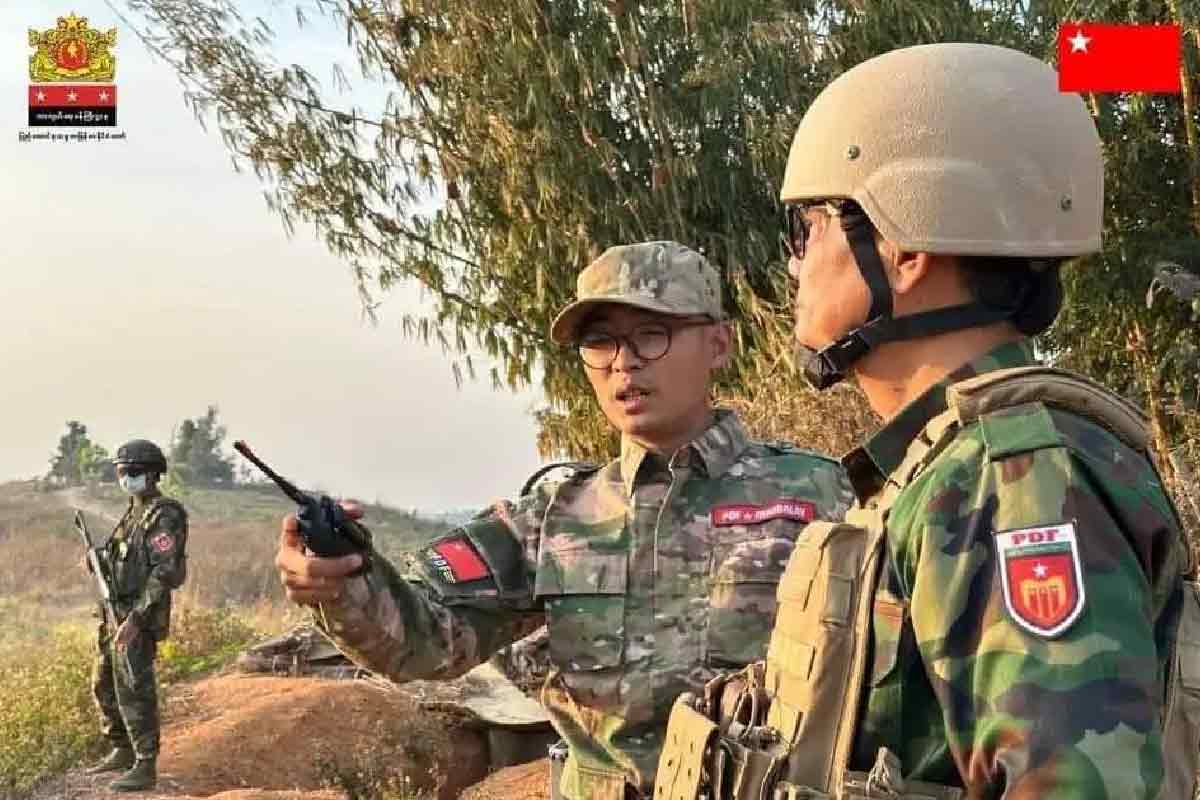
A statement dated February 8 announced that the People’s Defense Force (PDF), which operates under the Ministry of Defense of the National Unity Government (NUG), held a five-day commanders’ conference. According to the announcement, participants discussed a military review of the year 2025, which has just ended, as well as military objectives for 2026.
The statement said that more than 100 people attended the meeting, including the PDF’s Commander-in-Chief, Deputy Commander-in-Chief, officials from the General Headquarters, regional military commanders, commanders from other special operations units, and responsible officials from the Pa Ka Pha (People’s Administration) central office.
Regarding the topics discussed at the conference, the statement noted that the main focus areas included: fundamental military principles; the Pa Ka Pha’s three historic responsibilities; fifteen basic principles of warfare; the application of people’s war strategy; command and control and staff systems; military leadership; major force-building programs; five core capabilities; and three pillars of unity.
The statement also said that a military review of 2025 was discussed at the meeting, but it did not provide details. Some media outlets have reported that discussions included how to advance toward a decisive offensive. It has also been reported by some media that the first commanders’ conference was held in August last year, and that as a result of that meeting, offensives were launched in Bago Region in late 2025.
Dr. Soe Thura Zaw, a commander from the Mandalay PDF, wrote on his Facebook account that he was satisfied with the meeting. He said it became clear how important a step-by-step chain of command is. He also noted that another key issue was the Code of Conduct (CoC) for soldiers, which still has weaknesses. He wrote that the chain of command and military ethics are interconnected, and that establishing these two mechanisms is within the PDFs’ capacity to implement.
When referring to weaknesses in military ethics, Dr. Soe Thura Zaw was pointing to the opening of taxation checkpoints and corruption. He said that as step-by-step command and control becomes more effective, these issues can gradually be brought under control. However, he did not mention other ethical shortcomings. For example, he did not write about abuses of power such as beatings, extrajudicial killings, or other unlawful acts.
The NUG appears to have convened this commanders’ conference with the aim of moving toward a decisive military offensive in 2026. However, the statement does not specify what kind of military successes are expected this year. It only notes that the Commander-in-Chief instructed preparations related to force-building and military readiness in order to advance toward a decisive offensive.
Unlike in earlier years, the NUG is no longer saying that this year will be a “decisive year” or that victory will be achieved. In the early years, such statements—suggesting that only a little more effort was needed and that victory was close at hand—were made to boost public morale. When those claims failed to materialize, they led to public discouragement and damaged trust in the NUG.
Either because the long-term nature of armed revolution was not fully understood in the early period, or because leaders wanted to encourage the public, statements such as “this year will be decisive” led people to genuinely believe and to support the revolution with all the strength and resources they had. Many in the public honestly believed that the armed struggle would end in victory within one or two years.
However, when that victory did not come within one or two years, people began to doubt such mobilizing rhetoric. Just thinking about how displaced people living in IDP camps, those whose homes were burned down or destroyed by weapons and bombs, and those who can no longer farm or raise livestock because they have fled their communities will get through the coming years is already exhausting.
For people who poured in all their support in the early years, encountering the reality that the journey ahead may still be long has become deeply wearying.
Now that the revolution has entered its fifth year, when explaining and mobilizing the public around military goals and objectives, this is the time not to rely on morale-boosting rhetoric about whether the end is near or not. Instead, it is time to speak openly and honestly to the public about the real situation and what is realistically possible.