
Myanmar Spring Chronicles, February 5
Thailand offers to mediate between ASEAN and Myanmar, as ASEAN’s authority remains limited
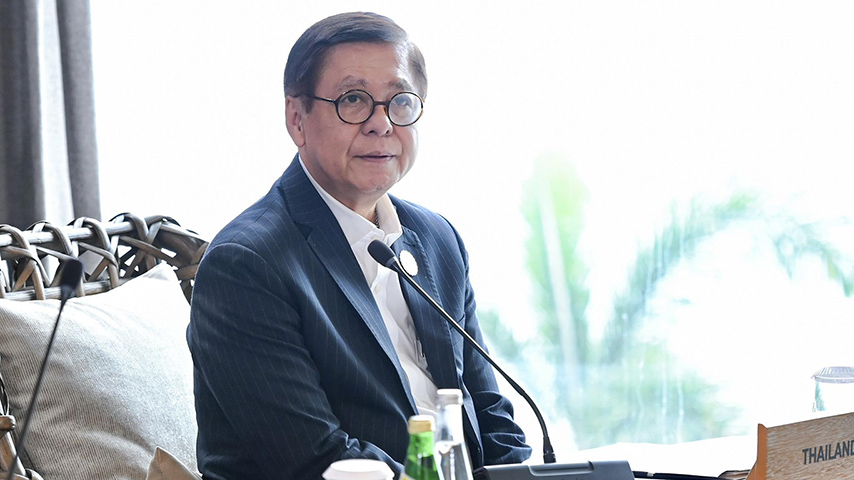
Thailand has said it is ready to act as an intermediary to help improve relations between ASEAN and Myanmar, which has just held an election overseen by the military junta. The Thai foreign minister made the remarks, referring to ASEAN—the regional organization of 11 member states, including Thailand and Myanmar, established to promote economic and political cooperation.
In recent days, ASEAN publicly announced that it does not recognize the results of Myanmar’s election, which was held in recent weeks. Thailand has not issued a clear statement on whether it recognizes the election results, but has diplomatically expressed hope that the election could serve as a step in Myanmar’s political transition.
Following the collapse of the Pheu Thai–led government late last year, the current government led by Anutin of the Bhumjaithai Party has, in its less-than-six-month tenure, gradually shifted toward a policy of engagement with Myanmar. A few months before the election, the Thai government stated that an election was not a solution to Myanmar’s political crisis. However, in the weeks leading up to the vote, a noticeable change in attitude could be observed.
Among ASEAN member states, Malaysia, Singapore, and Indonesia did not recognize or support the election process or its outcome, either before or after the vote. ASEAN as a bloc also decided not to send an election observation mission, although some member states—namely Cambodia and Vietnam—did dispatch observer delegations.
Thailand has borne the greatest impact from Myanmar’s ongoing political crisis, armed conflict, economic decline, and job shortages, which have driven refugees fleeing war as well as migrant workers seeking employment abroad. Malaysia has also been affected, as another ASEAN member state receiving large numbers of migrant workers. On the one hand, this migration can be seen as helping to fill labor shortages with low-cost workers. On the other hand, continued warfare, the breakdown of the rule of law, the tolerance of drug production and trafficking, and the accommodation of online scam operations by various armed groups seeking survival inside Myanmar have all had negative spillover effects on neighboring countries.
These underlying factors have pushed successive Thai governments to seek a swift resolution to the Myanmar problem. The current Thai government is due to transfer power to the winning government following the election scheduled for February 8. At present, it remains difficult to predict whether the party of the current prime minister and his cabinet colleagues will win, or whether another party will emerge victorious.
One thing that can be said is that, regardless of which party wins, Myanmar’s military leaders are unlikely to be overly concerned about armed clashes and other impacts along the border, as they have been able to maintain close relations with the Thai military.
If the People’s Party—made up of well-educated and economically successful young professionals—were to win the election and form a government, the new Thai administration could be more supportive of Myanmar’s democratic cause. If, however, the current ruling Bhumjaithai Party were to win, or if parties such as the Pheu Thai Party led by Thaksin’s daughter were to prevail, it is likely that there would be no major departure from existing policies.
Looking back over the past five years, it would not be inaccurate to say that ASEAN has failed to exercise effective leverage or pressure on Myanmar’s military regime. The most it has done is bar ministers and deputy ministers representing the junta from attending ASEAN meetings, allowing only the highest-ranking non-political official to participate, thereby downgrading Myanmar’s level of representation.
Under ASEAN’s principles, neither individual member states nor ASEAN as an organization are permitted to interfere in the internal affairs of a member country. Historically, ASEAN has never intervened to resolve a civil war within a member state.
ASEAN’s primary objectives are collective action on regional security issues, economic cooperation among member states, and collaboration in areas such as humanitarian assistance. As such, it lacks sufficient authority to resolve Myanmar’s internal armed conflict and political crisis.
The military junta is well aware of these limitations. As a result, nearly five years after agreeing to the ASEAN Five-Point Consensus in April 2021, Myanmar’s military leaders have made no meaningful progress in implementing it and have largely ignored it.
Similarly, although the United Nations has adopted Security Council resolutions on Myanmar, these were non-binding, and Myanmar’s military leaders have paid them little heed.
Taking all these circumstances into account, it is clear that Myanmar’s political crisis and civil war are issues over which regional organizations like ASEAN have limited effective influence. By contrast, neighboring China appears to wield far greater leverage and influence over Myanmar than ASEAN does.