Myanmar Spring Chronicle – Scenes from February 6
(MoeMaKa), February 7, 2026
Former NCGUB Prime Minister Dr. Sein Win Passes Away; Generational Handovers in the Anti-Dictatorship Struggle and Myanmar
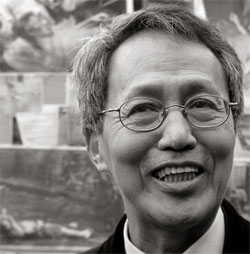
Dr. Sein Win, who served as Prime Minister of the National Coalition Government of the Union of Burma (NCGUB)—formed after the 1988 “8888” uprising in KNU-controlled territory along the Thai border—passed away on February 6 in the U.S. state of Maryland, where he had been living. Dr. Sein Win, who was 82 at the time of his death, first entered politics following the 8888 uprising. In the 1990 election, he ran representing the National Democratic Party and was elected as a Member of Parliament.
The National Democratic Party was a “reserve party” of the National League for Democracy (NLD)—in other words, it was formed to continue political activity in case the NLD were dissolved for any reason. Dr. Sein Win served as the party’s chair.
Although the NLD won a landslide victory in the 1990 election, elected representatives were unable to convene parliament, and power was not transferred. As a result, many elected MPs fled to the Thai–Myanmar border area. In December 1990, in Manerplaw, a KNU-controlled area, they formed the National Coalition Government of the Union of Burma. In the media, it was often referred to as a government-in-exile. In this government, known in English as NCGUB, Dr. Sein Win was selected to serve as Prime Minister, and its members were elected representatives from the 1990 election.
Looking back at Dr. Sein Win’s political path: he founded a political party and entered “legal, above-ground” politics to contest the 1990 election. But after the election was held, the coup regime that organized it neither allowed parliament to convene nor transferred power. A few months later, some elected representatives left for the liberated border areas, and when the government-in-exile was formed, he took responsibility as Prime Minister. A few years later, he moved to a third country—the United States*—and continued carrying out NCGUB responsibilities up until *2012, when Daw Aung San Suu Kyi entered the by-election.
After Daw Aung San Suu Kyi entered parliament in 2012, the overseas government structure—NCGUB—was formally dissolved. It could be said that the government-in-exile was officially brought to an end. Later, after the NLD won the 2015 election and had been in power for around three years, the NLD government officially revoked declarations that had designated NCGUB as an unlawful association and a terrorist organization. However, even after the NLD came to power, the Ministry of Home Affairs remained under generals nominated by the military, and it is understood that obstacles still existed regarding Dr. Sein Win’s ability to return to Myanmar.
After the 1988 coup, Dr. Sein Win lived in liberated border areas and endured the turbulent waves of politics; he spent nearly half of his life as an overseas political figure striving to oppose and dismantle military dictatorship. He was not known to have been tainted by allegations involving money, power, or positions. Though he was the son of a man assassinated together with other political leaders on July 19, 1947, he lived as a university lecturer up until the 1988 uprising—after which he became a politician. It can now be said that the final chapter of his life has ended abroad in a foreign country.
Although the former NCGUB Prime Minister—who for many years shouldered a historic responsibility without avoiding it—has departed this world at the age of 82, Myanmar’s democratic journey clearly has not yet come to an end.
Like Dr. Sein Win, Daw Aung San Suu Kyi—his cousin and a figure recognized as a public leader—also entered politics after the 8888 uprising. Even now, after turning 80, she remains detained in prison, still caught in the turbulent currents of Myanmar’s political history.
Less than a decade after the NCGUB led by Dr. Sein Win was officially dissolved in 2012, Myanmar experienced yet another coup. A new generation has chosen the path of armed resistance against the coup regime, and the country has again entered what is effectively a third liberation struggle.
Myanmar gained independence from British colonial rule in 1948, yet within months it fell into civil war fueled by ideological divisions and disputes over ethnic rights. Even after one generation after another has passed, it is deeply unsettling to see that Myanmar still has not been able to establish a genuine federal union system and a truly flourishing democracy.