Myanmar Spring Chronicle – January 4 Scene
January 5, 2026
The routine annual amnesty, Maduro’s arrest, and the unmasking of modern colonialism
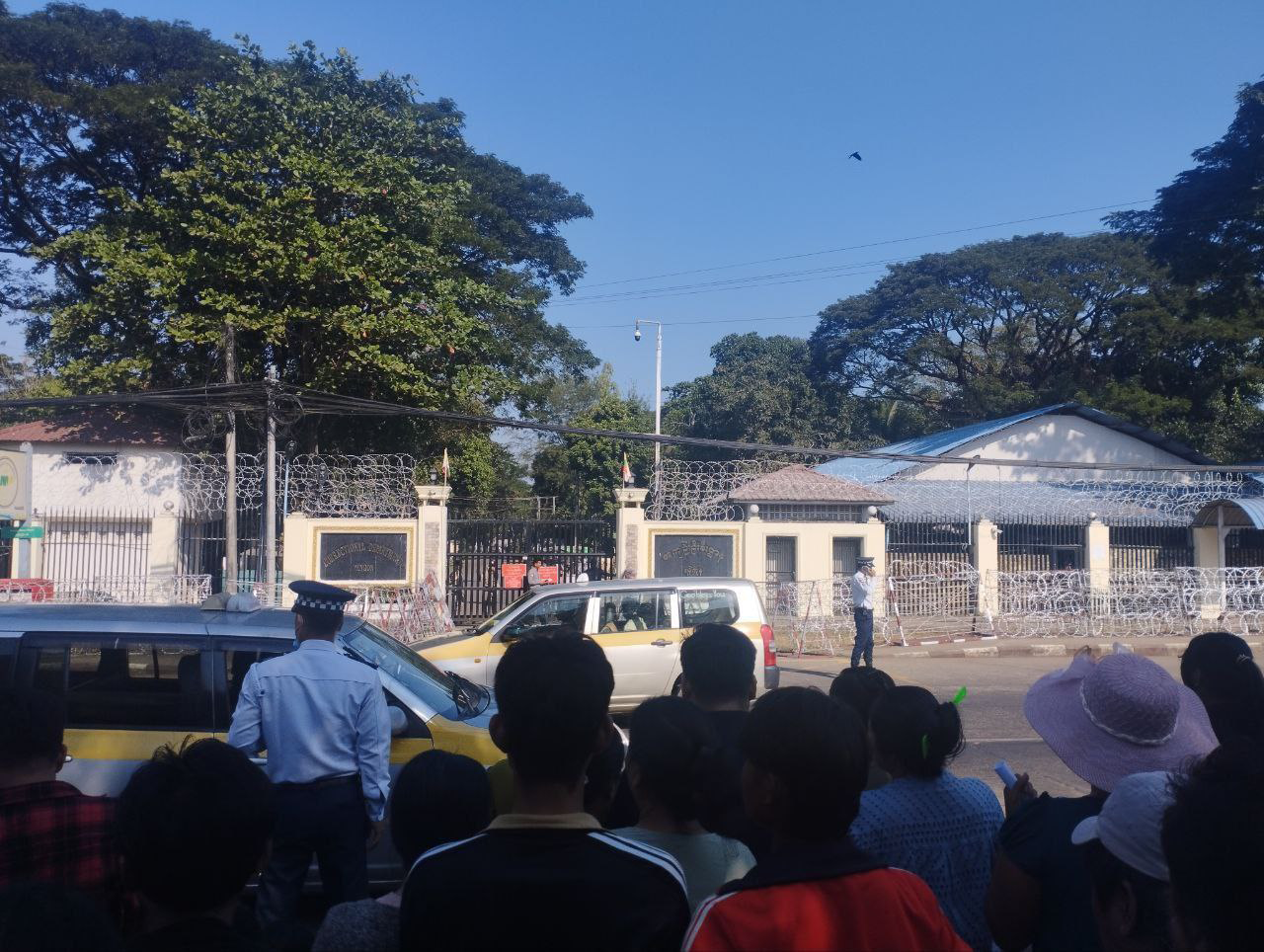
As has long been customary, governments announce sentence reductions and prisoner amnesties on symbolic dates such as Independence Day or Thingyan New Year’s Day. This year, on Independence Day, the coup military regime likewise announced an amnesty, issuing an order to reduce sentences and grant release to more than 6,100 prisoners.
However, it was stated that those eligible for release did not include prisoners convicted of murder, rape, unlawful association, corruption, offenses under the Natural Disaster Management Law, laws relating to weapons and explosives, narcotics laws, or the Counter-Terrorism Law.
These exclusions are not unusual, as similar restrictions were included in past amnesty announcements. By excluding those who took up arms against the regime, those convicted for association with unlawful organizations, those sentenced for murder, and those involved in bombings or urban guerrilla attacks, the regime effectively ensured that armed resistance members, their alleged affiliates, and urban resistance fighters arrested since the 2021 coup were barred from sentence reductions or release.
When such amnesties are announced, it is also common practice to deliberately include one or two well-known public figures. This ensures that media outlets highlight the release of prominent individuals, drawing public attention to the amnesty announcement and making it appear more acceptable or benevolent. In other words, the exercise functions largely as a psychological operation and propaganda effort, designed to generate favorable coverage of the regime’s announcement.
Among those released this time were U Ye Htut, a former Information Minister and presidential spokesperson during President U Thein Sein’s administration, and model Nan Moe San. U Ye Htut was arrested on October 27, 2023, charged under Penal Code Section 505(a) and Section 124(a) (sedition), and sentenced to 10 years in prison. Many others remain imprisoned under similar charges with the same sentence, so the decision to select and release U Ye Htut clearly appears to be an attempt to gain public recognition and legitimacy for the amnesty.
Another issue drawing widespread attention today is the arrest of the Venezuelan president and his transfer to a detention facility in New York, which has dominated global headlines. This includes former President Trump’s statement that the United States would assume administrative responsibility for Venezuela until elections are held and a newly elected government can take office, as well as reports that major U.S. oil companies would invest capital to restore Venezuela’s oil production. These developments have generated diverse reactions and opinions among the Myanmar public and political circles.
President Trump differs from many previous U.S. presidents in that he tends to openly state the objectives behind his administration’s actions. Put simply, he does not bother to disguise the interests of large U.S. corporations and business elites. The original justification for arresting the Venezuelan president—illegal drug trafficking to the United States—has now faded into the background, while the focus has shifted clearly to how U.S. oil companies can benefit from Venezuela’s oil production.
According to Professor Jeffrey Sachs, an economist and outspoken critic of U.S. foreign policy, the United States has intervened in the internal affairs of nearly 100 countries since the end of World War II. In numerous cases, the U.S. Central Intelligence Agency covertly supported efforts to remove presidents or prime ministers who did not align with U.S. interests, assisted military coups led by pro-U.S. generals, overthrew elected governments, and helped authoritarian regimes come to power. While some of these interventions succeeded, many resulted in countries becoming destabilized, fragmented, and ungovernable after unwanted leaders were removed.
There are several well-known examples from the not-so-distant past. These include U.S. involvement in Afghanistan from the late 1990s through 2021—first in removing the Soviet-backed Najibullah government, and later in overthrowing the Taliban regime; the overthrow of Iraqi dictator Saddam Hussein, in which the U.S. was deeply involved for more than a decade starting in the early 2000s; and the removal of Libyan leader Muammar Gaddafi more than a decade ago. Earlier still, there was the Vietnam War—known in Vietnam as the “American War”—in which the U.S. intervened militarily for nearly two decades.
In Vietnam, the stated aim was to prevent a newly independent country from becoming communist, and the U.S. invested massive amounts of money, weapons, and manpower. In contrast, the interventions in Iraq and Libya were clearly driven by the objective of controlling oil resources and installing compliant governments.
From the Vietnam War onward, U.S. governments should have learned that military intervention in other countries’ internal affairs tends to end in losses, reputational damage, and long-term instability. Yet they intervened again in Afghanistan for more than two decades, only to demonstrate that civil war and U.S.-backed governments could not be sustained. During this period, the U.S. also launched the Iraq War, citing alleged weapons of mass destruction to justify removing Saddam Hussein. While Iraq was freed from his dictatorship, U.S. intervention created conditions that allowed extremist groups such as ISIS to gain strength. Likewise, after years of war involving U.S. and Western forces—ostensibly to suppress al-Qaeda, a group once armed and trained by the CIA in the 1980s—the U.S. withdrew from Afghanistan in 2021, leaving behind prolonged instability.
Following the arrest of Venezuela’s president, it is expected that U.S.-managed elections and the shape of a transitional government will become clearer in the coming days. It remains unknown whether Maduro’s government, including the vice president, had any behind-the-scenes negotiations with the United States. If no such arrangements exist, the U.S. may even deploy ground troops to establish a pro-U.S. interim administration.
Should ground forces be deployed, this would mark the first U.S. ground intervention since the 2021 withdrawal from Afghanistan, and could lead to civil war or armed resistance against foreign troops inside Venezuela.
While it is now unmistakably clear that U.S. intervention in Venezuela is driven by oil resources, it is striking that some Myanmar politicians, analysts, and activists appear unable to recognize the dangers of modern colonialism, instead expressing views that Myanmar’s military ruler should likewise be arrested like the Venezuelan president.
Failing to see an authoritarian leader as merely the representative of a broader system, power structure, and ideology, and believing that removing a single individual will magically solve everything, reflects a deeply shortsighted political mindset. Such thinking risks pushing Myanmar into the geopolitical chessboard of global powers.
Myanmar’s political actors must carefully study recent world history and recognize the dangers posed by modern colonial powers, including the United States, if they are to navigate global geopolitics wisely and avoid becoming another pawn in great-power rivalry.