Myanmar Spring Chronicle – January 28 Scene
(MoeMaKa) January 29, 2026
NUG and resistance groups preparing to form a new body called the FSC
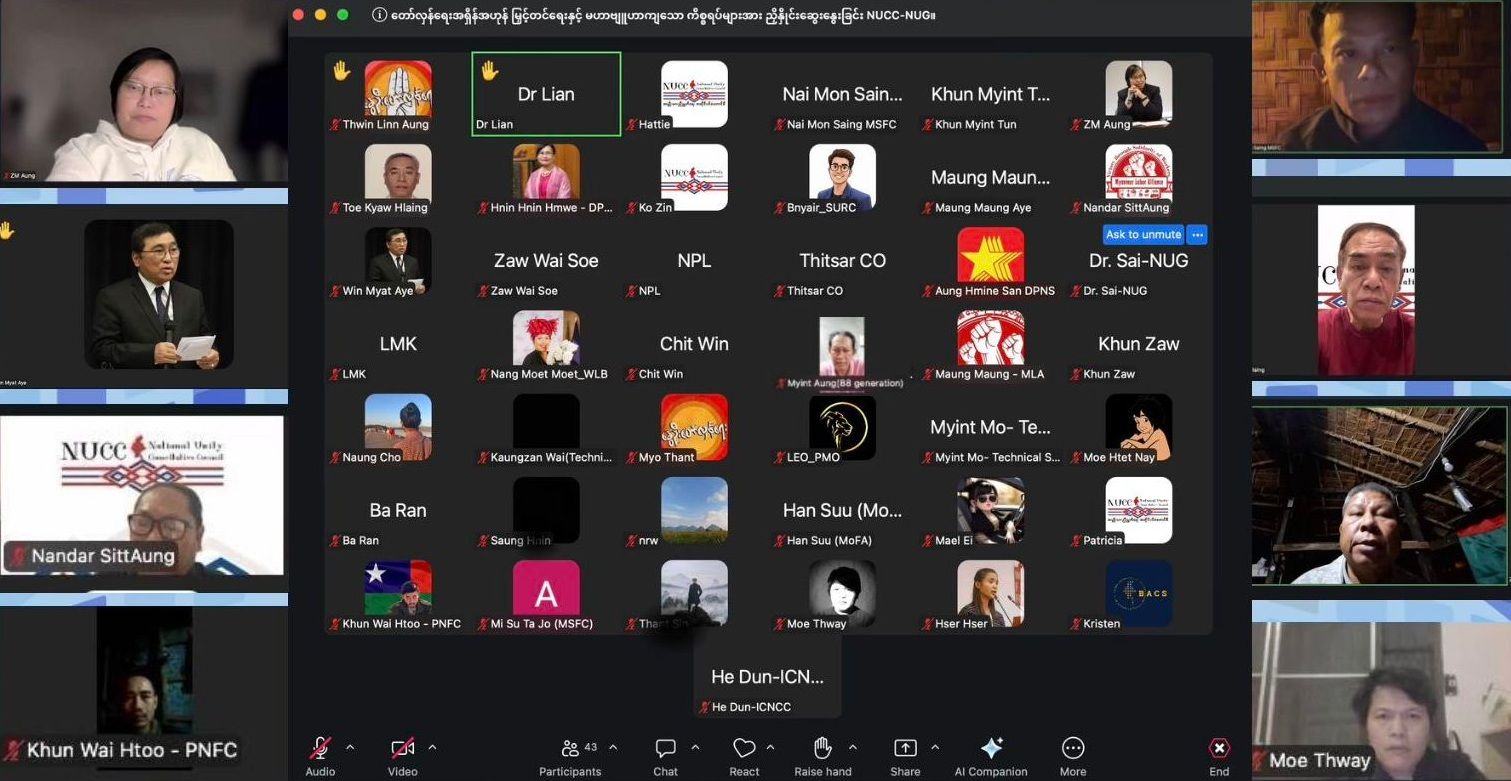
Reports have emerged that the National Unity Government (NUG), the National Unity Consultative Council (NUCC), and other federal-unit organizations and ethnic armed organizations are working to form a new joint body under the name Federal Steering Committee (FSC).
Although the precise purpose and orientation of this new organization have not yet been clearly defined, the name “Federal Steering Committee” suggests that it is intended to advance the goal of building a federal union. It does not appear to be a purely military alliance formed specifically for armed operations; rather, it is widely assumed to have a stronger political orientation.
According to reporting by BBC Burmese, the goals and planned activities of this body include political legitimacy, coordination, and sustained engagement and communication.
Given that its stated aim is to establish a future federal democratic union in Myanmar, it is reasonable to assume that the name reflects that aspiration. However, it is still unclear exactly which organizations will participate. Based on currently circulating reports and meeting attendance, it can be inferred that participants are likely to include the NUG, the NUCC, so-called federal units such as regional federal councils, interim state administrations and political leadership bodies, as well as the ethnic armed organizations that provide backing to these political structures.
At the same time, questions arise as to whether ethnic armed organizations that have temporarily suspended their participation in the NUCC in recent months, or political bodies such as the CRPH, will be involved. Another concern is whether the emergence of a new body like the FSC could weaken or eclipse the NUCC’s role as a collective platform and political leader.
Based on information available so far, it appears that the NUCC will also be part of the newly formed FSC. Previously, the NUCC functioned almost like an umbrella leadership body that included the NLD, the CRPH, ethnic armed organizations, strike committees, and other civil society groups. Under the new FSC structure, however, the NUCC is expected to participate as just one member organization among others.
This raises further questions about whether the creation of the FSC reflects growing difficulties for existing bodies such as the NUCC and NUG in moving forward or maintaining effective cooperation, prompting the formation of a new framework for collaboration.
In Myanmar’s current political landscape, it is noticeable that alliance blocs, political steering committees, and similar collective bodies tend to emerge anew every few years. Whether among ethnic armed organizations themselves or among political organizations, similar patterns of coalition-building, withdrawals, suspensions of membership, and pauses in participation occur frequently.
Often, when existing organizations can no longer move forward effectively or lose momentum in active cooperation, new bodies are formed in their place—a recurring pattern that observers have seen repeatedly.
During earlier peace-process periods, we saw successive or parallel formations of ethnic armed group alliances such as the UNFC, PPST, and FPNCC. When ceasefire talks with the military began in 2011, the UNFC was formed. Four to five years later, some groups withdrew or suspended participation, and after the signing of the Nationwide Ceasefire Agreement (NCA), organizations like the PPST emerged.
During the same period, ethnic armed organizations that chose not to join the ceasefire process came together to form the FPNCC—an alliance primarily based in the northeast—to engage with the government and the military outside the NCA framework.
When forming such organizations, it is crucial to thoroughly discuss and define in advance the group’s objectives, goals, guiding principles, procedures, and decision-making authority. It is equally important to prioritize the interests of the organization and the collective good over individual personalities.
While forming a new organization is relatively easy, sustaining it over the long term and successfully achieving its stated objectives is the real challenge—and the most important task.