
Myanmar Spring Chronicle – December 31 Scenes
January 1, 2026
December 31
Key events of 2025
The strongest Sagaing earthquake in nearly 100 years
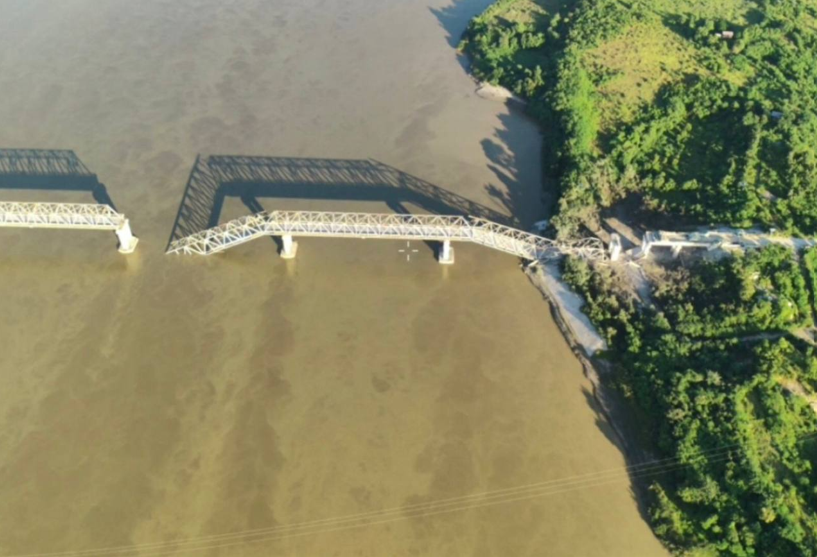
A powerful magnitude 7.7 earthquake struck a little before 1:00 p.m. on March 28, 2025, hitting Mandalay, Sagaing, Pyinmana, Naypyidaw, Myittha, and Pyawbwe, areas located close to the Sagaing Fault, which runs north–south across Myanmar. In Sagaing, Mandalay, Pyinmana, Naypyidaw, and the Inle region, successive tremors within minutes caused extensive destruction and a large number of casualties.
The most deaths occurred in densely populated Mandalay, while casualties were also reported in Sagaing, Pyinmana, Naypyidaw, Pyawbwe, Myittha, Yamethin, and other towns. International organizations estimated more than 4,500 deaths, over 11,000 injured, and damage exceeding USD 11 billion.
More than 55,000 homes were destroyed, and some monitoring groups said damage to roads, bridges, and public infrastructure alone was worth around USD 2 billion. Mandalay, Myanmar’s second-largest city, suffered the greatest destruction and loss of life. Across much of the city, multi-story residential buildings sank into the ground, collapsed completely, or were left leaning after lower floors failed. In one incident alone, the collapse of the Sky Villa condominium trapped and killed nearly 200 people, and clearing the rubble took months.
Pyinmana also experienced heavy destruction and fatalities. In Naypyidaw, the administrative seat of the military regime, many civil-service housing blocks were damaged and there were deaths as well. Even the parliament complex, the presidential residence, and ministerial offices were affected. The scale of damage was so extensive that it disrupted the regime’s administrative machinery.
Even regions not close to the Sagaing Fault—such as Inle*—felt the quake. Homes and monasteries on *Inle Lake were damaged to the point of tilting and near collapse. The quake’s effects were also felt as far as Bangkok, Thailand, where an under-construction high-rise reportedly collapsed, killing up to hundreds of construction workers.
The Sagaing earthquake also gave the coup regime opportunities to re-establish certain contacts with the international community under the pretext of humanitarian aid. Many countries sent emergency rescue teams to help pull trapped victims from the rubble and provided temporary shelters, food supplies, and medical assistance for those left homeless. ASEAN foreign ministers also traveled to Naypyidaw.
In short, it can be said that the coup regime tried to use the earthquake disaster as a reason to regain some international engagement.
The 2025–26 election
Another major event in 2025 was the election organized by the military—held roughly one month before the coup reached its five-year mark. Since the coup, the military’s narrative had been that it would hold an election after “reviewing fraud” in the 2020 election. But by the time it actually staged the 2025–26 election, nearly five years had passed—and more than half the country’s territory was no longer under its effective control.
In preparing the election, the military relied on tailor-made party registration and election laws to restrict parties that could become rivals. At the same time, the overall security situation deteriorated to the point that elections could not be held in large parts of the country. Revolutionary armed forces and the National Unity Government (NUG) viewed the election as a political process intended to confer legitimacy on the military, and urged the public not to participate.
Some countries regarded the election process as something that would increase violence in Myanmar, and the United Nations also stated a similar view. ASEAN did not endorse the election; within ASEAN, member states approached it with differing positions. Thailand did not openly oppose it, but made a diplomatic statement expressing hope that the election could be a step toward returning to a democratic path.
One thing is clear: this election neither reduced armed conflict nor led to dialogue. Instead, in many areas the military had already lost, airstrikes continued repeatedly, including across conflict zones.
During 2025, airstrikes caused large numbers of civilian deaths. In some incidents, women and children, as well as hospital patients, were killed in the dozens. Among the year’s most tragic episodes were: the airstrike on a school in Kyauktaw, the airstrike on a hospital in Mrauk-U, the airstrike on a Thadingyut candle-lit protest event in a village near the Chaung U township boundary, and the airstrike on a residential neighborhood in Mogok.
The economy in 2025
In 2025, Myanmar’s economy suffered widespread losses due to armed conflict, the earthquake disaster, and flood-related natural disasters. Right after the quake, institutions such as the World Bank projected that the disaster would have a major impact on economic growth indicators; in a September assessment, it was reported that the economic slowdown/decline was 0.5 percentage points less severe than initially projected.
The coup regime appeared still able to finance war expenditures through revenues from natural resources and taxation, while revolutionary forces also relied on funds from resource extraction and tax collection to cover the costs of armed struggle. In 2025, the coup regime imposed unusually strict restrictions on border trade with Thailand, aiming both to reduce foreign currency outflows and to cut off tax revenues collected by revolutionary armed groups along border trade routes.
Tight restrictions on Thailand-border trade led to rising prices inside the country for imported consumer goods and medicines. Even if the kyat did not sharply collapse, imported products either became unaffordably expensive or disappeared from the market, creating shortages.
Overall, 2025 can be described as a year in which Myanmar’s economy struggled to survive under sanctions and wartime conditions—living costs rose, but incomes did not, and people were forced to endure and cope under increasingly difficult circumstances.