
Myanmar Spring Chronicle – January 5 Scene January 6, 2026
Independence and Political Positioning
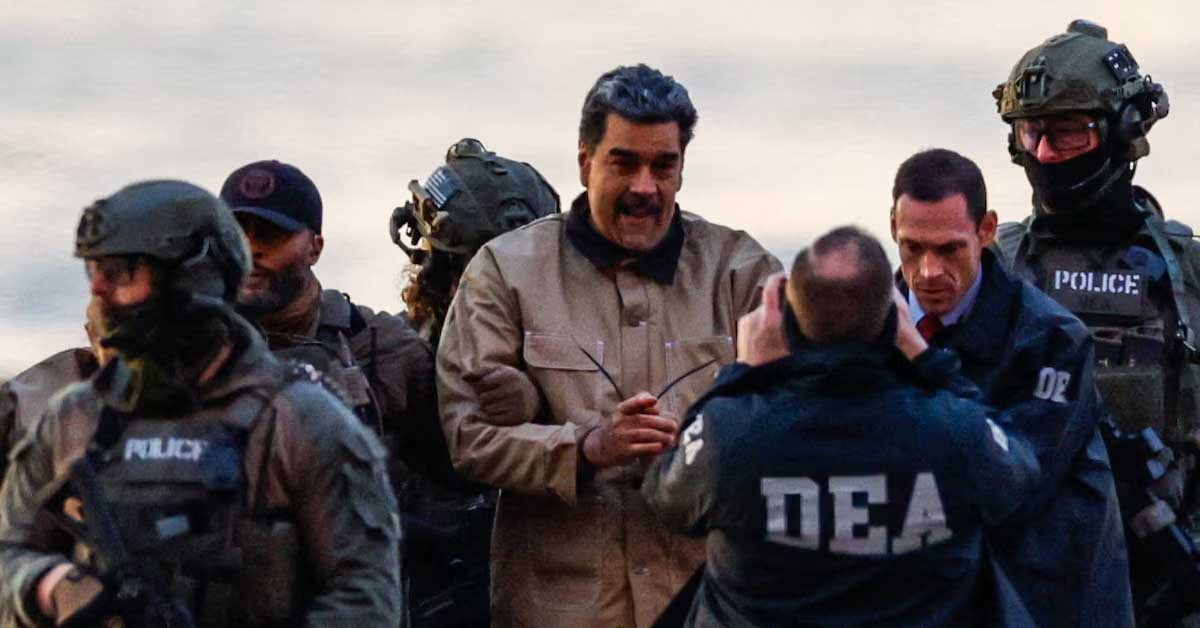
In 1956, in Hungary, an Eastern European country, mass protests erupted alongside a change in government leadership and a movement demanding the withdrawal of Soviet troops from Hungarian territory. This uprising—later known as the Hungarian Revolution—lasted for several months. However, in November 1956, Soviet forces entered the capital Budapest and crushed the movement through military force. The reformist prime minister Imre Nagy, who had been appointed during the uprising, was arrested and taken away by Soviet troops, and a Soviet-backed government was installed in his place. At the time, most left-leaning political figures in Myanmar supported the Soviet intervention in Hungary. They argued that the Soviet Union could not allow Hungary’s reforms to proceed, nor could it accept Hungary’s withdrawal from the Warsaw Pact—a military alliance between the Soviet Union and Eastern European states—and therefore justified the intervention as a necessary action. Among Myanmar’s leftist intellectuals of that era, only the writer Dagon Taryar openly stated that he could not accept the Soviet military intervention in Hungary. On principle, Dagon Taryar rejected the idea that one country could violate another country’s sovereignty by deploying military force to overthrow its government. He publicly argued that the Soviet action was wrong. At that time, not only in Myanmar but also among leftist supporters in many newly independent countries, there were numerous voices that defended the Soviet suppression of Hungary as a “necessary measure.” However, decades later—after the collapse of the Soviet Union and the end of the Cold War—many historians and political thinkers reassessed these events and came to recognize Stalinism, authoritarian brutality, and Soviet interference in Eastern European domestic affairs as serious historical mistakes. Although Dagon Taryar was not a politician, he was a committed leftist intellectual who wrote extensively on leftist ideology, literary theory, and aesthetics. He also published Taryar Magazine, a highly influential literary journal in post-war Myanmar, even though it could not be sustained for a long period. Unlike politicians who take purely results-based positions, Dagon Taryar was respected as a person who stood firmly by principle—someone who refused to abandon his beliefs for personal gain or short-term outcomes. In recent days, Myanmar’s political and revolutionary circles have expressed diverse and conflicting views regarding the incident in which the United States arrested the Venezuelan president, transferred him to U.S. custody, and initiated legal proceedings under allegations of illegal drug trafficking, along with statements that the U.S. would temporarily administer Venezuela’s governance. The All Burma Federation of Student Unions (ABFSU), together with four other student unions, the Blood Money Campaign, and the War No More Foundation, issued a joint statement under a title akin to “Oppose U.S. Imperialist Actions,” condemning the U.S. arrest of the Venezuelan president. Although written from a leftist ideological standpoint, the statement described the U.S. action as an act of invasion, a fascist act, and a major threat to world peace, and called on people to oppose U.S. imperialism. In response, some groups and activists within Myanmar’s Spring Revolution criticized the statement, arguing that condemning the United States while failing to strongly oppose China’s interference in Myanmar’s affairs was meaningless. Others attempted to equate China’s political involvement in Myanmar with the U.S. act of entering another country’s territory, arresting a sitting president, and asserting judicial authority over him. It is historically natural that student unions across different periods have leaned toward leftist ideology. During the British colonial independence struggle, the post-war AFPFL era, the period following the 1962 military coup, the July 7 student massacre, and throughout the 1970s, student movements in Myanmar were deeply influenced by leftist thought. The presence of leftist ideology in student movements is not, in itself, a problem. Student unions have never sought to seize state power, nor have they historically compromised their principles to gain political office by aligning with dictators. Because they do not pursue political power, they are not actors who trade principles for personal benefit, nor are they candidates for positions of authority. For this reason, even when one disagrees with their views, it is surprising to see some revolutionaries and activists attack them—branding them as “Chinese proxies,” accusing them of being silent on China while insisting they should not criticize the United States. Myanmar’s own history provides sobering lessons. In the desire to escape British colonial rule, Myanmar once cooperated with Japanese fascism, even accepting Japan’s so-called “gold-plated independence” during World War II. The weakness of ideological evaluation and the failure to firmly adhere to principled positions contributed to a long and difficult struggle for genuine independence—an important lesson, if one is willing to learn from history. After World War II, Myanmar gained independence—but India also gained independence without fighting alongside Japan. In Myanmar’s historical record, the decision to invite Japanese fascist troops into the country stands as a profound warning. Reflecting on Myanmar’s history on Independence Day, marking the 78th anniversary, leads to a clear conclusion: to achieve freedom not only from military dictatorship, but also from both traditional imperialism and modern imperialism, Myanmar’s politicians, activists, and revolutionaries must cultivate and defend independent thinking, independent political positions, and independent principles.